Buying marine B2B advertising? The questions marketers should be asking
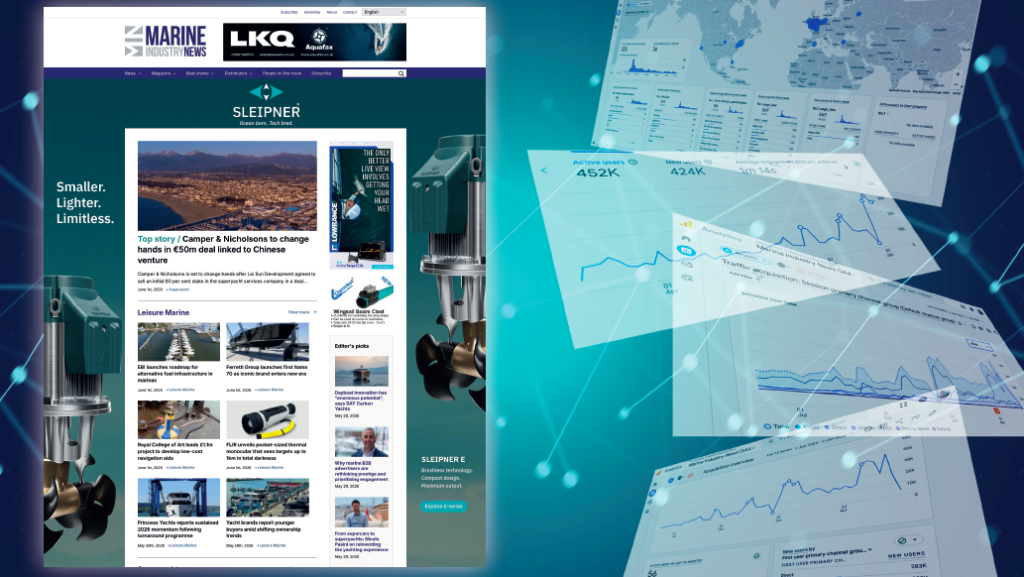 A publisher should be able to show live data to a potential advertiser
For marine marketers buying advertising on a B2B media platform can feel deceptively simple. A publisher sends over a media pack, promises audience reach and suggests a package designed to “maximise visibility.”
What marketers should ask before buying marine advertising
But experienced marketers know the harder question is not ‘how many people might see this?’– it is ‘who are these people, and will this campaign actually reach the right buyers?’
“In marine B2B media, audience quality matters far more than audience volume,” says Mike Shepherd, director of MAA (Marine Advertising Agency) and MIN‘s publisher. “Advertisers are usually trying to influence a relatively small number of commercial decision-makers, so that makes scrutiny of numbers essential.”
A media pack is not proof of performance
Shepherd says a media pack should be the beginning of a conversation, not the end, as much of it still amounts to the publisher’s own description of its audience and influence. A trade title may have existed for years and built strong recognition in the sector, but longevity alone does not prove relevance.
The key questions remain surprisingly simple: is the publication still reaching the right people, and are those people actually engaging with the content?
Advertisers should demand live data from publishers
Marketers should be asking who the readership really consists of, how audiences are segmented, where traffic comes from and what engagement actually looks like. Newsletter numbers matter, but so do open rates and click-throughs. Website traffic matters, but so do dwell times, repeat visits and evidence that readers are returning regularly because they trust the content.
This means that, importantly, marketers and advertisers should ask for proof with questions such as:
- Can the publisher demonstrate actual live audience performance – rather than printed plaudits?
- Can the publisher show where readers are located geographically, what sectors they work in and how campaigns perform in real time?
- Can marketers see evidence beyond broad claims about ‘industry reach’ or ‘market leadership’?
Questions such as ‘who is actually reading this?’, ‘how do you prove engagement?’, ‘what does success look like for advertisers like us?’ and ‘can I see performance data?’ are not signs of distrust – they are signs of good marketing discipline.
Those questions may feel uncomfortable in a relationship-driven sector, but they matter – particularly when marketing budgets are highly scrutinised and campaignsneed to deliver measurable outcomes.

Why transparency is becoming a competitive advantage in B2B media
At MIN, Shepherd says transparency has become a defining principle of how the business works with advertisers.
“Marketers need to know exactly who they are reaching,” Shepherd says. “A PowerPoint presentation or media pack is still ultimately the publisher’s word.
“We can show live audience data and we’re happy for that to be scrutinised.”
That willingness to open up performance data is becoming increasingly important in B2B publishing. That’s because advertisers are moving beyond traditional banner campaigns and now expect richer reporting around engagement and outcomes.
MIN also operates without subscription barriers or paywalls, meaning its content is freely accessible to professionals across the marine industry. Shepherd argues this approach creates a more transparent relationship with both readership and advertisers.
Open publisher eco-systems are key to success
Because content is openly available, marketers can see campaigns appearing in the same environment readers experience every day, rather than behind registration walls or closed ecosystems. In practical terms, that means advertisers are able to view activity and assess visibility more directly.
“I’m often told it’s refreshing for clients to see their campaigns in action,” Shepherd says. “The feedback is incredible.”
None of this removes the need for advertisers to ask challenging questions. Before committing budget, they should still interrogate audience fit, performance reporting, editorial alignment and realistic commercial outcomes.
Previously, Shepherd told MIN that advertisers shouldn’t be asking ‘Where should we advertise?‘ And instead be looking at the question: ‘Where will our campaigns actually work, where readers are engaged?’ He says success depends on where, how, and how consistently a company shows up in the market.
Can print still deliver value in marine B2B marketing?
Shepherd highlights MIN‘s magazine as a prime example of engagement. It was requested by the industry (MIN launched as a digital product). The magazine – a show product – is delivered into the hands of all the boatbuilders, OEM and manufacturers exhibiting at major European boat shows. “It’s old fashioned media distribution,” Shepherd says, “to complement the digital world. Show distribution underpins the friendships that the industry is built on.”
MIN‘s magazine is printed on A3 120gsm art paper, looks and feels like the quality it represents. Advertiser’s messages are big, bold and are delivered directly to the stands of their customers by the publisher himself.
What success really looks like for marine advertisers
In a niche sector like marine, where purchase decisions are often relationship-led and sales cycles are long, the strongest advertising partnerships are rarely built on the biggest audience claim. They are built on confidence that the right people are reading, that campaigns are visible, and that performance can be seen rather than simply promised.