Castoldi steps up unmanned surface vessel (USV) push as global demand accelerates
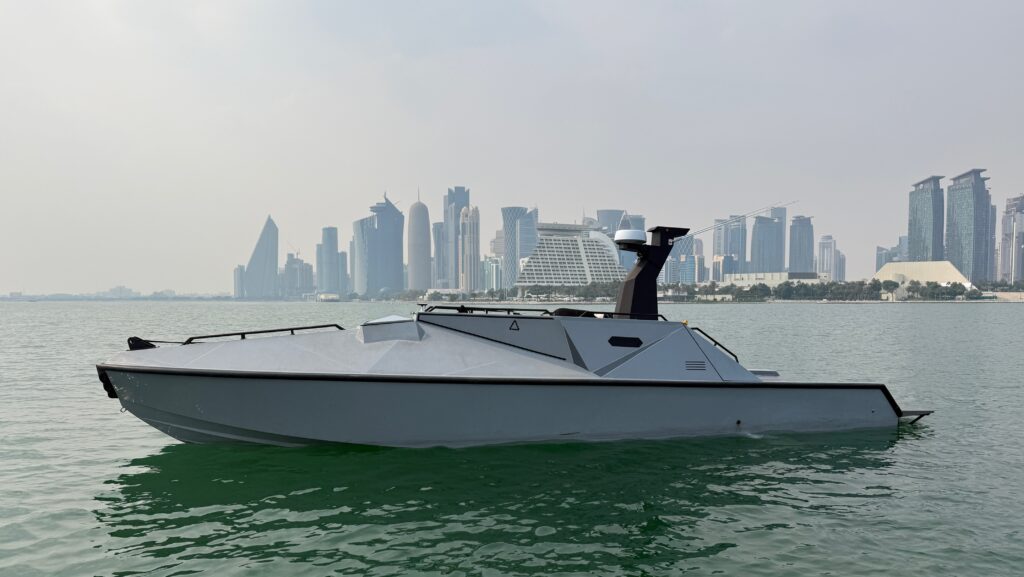 Demand for integrated propulsion solutions on Castoldi’s 13-metre USVs is rising sharply
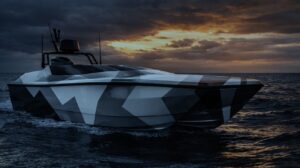
While completing four units of its newly launched JT 34 Limo for a major luxury resort operator, Castoldi is simultaneously accelerating its presence at the other end of the marine spectrum: unmanned surface vessels (USV). The Italian manufacturer says demand for integrated propulsion solutions on 13-metre USVs is rising sharply, driven by geopolitical uncertainty and expanding civilian use cases.
“We are seeing an increasing demand for USV applications, driven by the current climate of uncertainty,” says Giacomo Castoldi (CEO), reflecting Castoldi’s growing involvement in the USV sector.
DIMDEX showcase highlights mature USV capability
The company’s just exhibited at DIMDEX 2025 (Doha International Maritime Defence Exhibition and Conference) alongside its local distributor Performance Marine Defence Solutions. The business has been in the USV space for several years now, Castoldi tells MIN, with different projects worldwide. This was its first exhibition of 2026 with further commercial and military exhibitions to follow. In late March the company’s exhibiting at Asia Pacific Maritime.
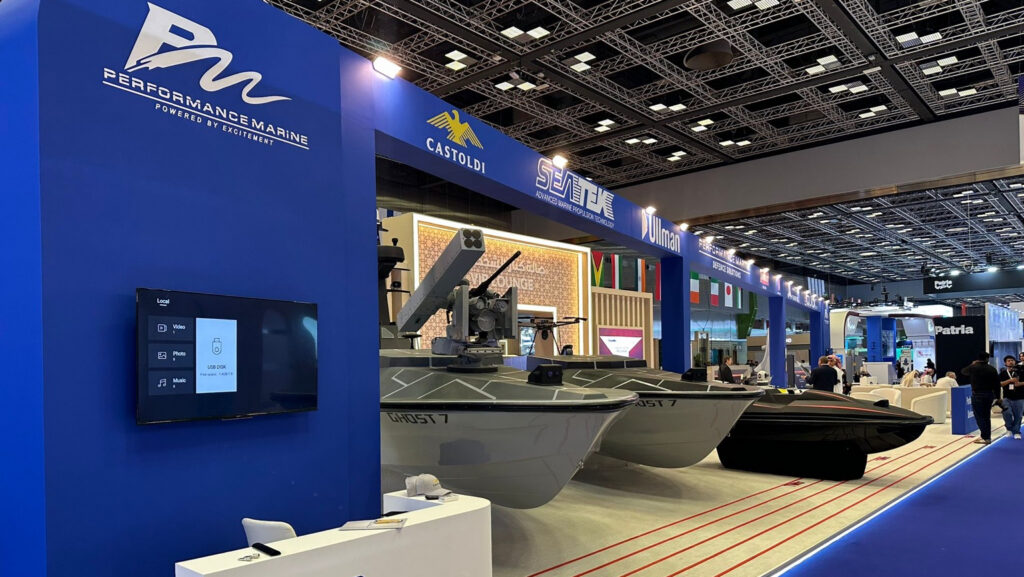
Although USV projects are typically covered by NDAs, the Castoldi’s current markets include Europe, the Middle East and Asia.
At DIMDEX, Castoldi presented an advanced 13-metre USV project. It’s equipped with twin Castoldi Turbodrive 284 H.C.T. waterjets matched to 350 HP diesel engines – a combination which delivers a top speed exceeding 35 knots.
Standardising control in a fragmented signal landscape
One of the more challenging aspects of the USV projects is that “the signal controlling the USV varies from customer to customer, so the interface must be custom-designed for each application.” This, he explains, involves rigorous bench and onboard testing.
“Now, due to the increasing demand for these applications, we’ve designed a reliable and proven platform based on our ACES CAN bus electronic control system.”
ACES platform enables manned-to-unmanned conversion
The propulsion package is managed by ACES, Castoldi’s CAN bus electronic control system, which integrates engine and waterjet management with a dynamic positioning system and full remote control capability – enabling operation from either a shore-based station or via signal command.
“The ACES components installed onboard are the same as those on manned boats. An interface box is added to enable the system to receive external signals. This also allows a manned boat to be converted to unmanned operation at a later stage.”
Turnkey propulsion solutions for global USV programmes
The company is currently supporting multiple USV projects worldwide, supplying complete turnkey solutions that include its unique waterjet design featuring an integrated gearbox and other exclusive features that set it apart from any other product on the market.
Castoldi defines those features as being derived “from our unique waterjet design, including an integrated gearbox, built-in hydraulic clutch incorporated back-flushing system, impeller shaft protected in an oil-lubricated sleeve etc., resulting in significant operational benefits.”
Beyond defence: civilian and survey applications
While the technology is developed for commercial and military applications first and then adapted for the leisure market, “USV applications are not limited to the military sector; they also include civilian uses such as oceanographic vessels for seabed mapping and other survey operations.”
As vessel autonomy reshapes both defence and commercial marine operations, Castoldi’s approach reflects a wider industry shift toward adaptable, future-proof propulsion platforms. With technologies designed to move seamlessly between manned and unmanned operation, the company is positioning itself not just as a component supplier, but as a long-term partner in the evolving USV ecosystem.