Craft, heritage and quiet excellence – behind the scenes at Baglietto’s artisanal shipyard
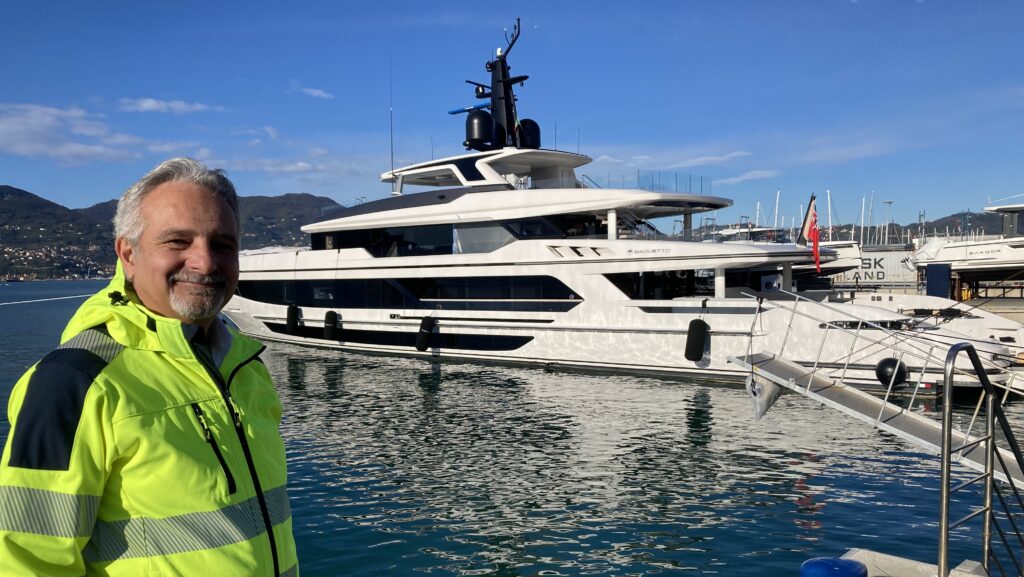
Baglietto’s shipyard sits quietly on the La Spezia waterfront, but nothing about the operation feels small. The sheds hum with specialists, the slips are packed with steel and aluminium giants in mid-build, and the order book stretches years into the future.
Yet, despite its 170-year legacy and star-studded roster of owners, Baglietto often can’t say much at all. Privacy, in this world, is currency — and it’s one of executive director Egidio Bisson’s headaches.
As Baglietto announces its latest sale – the fourth unit of its new launched DOM115 line – Egidio Bisson says one of the challenges he faces is owners. Specifically – and understandably – their need for privacy.
It must be frustrating. Here’s a company – with over 11,000 models afloat – who wants to shout about its achievements.
“Sometimes you can give information, sometimes you can’t,” he says of the custom super and mega yachts that Baglietto builds. “Maybe you have lots of things that you would like to communicate . . . like it’s really full of beautiful things.”

A full pipeline of builds across Baglietto’s yards
Currently there are 21 boats in construction for discerning owners (the company also builds for the military) – showing high demand and a full order book through 2027–2028. Seventeen are sold and four are speculative. The complexity and challenge of building bespoke yachts means that there’s continuous problem-solving for owner requests.
But this is what makes the work exciting and special, Bisson says.
Baglietto has quite the roster of owners – including Puccini, a pope (Leo 13) and Prince Ranier of Monaco. It’s a glamorous brand, but it has the substance to back up its style.
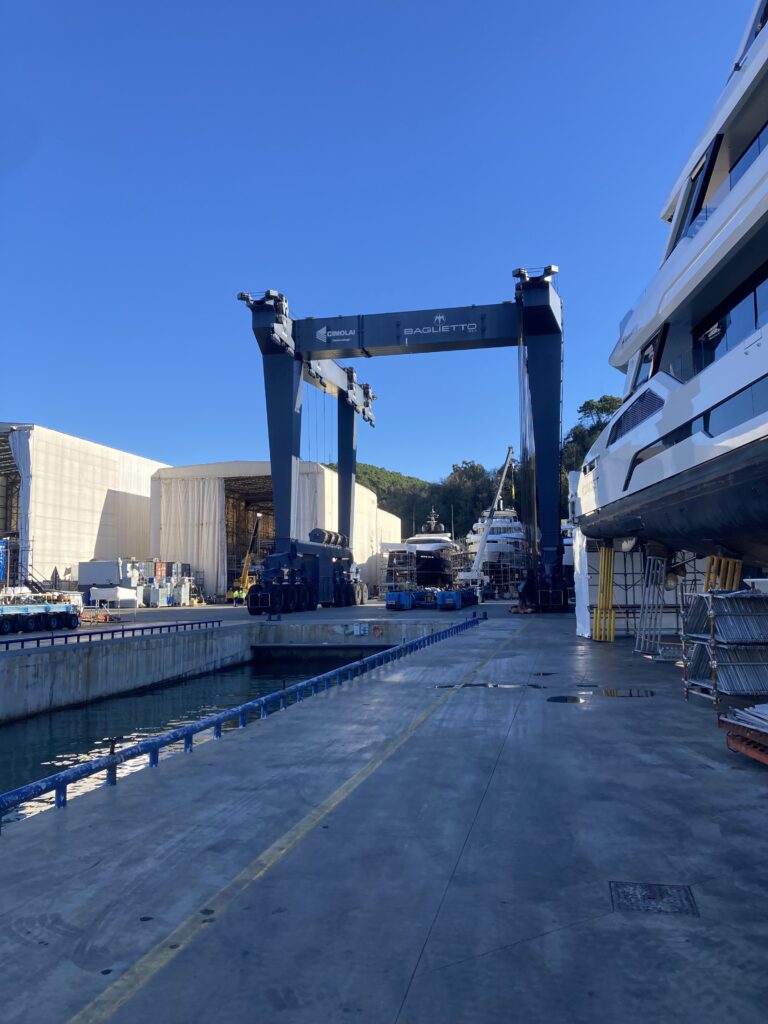
It uses a multi-yard model (steel/aluiminum fabrication in one yard, outfitting in another), and in the latter its infrastructure includes a 9,000-ton travel lift. The company’s growing but currently limiting itself to 6-7 deliveries per year, and maximum yacht sizes of 65 metres – in order to preserve craftsmanship.
Baglietto expands Into Asia and Australia
The US is its strongest market (at around 40 per cent of sales). Italian domestic sales are small, but Baglietto reports growing activity in Asia and Australia.
The company recently announced an agreement with Asiamarine and Fraser Yachts to cover markets like Hong Kong, Singapore, Thailand, and Indonesia.
Two boats are heading to Australia in the next couple of years.
“We are watching other markets just in case the American one suffers, but in this moment we haven’t had any particular problem with the market,” Bisson says.
Europe accounts for about 50 per cent of sales overall
Why Baglietto calls Itself ‘artisanal’
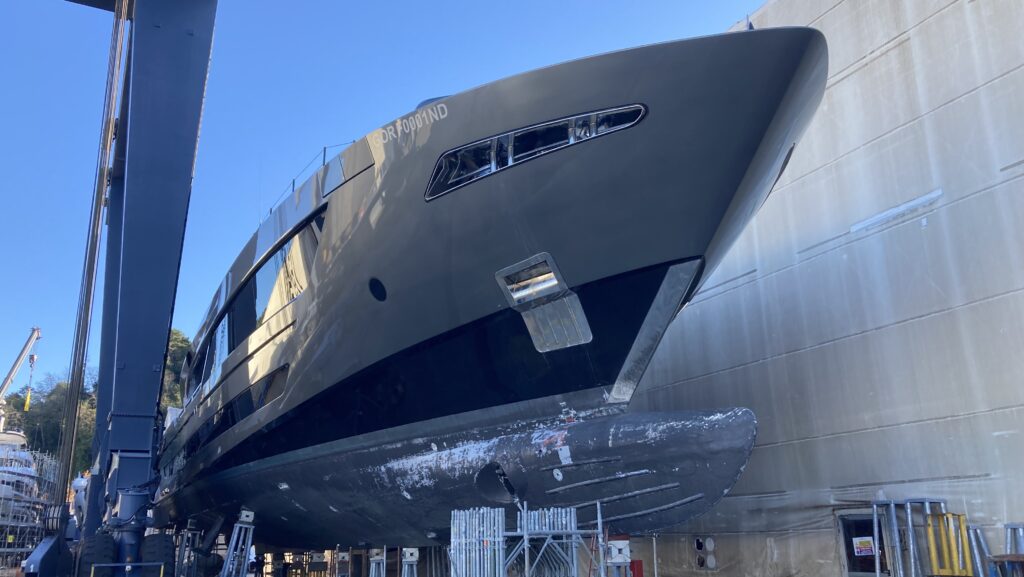
Like many superyacht companies, it’s trading on its highly customised shipyard approach. But Baglietto goes as far as to say it’s ‘artisanal’, with deep owner involvement. Customisation is extensive — interiors are 100 per cent up for grabs, the exteriors are often modified during construction.
Bisson recalls one project where the interior had to be redesigned for a ‘particularly tall client’. But generally, customisation looks like swimming pools, exterior furniture, and tender arrangements based on client preferences.
Managing the human ecosystem behind Baglietto builds
Managing those literally involved in customisation presents another challenge. The shipyard’s staff have multi-boat involvement. There are about 100 full-time employees at the main site, with approximately 600 additional people (subcontractors) working there daily, and another 200-300 people at Baglietto’s other facility.
In-house employees are the “people that control the process, people that keep developing, drawing, all the engineers in the house.”
In La Spezia, where Baglietto’s headquartered, many shipyards are building their wares, including Sanlorenzo, Riva (Ferretti Group), and Fincantieri. The area’s a significant Italian hub for high-end maritime construction. And, the shipyards are relying on the same eco-system of subcontractors.

Bisson explains the company uses specialists with at least 10 years of collaboration history, but it’s always looking for new prospects. And when the company finds them? It first visits potential subcontractors to check their quality and resources, then provides specifications they must follow. The idea is to create consistent processes and design concepts across all vessels to maintain quality.
Thus, Baglietto has to carefully manage construction timing throughout the year to avoid overloading any single subcontractor. It requires daily work to adjust manpower and resources.
Bisson admits he likes to maintain the same supplier line – and treat them like family – as this helps control quality.
“This is mainly the way we control the production using the same subcontractor with the same kind of design. Of course, all the boats have different shape[s], but at the end, we have the same concept.”
Hydrogen fuel of choice for Baglietto
Another concept which the company has fully embraced is hydrogen.
Bisson says that zero emission is a goal – and to get there, the company’s invested heavily in green hydrogen. It’s built a prototype on its dockside (with technology partner Siemens) to extract hydrogen from seawater.
“it’s exactly the same system which will be able to be fitted on board a 62 metre yacht,” says Bisson.
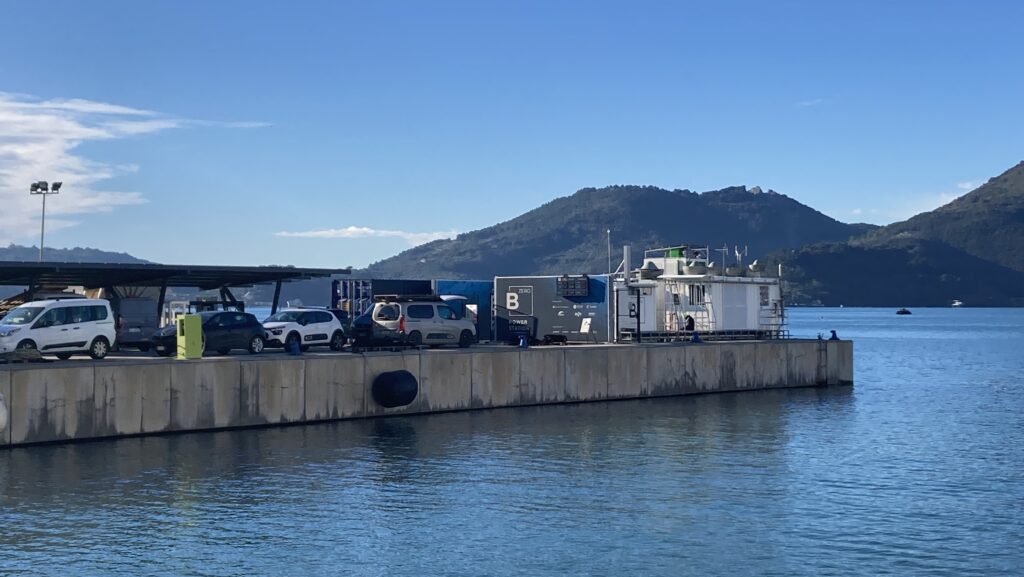
“We built this on shore because this way we, and also the supply chain and the owner, can definitely understand how the system works and experience it, and see it.
“Everything is new in this world about sustainability. Every shipyard has its own idea. We have chosen hydrogen because it’s really the only way to have it absolutely green because the hydrogen is produced from seawater.”
It’s been developed like this because marinas aren’t ready to refill boats. “The system is in continuous development, because from five years ago, up to now, the systems are completely different.”
As Bisson walks the yard, he talks about owners, markets, and the delicate choreography of hundreds of craftspeople moving through a single build. But when he stops beside the hydrogen prototype, it’s clear the next chapter of Baglietto won’t look like the last 170 years. If the company’s heritage is built on craft, its future may well be written in green energy. And for a shipyard that thrives on both tradition and reinvention, that seems exactly the point.

This article was edited on 19 December 2025 to state that owners’ privacy is one of Baglietto’s headaches – and not its biggest one as previously stated.