“Critical insurance policy blind spot” – it’s time to move beyond simple asset replacement

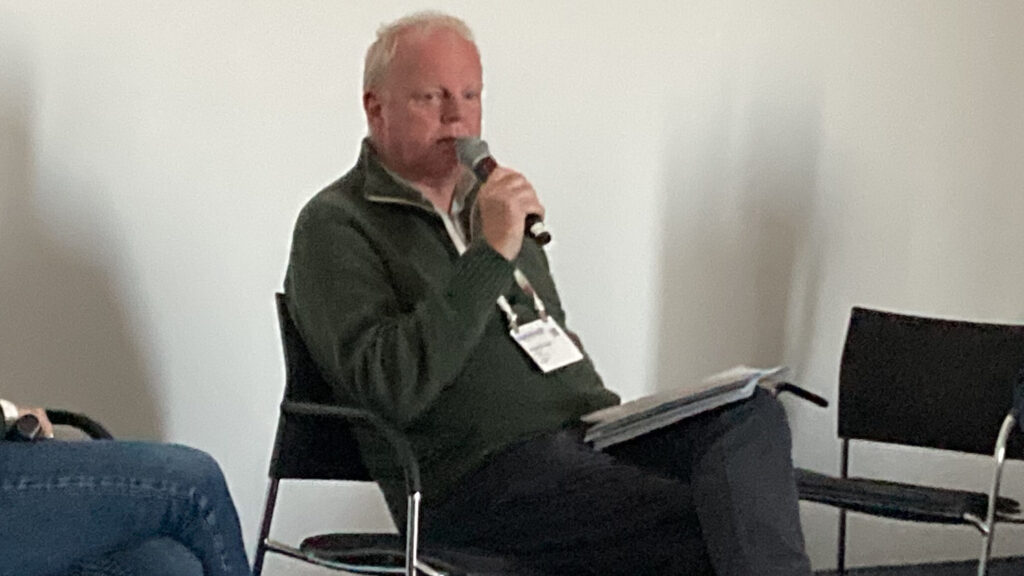
There’s a compliance gap that could sink Europe’s green shipping goals, writes Armand Lans from FDR Risk (pictured above). As a senior broker for a marine insurance consultancy firm, Lans warns that ‘compliant’ replacement can triple costs.
As European regulators accelerate their decarbonisation push, a hidden challenge is emerging – outdated insurance policies that fail to reflect the realities of the energy transition and pose a serious threat to shipowners and operators.
Across Europe, thousands of inland vessel owners and operators are under mounting pressure to meet ambitious EU climate targets. Regulations such as the Renewable Energy Directive (RED II) and the FuelEU Maritime regulation are forcing operators to phase out fossil-fuel engines in favour of cleaner, low-emission alternatives.
On paper, these measures are designed to reward early adopters and align inland shipping with the EU’s 2050 net-zero goal. In practice, however, they’ve exposed a critical policy blind spot, and marine insurance simply hasn’t kept pace.
Like-for-like replacement doesn’t work for ‘compliant’ replacement
Most existing marine insurance policies are structured around the assumption of like-for-like replacement. For instance, if an engine is damaged beyond repair, the insurer covers the cost of replacing it with an equivalent model. But ‘equivalence’ has taken on a new meaning under EU law. The compliant replacement is no longer a diesel unit but a cleaner, costlier, and often more complex system. The price gap and vessel configuration requirements can be substantial.
For instance, an inland barge transitioning from marine diesel to an ammonia-compatible engine must also invest in new fuel tanks and safety systems, as ammonia’s lower energy density requires greater storage volume. This space comes at a premium, often at the expense of cargo capacity. The owner faces not just higher replacement costs but also reduced earning potential. Yet none of these factors are reflected in current insurance structures, which still calculate compensation based on legacy technology.
This isn’t hypothetical — it’s a looming reality for many operators. Depending on the vessel’s age and design, replacing an older engine with a compliant one can double or even triple total costs.
Without updated coverage, owners risk insolvency after a single catastrophic failure, ironically, at a time when EU climate policy demands their continued participation in the transport system.
Regulators demand cleaner vessels, insurers lag behind policy shifts, and financiers hesitate to bridge the gap continued participation in the transport system, culminating in a deadlock. The risk is that an engine failure could trigger a chain reaction of insolvencies across smaller operators, eroding confidence in the very sector the EU aims to decarbonise.
The complexity of today’s regulatory environment requires a return to consultative ‘human-first’ underwriting.
Replace checklists with flexible coverage
Rather than relying on rigid checklists, insurers need to engage directly with shipowners, engineers, and regulators to design flexible coverage that reflects real-world challenges and transition costs. This includes allowances for retrofitting downtime, fuel system upgrades, and potential income losses during compliance-related refits.
Some forward-thinking brokers are already taking this approach, arguing that no risk should be deemed ‘uninsurable’ until it has been fully assessed. Their proactive stance is paving the way for insurance models that reward sustainability rather than penalise it.
Reforming marine insurance isn’t just about updating paperwork, it’s about preserving the resilience of Europe’s logistics ecosystem.
Inland waterways carry a sizeable share of the EU’s freight, from bulk commodities to essential materials. If smaller operators are forced out by unmanageable financial risks, freight will inevitably shift to road, driving up emissions, congestion, and costs.
A modern insurance framework needs to move beyond simple asset replacement to encompass total lifecycle risk, covering compliance-driven upgrades, transition-related downtime, and long-term emissions benefits. Modular products that adjust premiums based on a vessel’s fuel type or verified carbon reduction could provide a viable solution.
Crucially, collaboration is needed. Regulators, financiers, and insurers must align on clear guidelines for the transition to low-emission vessel coverage.
Energy transition defining test for marine insurance
The crux of a marine insurers’ role is to anticipate and manage risk. There is no greater collective and existential risk than climate change itself. By embracing the shift, insurers can become cataylsts of innovation rather than obstacles to it. The energy transition is a defining test for the sector, it is vital the sector take action and ‘pass’ with flying colours.
Rightly, the EU’s imperative is clear, the transition to clean energy is non-negotiable. The insurance industry must be equally decisive: this transition is insurable. Only by closing the gap between policy and protection can Europe ensure its inland shipping fleet stays afloat.