How Trump sank ten years of climate talks – and what shipping does next
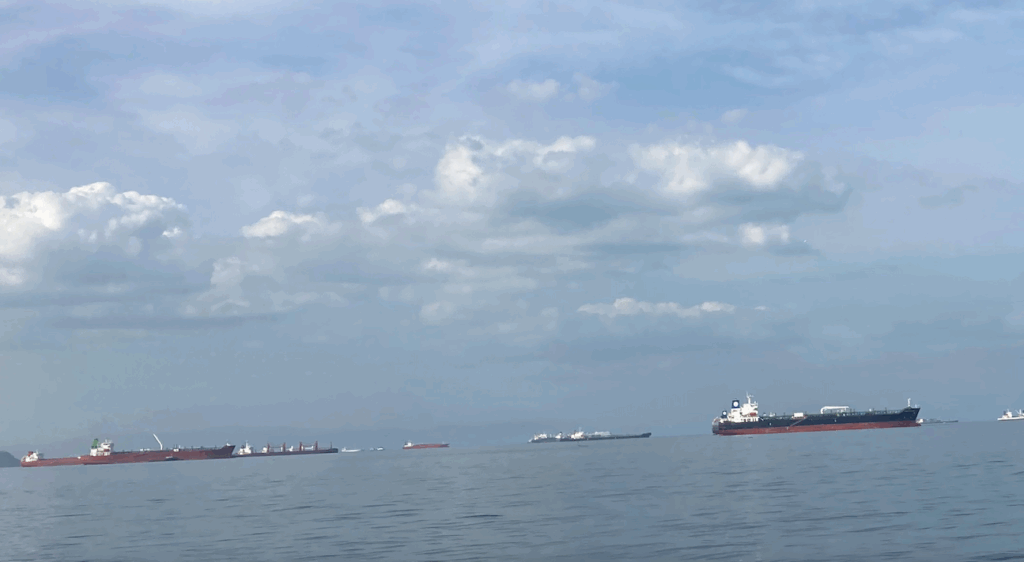
Ten years of net-zero negotiations have been sent spiralling. All thanks to Trump and his endless quest to diminish climate change.
While the maritime world had pretty much come together to adopt the International Maritime Organisation’s net-zero framework (enabling the shipping industry to work together on a clear pathway to a coherent future), one threatening post from Trump and it’s over for another 12 months.
IMO’s marine environment protection committee decided to push back on formally adopting its planned framework. About 63 IMO members who had voted ‘yes’ in April were expected to maintain their support for curbs on emissions, and others were expected to formally approve the framework. But on 17 October, IMO issued a statement (see it in full online) outlining its delaying position, after Trump’s post derailed what he called the ‘Global Green New Scam Tax on Shipping’.
Key elements of the IMO Net-Zero Framework require ships to comply with a global fuel standard (reducing their annual greenhouse gas fuel intensity over time) and / or acquire remedial units to balance deficit emissions.
Trump’s view appears to centre around the pricing mechanism for non-compliant ships functioning as a ‘carbon tax’ and thus raising shipping costs by more than 10 per cent. His post was followed by threats to impose sanctions on countries that supported the agreement.
But, while countries may have crumbled under the US tactics, companies are vowing to push forward.
“It’s a political setback, but not a technical one,” says Neel Shah, CEO of Purifire Energy (which transforms wastewater into green hydrogen and bio-methanol). “Science and humanity’s needs don’t alter due to one person’s opinion.”
He says his company will continue to build because it believes the transition is both inevitable and necessary. “Every delay increases the risk of fragmentation and missed opportunities, but it also sharpens the focus of those committed to making this work.”
Why net-zero matters for the maritime sector
The Net Zero Framework had already been approved by members of the London-based IMO, a United Nations body, in April. It matters because around 80-90 per cent of global trade goes by sea. Shipping emissions account or about three per cent of global emissions. And the public’s waking up to it.
While aircraft emissions have long been in the ‘green consciousness’, maritime emissions have taken a back seat. But now they’re being thrust into the limelight and even being dissected on general interest shows.
As Rory Stewart – co-presenter for podcast The Rest is Politics – says: “[Maritime emissions are] currently on track to grow very significantly because ships are powered off the very filthiest diesel. All the good stuff is extracted for other things and all the filthiest stuff that’s left over goes into the ships.”
The industry – driven by the private sector – has been pushing for a long time for clarity (the framework) on what the future rules will be, so it can invest in the right ships, Stewart explains. A lot of things follow from this. As examples, he cites investments in engine design and fuel design, and infrastructure for where fuel is stored. A framework would help supply chains to be established.
“And what they really wanted, they said above all, was predictability so that they could make these investments . . . and not be left with stranded assets, not be left with ships that they’d bought that suddenly they weren’t allowed to sail around,” Stewart continues.
The proposed solution was a “classic industry-led model” with around 100 countries spending about ten years negotiating a process for phasing out polluting vessels. After a certain date, polluting vessels would pay into a fund, which would then be used to help smaller developing nations.
“And if you modernised and got your emissions down, all’s well and good.”
Trump’s post that changed everything
The decision to delay the framework’s adoption came a day after Trump posted: “I am outraged that the International Maritime Organization is voting in London this week to pass a global Carbon Tax.
“The United States will NOT stand for this Global Green New Scam Tax on Shipping.”
Washington later threatened to impose sanctions, visa restrictions, and port levies on countries that supported the deal.
“It was a real example of Trump’s arbitrary power, because what really swung it was not the US, Saudi and Russia . . . but the fact that he put pressure on small island states,” says Stewart.
“And we suddenly had Caribbean states saying, ‘I’m really sorry, but the US is a 400 pound gorilla and we can’t afford to defy them on this’.”
Industry reaction: frustration but resolve
A delay in regulation doesn’t mean a delay in action, notes Argent Energy, a UK producer of waste-based biodiesel with operations in the UK and Netherlands.
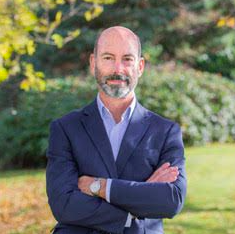
“The industry must not stand still,” says Dickon Posnett, corporate affairs director (pictured).
“The IMO’s efforts remain vital, but regulatory delays should not deter shipping companies from acting now. Solutions exist now. Companies can act now.
“The climate crisis isn’t waiting, and neither should we. No single country or interest group should hold back global progress.”
Industry needs to lead, not wait
Posnett advocates for momentum to continue and urges the industry to act in parallel.
“We applaud those driving efforts to strengthen the IMO framework and set more ambitious targets. In the meantime, we’ll keep providing fuel for shipping companies who want to lead, not wait.”
Fuel innovation continues despite politics
Shah and Posnett are not the only industry voices speaking out about moving forward.
“We are disappointed that member states have not been able to agree a way forward at this meeting,” says Thomas Kazakos, International Chamber of Shipping secretary general. “Industry needs clarity to be able to make the investments needed to decarbonise the maritime sector, in line with the goals set out in the IMO GHG strategy.
“As an industry we will continue to work with the IMO, which is the best organisation to deliver the global regulations needed for a global industry.”
Maritime innovation to continue pushing towards net-zero
While, Shah is disappointed with the delay, he’s confident innovation will continue.

“The industry will continue to develop cutting-edge technology, changing the maritime industry for the better. Eventually, political obstacles will give way to progress, and this delay is just one of many challenges we must overcome to shift the global shipping industry’s mindset,” Shah (pictured) says.
He believes that the timelines may move again, but says: “The world doesn’t need a framework to know the mission brief. We are seeing a growing demand for sustainable fuels and government backing, especially in the UK and Europe. The best way to prevent further delay is to demonstrate that the solutions we need already exist, work, and are ready to be scaled.
“The more evidence we provide, the harder it becomes to justify inaction.
“Those who have been around the longest and possess extensive legacy infrastructure and revenue streams may see this as breathing space. Still, most will recognise that clarity, rather than delay, provides the confidence businesses need to invest.
Decisive policies will surge ahead with investment frameworks
“The companies leading the transition are already moving quickly. They understand that being off the hook today could mean becoming irrelevant tomorrow, as regions like Europe and Asia push ahead with more decisive policies and investment frameworks.”
The biggest issue for company’s like Shah’s is not technical; it’s about balancing scale with trust. “We know how to convert wastewater into methanol and hydrogen.
“However, building the infrastructure to do so at scale relies on more than just engineering; it depends on gaining confidence from partners, investors, and regulators that this is a viable path. The IMO framework, once adopted, helps provide that confidence. It establishes a shared direction that the entire sector can rally around.
“The main challenges are uncertainty and inconsistency in funding. Technologies are advancing, and interest is there. However, without clear and consistent signals, both regulatory and commercial, it’s hard to justify scaled-up investment. You can’t simply fix this with regulation. We need to fund innovation projects, demonstrate alternative fuel pathways, and ensure the data is independently verified. That’s the work we’re concentrating on at the moment.
“The current political uncertainty is just one obstacle in a larger transition; the shift towards alternative fuels is unavoidable, and we will continue to strive for that outcome, regardless of short-term political changes. ”
Calls for clarity from global shipping bodies
A UN spokesperson says that secretary-general António Guterres views the outcome as “a missed opportunity for member states to place the shipping sector on a clear, credible path towards net-zero emissions.”
He stresses that decarbonising the maritime sector – responsible for about 80 per cent of global trade – “is critical.”
Marco Rubio, US secretary of state, told media that the delay was a great triumph for American diplomacy. But Stewart disagrees.
“It’s a triumph for American brute force.
“You could argue that’s a triumph for diplomacy, if you want, but I think it’s the brute force that we should be pretty worried about.”
Despite the odious setback, companies such as Argent Energy and Purifire Energy continue investing in cleaner fuels and propulsion technologies. As Dickon Posnett puts it: “The climate crisis isn’t waiting, and neither should we.” Whether or not the IMO framework moves forward in 2026, industry leaders seem determined to chart their own course toward net-zero.