Industry insight: Diversity in demand, new markets and mainstreaming electric yachts present opportunities for boatbuilders
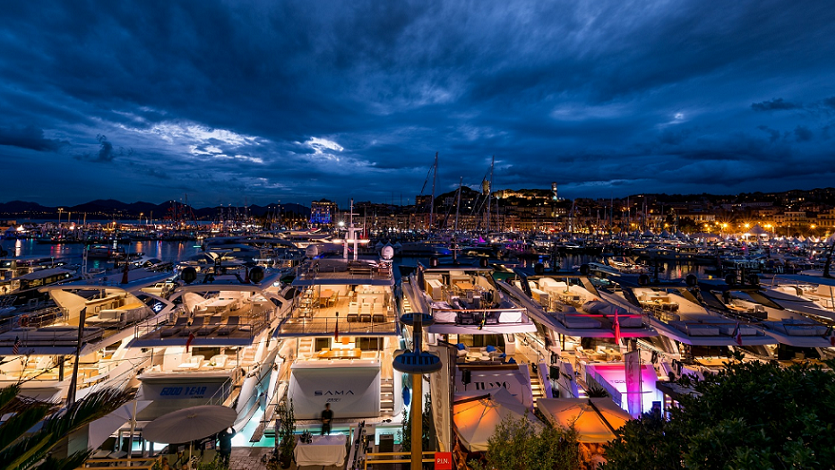 Cannes Yachting Festival 2018
As the unofficial start of the boat show season, Cannes Yachting Festival offers boatbuilders the opportunity to – almost literally – set out their stall for the coming year. Here MIN sits down with boatbuilders and others to find out what’s exciting in their parts of the marine world and – of course – the challenges which come hand in hand with the opportunities.
Managing the growing diversity of demand is a challenge currently facing the marine industry. With many companies offering bespoke configurations of anything and everything onboard, consumers are demanding customisation where some OEMs fear to tread.
Marc Forné, sales manager for Maxim Yachts, believes that this diversity is an extremely positive signal for the market, but it also presents an operational challenge: how to meet high and varied demand quickly and efficiently, without compromising quality, customisation or attention to detail.
“Today, we are seeing a wide variety of customer profiles — each with different expectations for boat size, design, configuration, and performance,” he says.
“To address this, we are investing significantly in expanding our production capacity and optimising internal processes. At the same time, we are actively developing new models to complete our range and offer a broader choice of lengths and configurations.
“We know that customisation, innovation, and availability are decisive factors in purchasing decisions, and our strategy is built around anticipating and fulfilling these expectations.”
But, with all that said, what excites him the most is the positive change in the international economic and commercial landscape, particularly in the relationship between the United States and Europe regarding import duties.
“For the last six months, the market had been somewhat paralysed by uncertainty over tariffs and the lack of a clear agreement. Now that the European Union has finalised an agreement with the US, the situation has normalised, and we are seeing a return to strong demand. This creates an optimistic forecast for the months ahead. We are very happy about this development and look forward to a highly dynamic and positive period for the industry.”
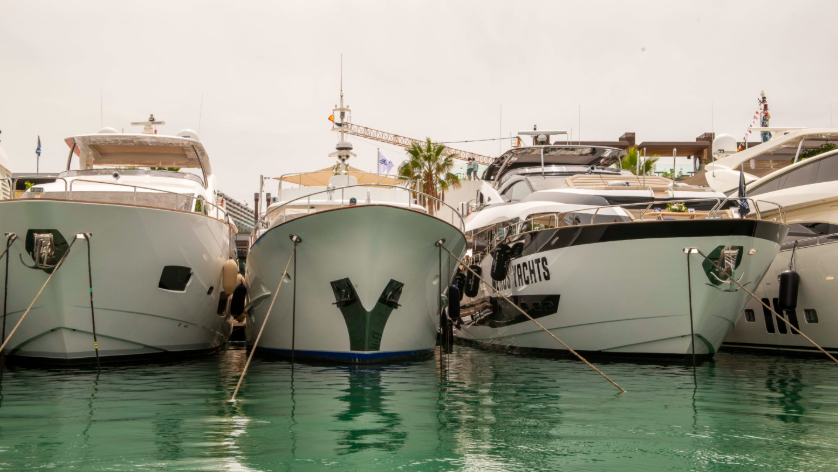
Customer loyalty crucial to brands
Evo Yachts’ shipyard owner, Rosario Mercuri, notes that the company places great value on its ability to tailor each boat as much as possible. That’s done “with the utmost care and precision, creating yachts that reflect every owner’s personal vision. Given the current global uncertainty, we do not foresee significant growth in the 7 – 18 metre segment,” Mercuri says. Which means “customer loyalty remains a crucial aspect of the yachting industry as a whole, and even more so for our brand.”
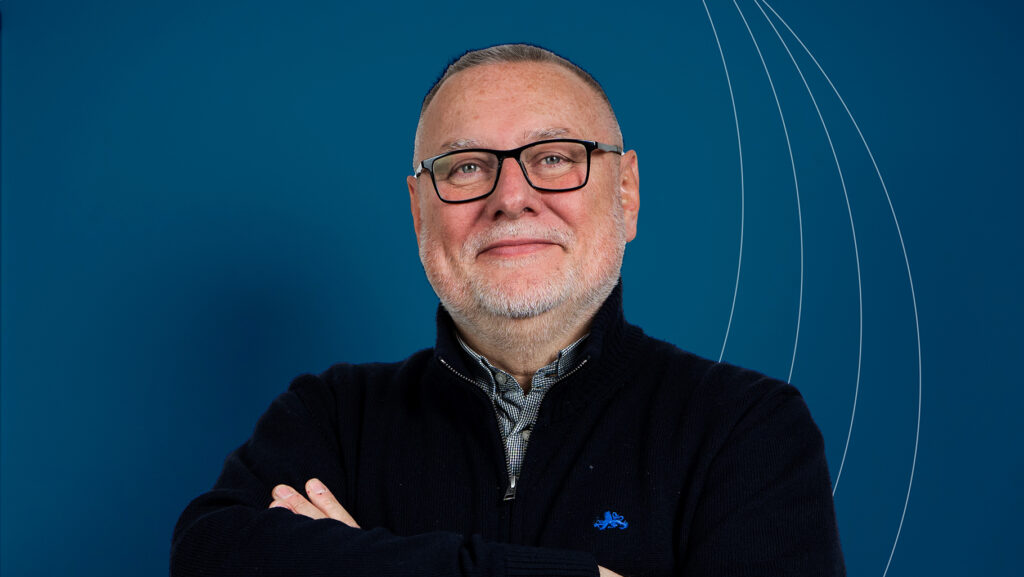
Milvio Ricci, CCO at Sialia Yachts, is excited about the mainstreaming of electric yachts over the next 12 months. “Interest from charter firms, private owners, and high-profile events is steadily increasing, and this momentum will be further amplified by the debut of the Sialia 45 Sport at the end of this year,” he says.
“The yacht’s recognition with prestigious awards underscores the growing appetite for sustainable performance. We also see supportive regulatory changes as a key driver, particularly in Europe where many waterways are moving to restrict diesel use.
“At the same time, rapid advances in battery density, CCS2 fast-charging, and smart fleet management systems are pushing maritime electrification forward at a remarkable pace.
“We believe that the rising demand for conscious luxury, where owners want high performance without polluting, represents the most exciting transformation of all — and one where Sialia is uniquely positioned to lead.”
That said, Ricci is aware that infrastructure is an ongoing issue.
“The wider adoption of electric yachts still depends heavily on the development of marine fast-charging infrastructure, which remains uneven across many regions.
“Market perception also plays a role, as customers sometimes hesitate over questions of range or the 15 to 20 per cent price premium that electric yachts can command.
“There are also broader pressures linked to battery supply chains, including sourcing, cost, and sustainability considerations. Finally, we face the challenge of scaling our innovations under growing demand while maintaining the bespoke craftsmanship, ecological integrity, and uncompromising quality that define Sialia. Meeting these challenges head-on is part of what makes the coming year both demanding and full of promise.”
Acceleration of hybrid propulsion
Ricci has been keenly following the rapid acceleration of electrification and hybrid propulsion.
“Hybrid drives, hydrogen fuel cells, and solar integration are increasingly setting new benchmarks for yacht design,” he says. “At Sialia, we have contributed to this transformation with the introduction of next-generation electric drivetrain systems developed in collaboration with Ampros. These systems incorporate remote monitoring, predictive maintenance, lifecycle-assessed materials, and warranties of up to ten years.”
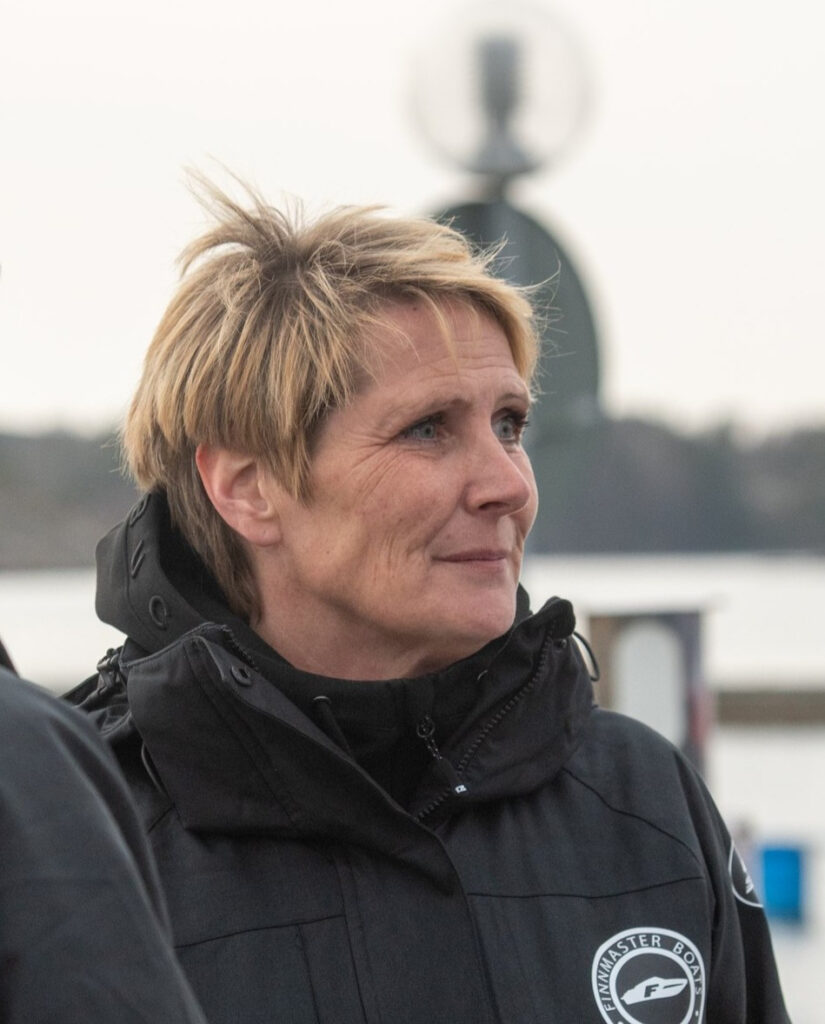
Also investing in R&D – “especially around AI, automation, and eco-friendly features— to bring smarter, more sustainable boats to customers” – is Finnmaster Boats’ COO, Pia Niska. “For us, the coming year brings world premieres at major international shows like Cannes, where we are debuting our new Grandezza 37 Outboard and we’re excited by the opportunity to expand into new markets in Europe, the Middle East, and Asia, where boating cultures are growing quickly, encouraged by the resilience of Northern and Central Europe, which helps balance the global market picture.”
Kaloyan Radulov, general manager of Omaya Yachts, thinks that the marine industry tends to move at a slow pace when it comes to innovation — whether in product, communication or marketing — but says that one exciting shift is the rise of power catamarans.
“When we started designing ours five years ago, there were hardly any serious options on the market. Today, both established and newcomer brands are launching sleek, functional models, and this new wave of competition is energising.
“This growing competition excites me — not only because it validates the direction we chose, but because it pushes the entire industry forward.”
Diversification is key as boatbuilder partner
“Markets are still suffering from the drop in demand experienced after the outstanding results we all had from the pandemic through 2023. It will still take time to clear stock, and only those boat builders who have emerged with innovative solutions and a high quality standard of both product and service are going through this period with less concern,” says Marco Donà, executive VP & CEO, SAIM Spa (pictured below).
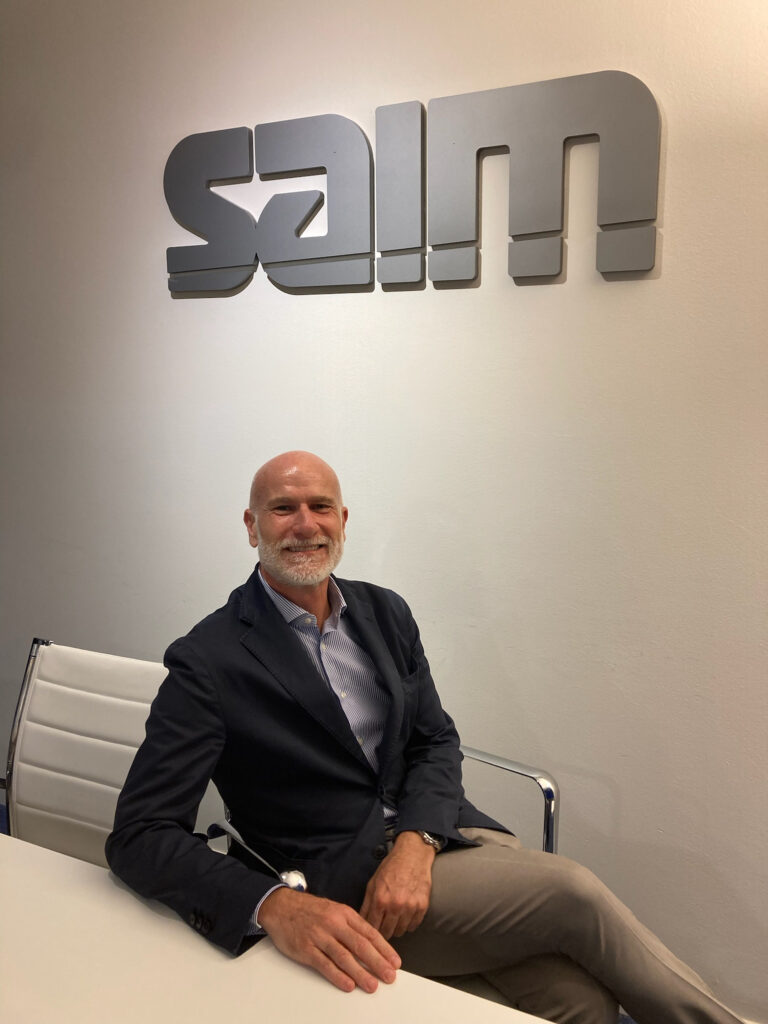
“The challenge is the same for suppliers: we too cannot afford to lower the quality level of our products and our pre- and after-sales service, in which we continue to invest heavily. Diversification is the key to (re)establishing ourselves as a partner to manufacturers. Continuous upgrading, certifications, ESG policies, ongoing research: the challenge is ongoing, but the fruits of so much dedication come sooner or later,” he concludes.