
Inside Cranchi: How one Italian family perfected assembly line yacht building over 55 years
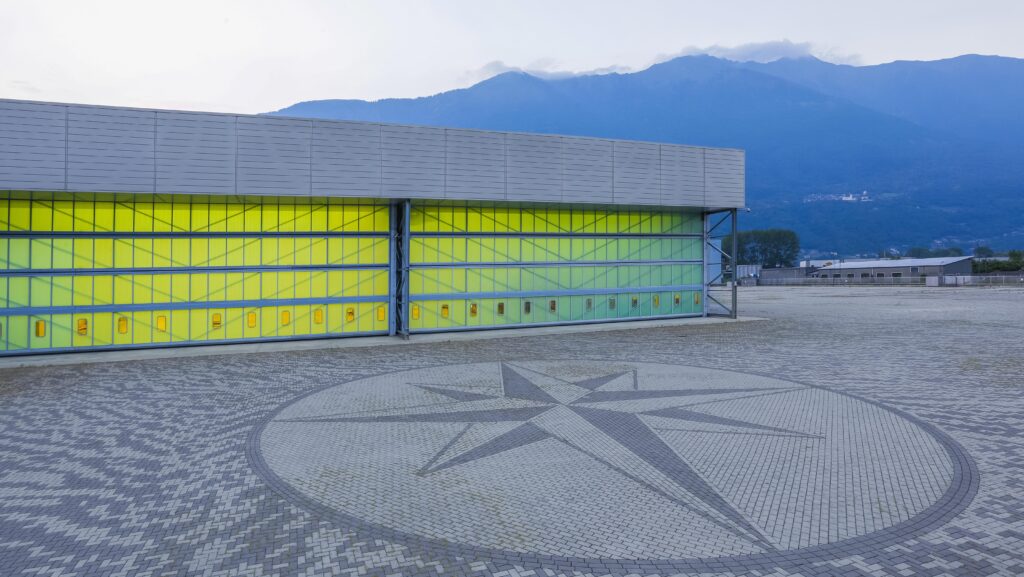 Cranchi has a stunning backdrop in Lombardy, Italy
On a rare look inside one of Europe’s most disciplined yacht factories, MIN discovers how Cranchi’s assembly-line thinking, robotics and discipline have reshaped how yachts are built.
Inside Cranchi’s factory in Piantedo, Lombardy, boats don’t drift through production — they move with intent. Clean floors, closed moulds and robotic arms tell the more recent history of the boatbuilder, when one man decided that yachts could be built with the same discipline and predictability as cars.
Cranchi has just marked 55 years of assembly line boat production, a milestone rooted in the defiance of founder Aldo Cranchi. At a time when Italian boatbuilding was dominated by small workshops and hand-built traditions, he pushed against convention, inventing not only machines but an entire production system that many believed was impossible. Today, that system still defines how every Cranchi yacht is made.
To understand how this philosophy has survived — and evolved — MIN joined Filippo Lucini, Aldo Cranchi’s grandson and production manager of plant one, during a private factory tour. Raised on the shop floor and trained by doing – rather than studying textbooks – Lucini now leads a manufacturing operation where quality is not inspected in at the end, but designed into every movement, every person, and every decision.
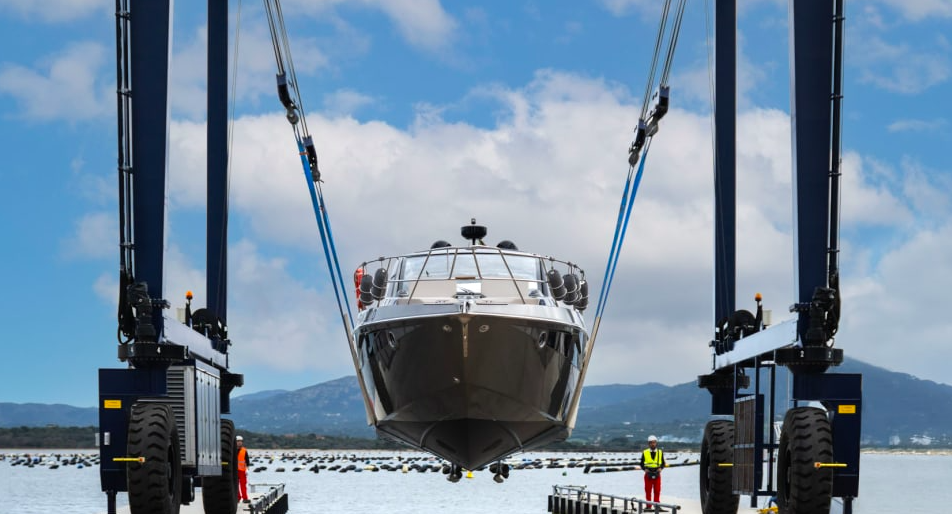
A factory built on defiance and genius
It all harks back to Aldo Cranchi, whom his grandson Lucini repeatedly calls “a genius” — not only for his character, which became the source of the company’s culture, but also because of his “defiance”.
That defiance was in pushing ahead – and succeeding – in creating a boatbuilding assembly line. Aldo Cranchi sparked a mindset change in boatbuilding, inspired mechanical technology (“Our grandfather created the robot with the company. They didn’t exist.), and — while he was at it — created a single-handed boat manoeuvring track throughout the plant.

“He has the anger inside him to show that he can make boats in the assembly line. He invented not only the machine, but all the process behind it,” states Lucini, who has benefited from the in-house generational capability to frame his experience. He says that despite widespread skepticism (the Lake Como area had 60-70 boat companies, most of which have since disappeared) Aldo’s revolution proved that assembly line boat production was viable.
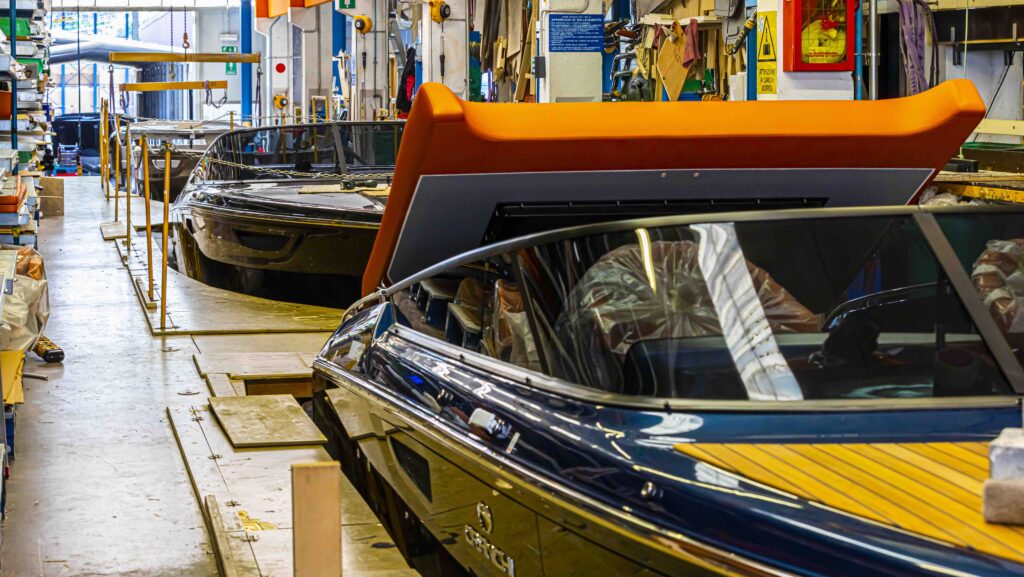
At the heart of Cranchi’s identity is a conviction that boats should be built like cars — systematically, repeatedly, and predictably. And it’s quite the scene to behold. Not only is plant one impeccably clean and ordered, but you can also almost taste the efficiency in the air.
Now Lucini is driving innovation himself.
He’s developed the Cranchi Academy (more information about the academy is available on Cranchi’s website) about two years ago. The academy is an on-site comprehensive training programme that addresses the declining practical skills of younger workers, who, unlike previous generations, often lack basic mechanical knowledge.
Learning by making mistakes — off the boat
The academy provides up to one year of training (there’s a minimum of six months for exceptional students) covering all boat systems, including water systems, stairs, connections, engines, electrical work, hydraulics, and woodworking.
“How can I teach an employee inside a boat? It’s impossible,” says Lucini.

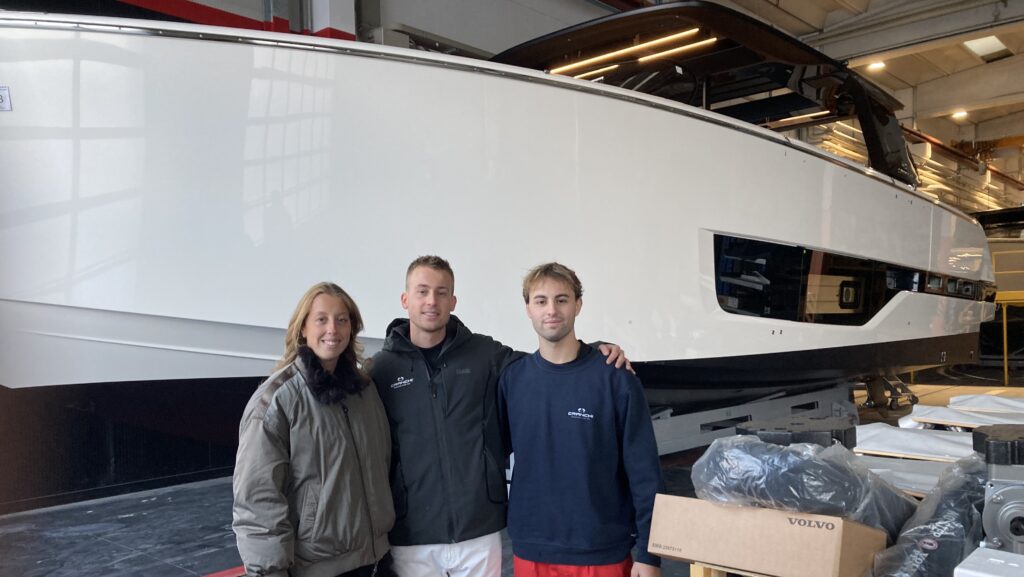
Filippo Lucini, production manager of plant one and grandson of Aldo Cranchi, continues the family’s manufacturing philosophy
Thus, students work on tables rather than inside boats, allowing instructors to observe and correct mistakes effectively. Those are encouraged under supervision — and crucially — made on a workbench instead of in the confines of a boat.
“If you don’t make mistakes, you can’t learn,” he says.
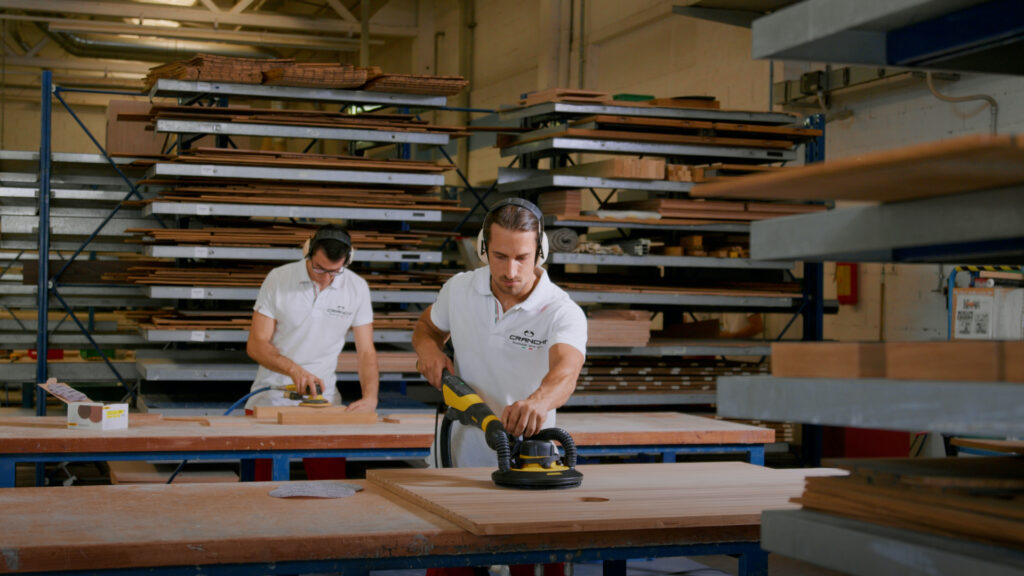
The programme begins with basic workplace discipline, requiring punctuality and professional behaviour. Education and continuous learning are fundamental. The academy has already trained 20 employees who are now working on the production floor.
Employee retention and professional development are central to Cranchi’s philosophy. Lucini explains its policy of keeping workers in specialised positions rather than rotating them, ensuring expertise development and mistake prevention. Plus, all workers are direct employees rather than contractors, with competitive compensation designed to retain skilled professionals. There’s mentorship available – a 30-year veteran employee serves as a mentor to younger workers, including recent hires aged 18 and 20.
Working through the ranks instils a unique mindset
Lucini’s experience at Cranchi began at the very bottom of the organisation, a starting point that still shapes how he thinks about work and responsibility today.
He learned the business directly from his grandfather rather than through a formal engineering education. He spent six months on the assembly line, followed by one year in the resin process, emphasising that while the physical work isn’t difficult, the chemistry knowledge required is substantial.
Prior to that official start, he explains that he “lived here” and that during school holidays, he “started washing the bathrooms,” coming into the factory in the summer with his mother.
“I grew up here. I never think about anything else.”
Cleanliness as a production tool
That early exposure to the most basic tasks inside the company underpins his belief that respect for quality, order and people is learned through doing, not titles. It established a mindset that now informs how he approaches production, training and leadership across the factory.
For example, cleanliness is not treated as housekeeping, but as a behavioural control mechanism that directly affects quality outcomes.
Being “clean and organised are the two very important things. If you work in a dirty place, you can’t make quality.”
He sees cleanliness, in the context of closed mould rooms, daily floor cleaning, humidity control, and dust management systems, as a production tool.
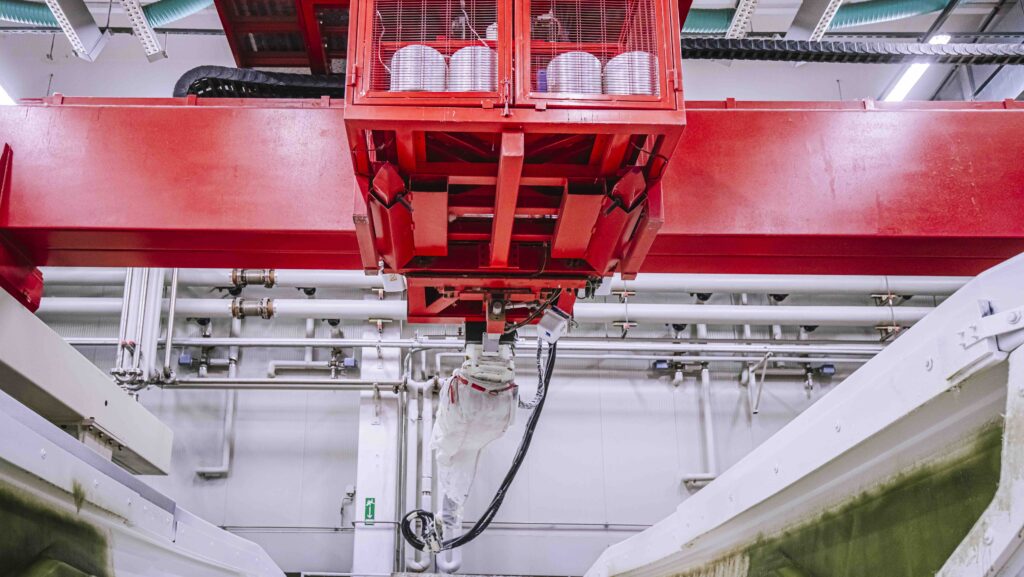
The production line is organised into four stations: stations one and two handle hulls, while stations three and four work on decks and tops.
The facility tour begins with the mould preparation area, where the critical importance of maintaining a dust-free environment is emphasised once again. Cranchi has implemented a humidification system to control dust and electrostatic issues, with daily cleaning protocols for all surfaces. Moulds must be kept completely closed and protected from contamination to ensure quality gel coating application.
Robotics where consistency matters most
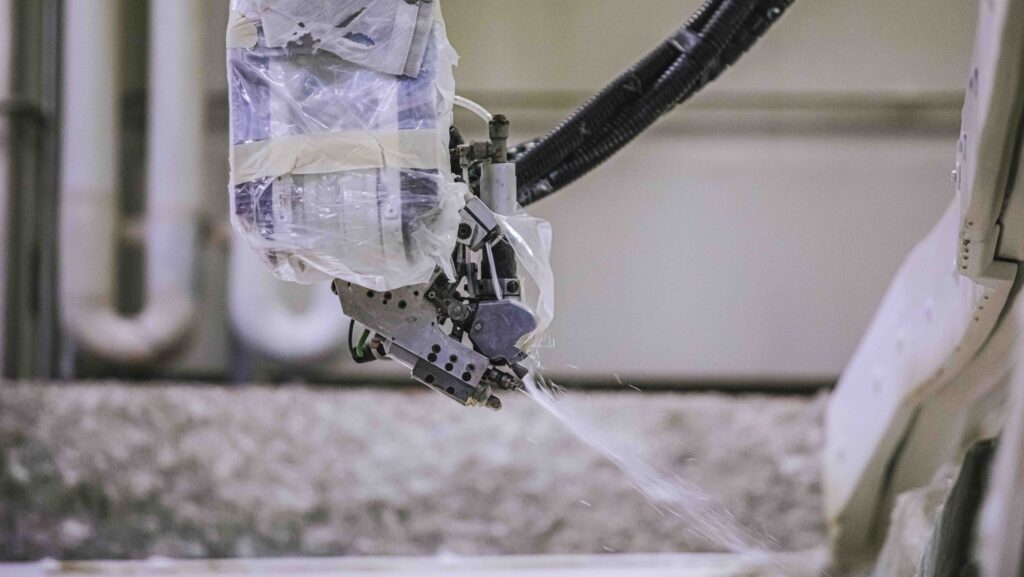
The gel coating process represents one of the most technically challenging aspects of production. The company has a year-old robotic system, which applies gel coat to achieve the precise 900-micron thickness required. This thickness is critical – too thick creates structural damage during wave impact, while too thin requires costly polishing repairs. The robot operates with over 60 metres of cables and requires sophisticated offline programming to handle the complex three-dimensional surfaces of boat moulds.
From gelcoat spraying to fibreglass application and CNC drilling, robotics are used where consistency is critical. Lucini says automation exists to eliminate variation in product, not labour.
The track that moved an industry
The company’s innovative track system, invented by Aldo Cranchi, allows single-operator movement of boats through production. This system requires only one person to control boat movement along the tracks, eliminating the need for multiple workers to manually guide boats and reducing both time and confusion.
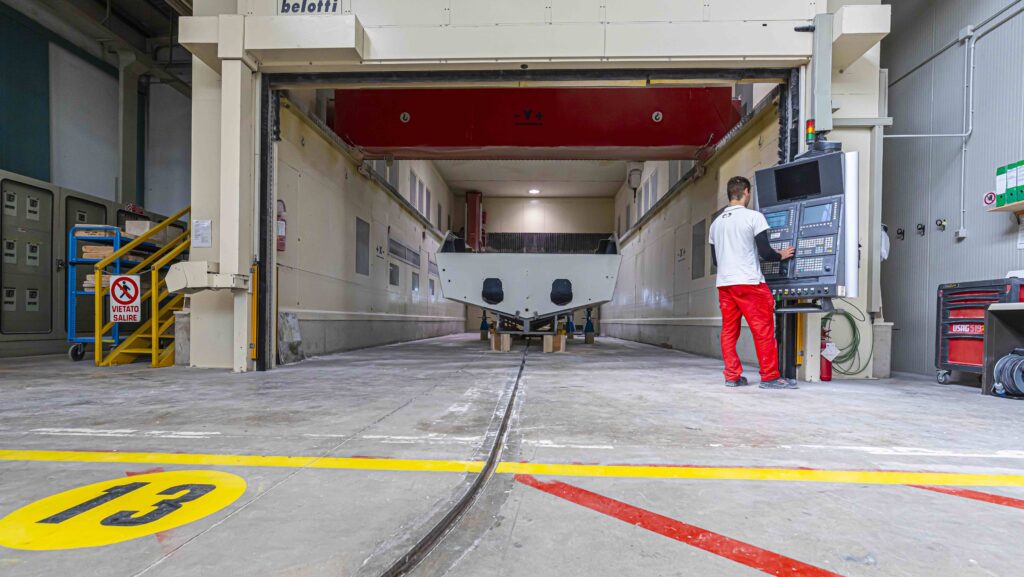
Lucini believes that this system is unique to Cranchi, and any similar systems elsewhere were copied from its original design.
The fibreglass application process utilises a 20-year-old robot with extensive operational experience. Cranchi controls 100 per cent of fibreglass production in-house with advanced temperature and humidity control systems.
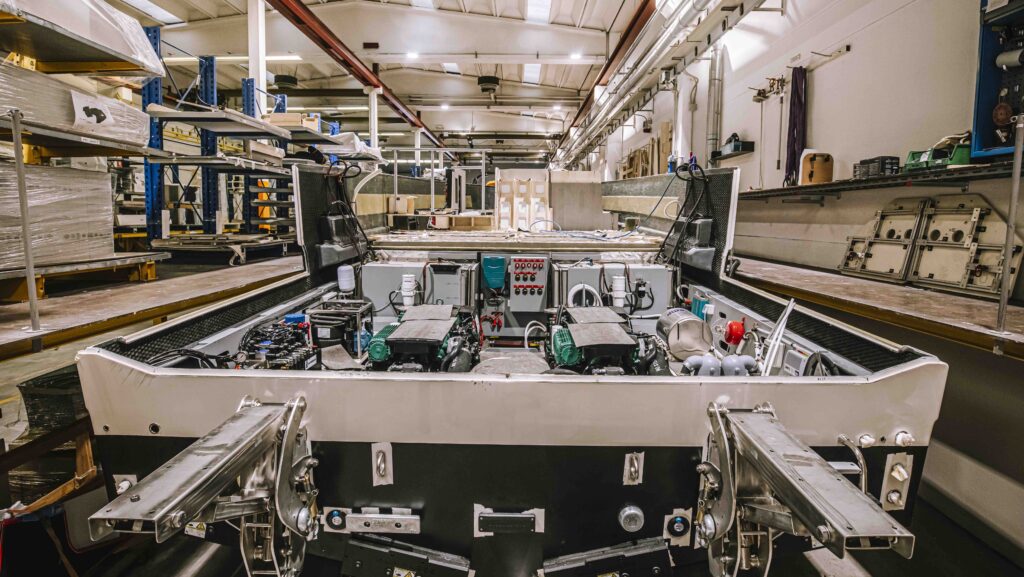
Women, precision, and detail work
Like many of the boatbuilders that MIN visits, Cranchi made a strategic decision to employ predominantly female workers in detail-oriented positions — seemingly, women naturally pay more attention to precision work compared to men (who are said to tend to rush through tasks).
The company also produces smaller components like dashboards internally rather than outsourcing, maintaining its quality standards throughout the production process.
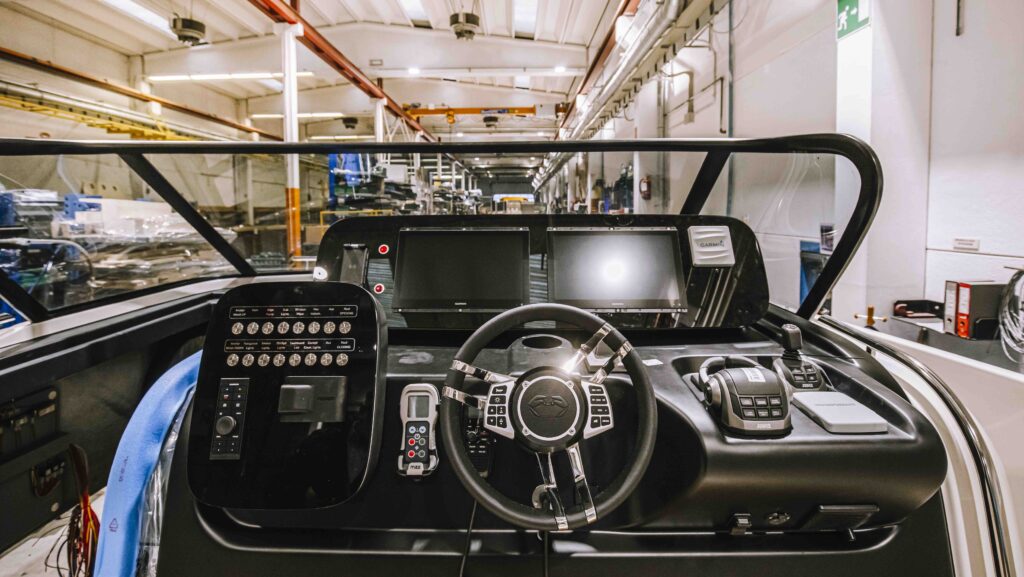
Movement is engineered out of the system wherever possible.
“If you make more than three steps, you are losing time. You are not working.”
This logic extends to pre-cut materials, pre-labelled cables, and pre-defined work kits — everything is designed so that execution, not decision-making, happens on the line.
A significant recent investment was the new Belotti drilling machine, costing €1 million and representing the second such machine at this facility (with four in total across Cranchi operations). This machine performs all drilling operations with precision that human workers cannot consistently achieve, handling everything from large window openings to 3-millimetre diameter holes.
The painting department represents another area of excellence, with Cranchi’s paint finishes considered among the best in the nautical sector, says Lucini. The process involves surface preparation, brushing, primer application, additional brushing, painting, and final polishing. Like other departments, the same personnel work consistently on painting to achieve daily improvements and perfection through repetition and specialisation.
Then there’s the warehouse management system, which handles 6-7,000 articles using an automated sliding storage system – again invented by Aldo Cranchi. This system allows efficient access to stored materials without manual handling of multiple storage units. The facility also includes specialised departments for material cutting, including carbon fibre processing, with emphasis on minimising waste and maintaining organisation.
Quality is designed in, not inspected in
Quality control is implemented through multiple checkpoints.
A dedicated quality inspector spends two hours daily on the production floor, identifying issues before final inspection. The unapologetically strict final inspection includes comprehensive testing with simulated rain and wave conditions, utilising checklists with up to 2,000 questions for larger boats. Lucini says it’s similar to Boeing aircraft inspection protocols.
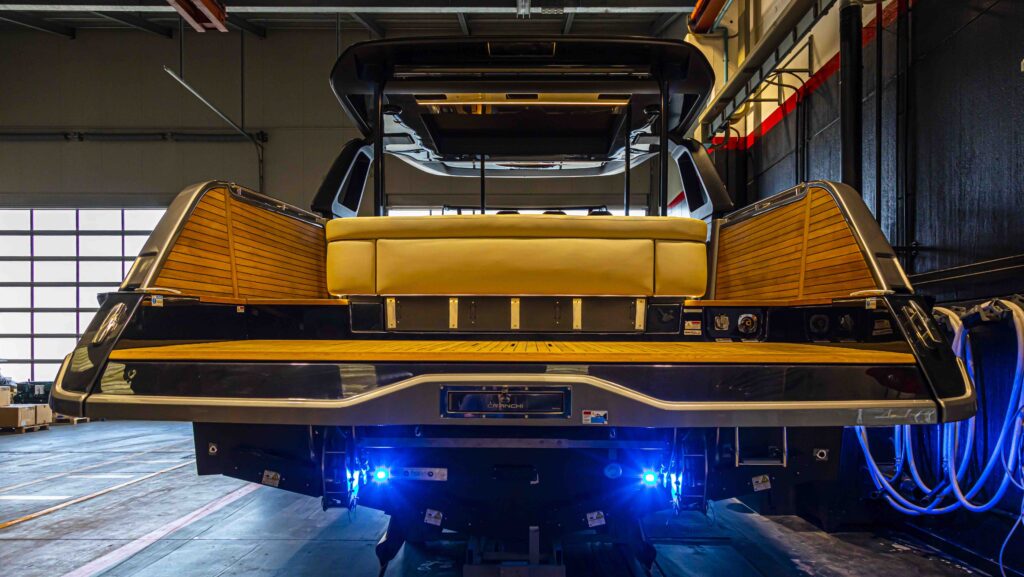
A living industrial inheritance
Lucini says the company philosophy emphasises serious business practices, recognising its responsibility to 250 current employees (previously 400) and their families. This responsibility drives its commitment to reliable supplier payments and maintaining strong partnerships even during economic downturns.
It’s fair to say that significant time and money is invested in technological supremacy throughout the production process.
Cranchi emerges not just as a yacht builder, but as an industrial system refined over generations. Discipline, repetition, cleanliness, and education are treated as strategic assets — not operational details. The factory itself becomes a living inheritance of Aldo Cranchi’s original idea: that boats, like cars, can be built with precision, pride, and humanity — if the system is respected. As grandson Lucini makes clear throughout the tour, quality at Cranchi is not inspected at the end. It is designed into every movement, every person, and every decision.










Leave a Reply