Italian yacht builders warn suppliers of a new competitive era
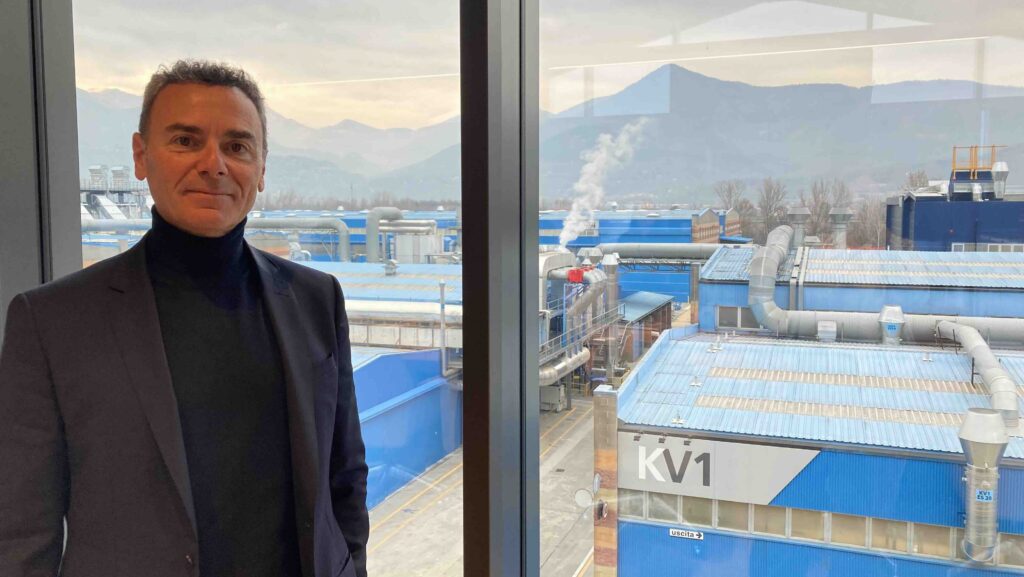 Marco Valle, CEO of Azimut Benetti Group.jpeg
The mood inside Italy’s leading boatyards is shifting. As global demand steadies and new competitors enter the marine sector, long-standing suppliers are being warned: the era of guaranteed business is over.
From mass-market changes to the rising influence of innovation-driven newcomers, Italian yacht builders say the future now hinges on flexibility, global support, and a partnership mentality – not simply selling components.
“The market has changed,” says Marco Valle, CEO of Azimut-Benetti Group. He’s warning suppliers to the renowned Italian builder – and other boat yards – that they need to be wary of what’s to come.
“They have to consider the fact that a yard can find, and are looking for, alternatives. Suppliers cannot take themselves for granted.”
Valle comes across as positive. But, as he says, when the number of boat sales decreases, margins decrease. To survive, yards will have to find alternatives in order to keep market share, and to keep sales.
“Suppliers will either follow this strategy or will suffer more than the yard.”

Traditional marine suppliers face growing competition from other industries
Other industries are in more difficulties than the yachting industry – and it won’t be long before suppliers in those start eyeing boats – and their builders.
“From automotive, design and from furniture, they are already proposing alternatives,” Valle says.
“Suppliers that have been working for 30 years, saying ‘nobody can touch my area because I’m protected’ need to consider it’s not really the case anymore. [Existing] suppliers [need to] try to change their mentality. In a difficult period, new competitors will come inside the industry. They are approaching all our brands.”
Global supplier service networks now a non-negotiable requirement
Wherever they come from, Valle’s looking for reliability. And the gold star: “Can they provide the proper service to all of our clients?”
It all comes down to the international market when a company’s selling 250+ boats worldwide per year.
While he acknowledges that the scale is small compared with other industries, his clients are spread across global hotspots like Portofino, Singapore, and Acapulco, using the same components. The company must ensure that if something fails, it is promptly addressed.
“In the past, we had some small suppliers but they failed because they were not able to provide the proper service.”
Now service centres have been established in key regions worldwide, supported by agreements with local partners. At the same time, suppliers are expected to maintain a presence at major hubs, with the company’s support, to deliver the necessary service and maintenance.
Cranchi adopts an open-door policy for future-focused suppliers
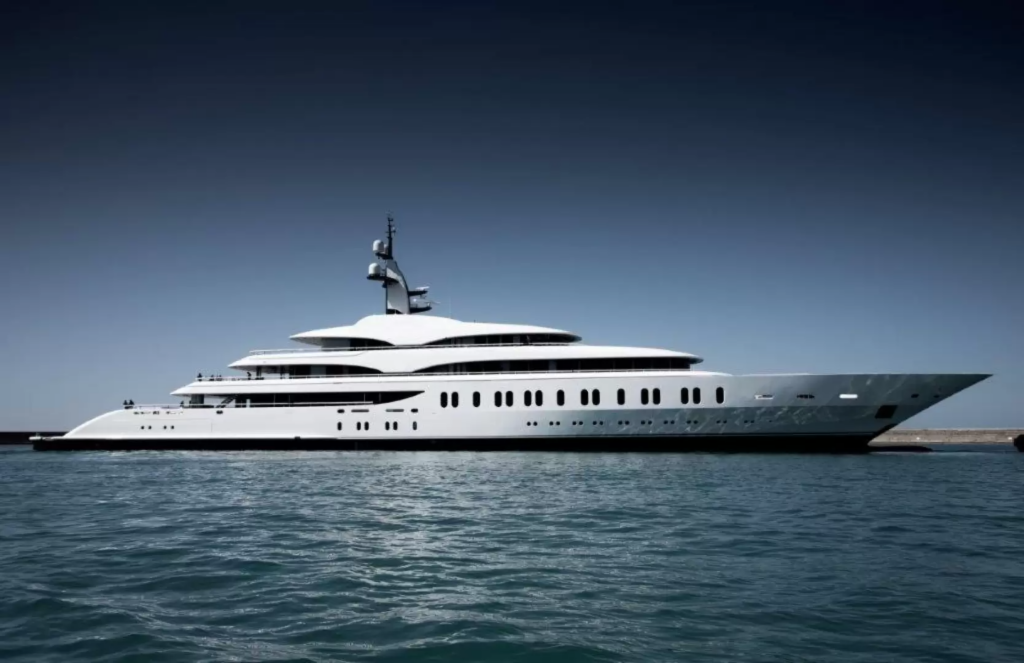
In 2015, Cranchi – nestled in the Italian Alps – decided to reset “everything.” In collaboration with yacht designer Christian Grande, the company reinvented itself to offer high-quality luxury motorboats up to 25 metres.
Now the company’s looking to further develop markets in Japan and Thailand while also looking at Taiwan, South Korea and Vietnam.
Guido Cranchi (CEO) says he’s giving the latter markets a lot of attention “because we have to think about the future. People in Taiwan have a lot of money and they want to explore this world.”
He’s open to new suppliers. “As technology is looking forward, as the world is continuously changing, the doors are completely open.
“If someone approaches us, and they make something that we already have, we never say ‘no’
[to the conversation]. Price is not so important. Most important is quality.”
Again, worldwide service is key. “The boat owner needs a supplier that is ready to ‘fix it’ where he is.” That affects Cranchi’s decision on which supplier to “keep for the future – or not.”
Long-term supplier partnerships prove their strategic value
Cranchi has been in partnership with Volvo Penta for many years.
Filippo Lucini, production manager of plant one, says his grandfather made “a huge trip from Lake Como to Sweden by car to buy his first engine.” On arrival at Volvo, his grandfather was mis-identified as a merchandising supplier and told to go the warehouse. That sorted, the president of Volvo upsold him – from 15 to 20 (and then 25) engines … with a respectable discount.
“This is a partnership,” Lucini says of the enduring relationship. “There are tough periods, good periods, but a good partner is a good partner always. We create this because we are very serious. You have to be serious because you have 250, and in the past 400, families to feed.
“If you don’t want to [be serious], don’t be Cranchi.”
Collaboration between Cantieri di Pisa and Mariotti raises the bar
Cantieri di Pisa and the Mariotti Group recently entered into a collaboration to build large luxury yachts. The idea is to combine Cantieri di Pisa’s expertise in luxury yacht design and quality control with Mariotti’s shipbuilding capabilities. And the expected outcome? Vessels over 70 metres – ready to compete with Dutch and German builders.
Mariotti – which builds cruise liners, naval, and other commercial vessels – will harness its industrial approach and apply it to yacht building while maintaining artisanal quality.
Marco Ghiglione, Mariotti’s CEO, says both companies are quite flexible. But like Cranchi he emphasises they need partners, not just suppliers, to ensure quality and reliability.
He explains a platform is being created to share suppliers between projects. Cantieri di Pisa will act as an arbitrator and quality supervisor, and within that it’ll select the best suppliers for each component to maintain quality.
Boatbuilders rely on trade fairs to identify emerging marine technologies
“We’re not in a position to influence the macro system or suppliers – we can’t say ‘let’s move to electric or hydrogen’ and move the industry. That’s because we’re mostly assembling components,” says Nicola Antonelli, chief marketing officer, Sacs Tecnorib.
“Our approach is choosing the best suppliers with the best materials and policies. New technologies usually come down from the superyacht industry to mid-size or small boats, and we’re ready to follow these technologies immediately.”

Antonelli notes that there are a lot of developments from technical creatives, who can sometimes struggle with translating their achievements into marketing.
This means that Sacs Tecnorib stays really attentive to new proposals – whether that’s through people handing over their card or sending emails, “to whatever”. Listening to everyone is the only way possible to find these gems, he says.
Both the company’s production and R&D teams scout the most important marine fairs.
“This is normal for everyone. We had six or eight people in Metstrade for example. This is our way – listening to [conversations about] things coming from scratch, new opportunities, and being open to these kinds of people.”
Younger owners drive demand for sustainable boat materials
Baglietto, an Italian shipyard with 170 years of experience, specialises in custom luxury yachts. It’s also innovating – investing heavily into hydrogen (it’s developed a hydrogen-powered system with Siemens Energy that extracts hydrogen from seawater).
It markets itself on its high customisation capabilities and maintains close relationships with owners throughout the yacht’s lifecycle. Past clients include Pope Leo XIII, the Prince of Monaco, and various royalty.
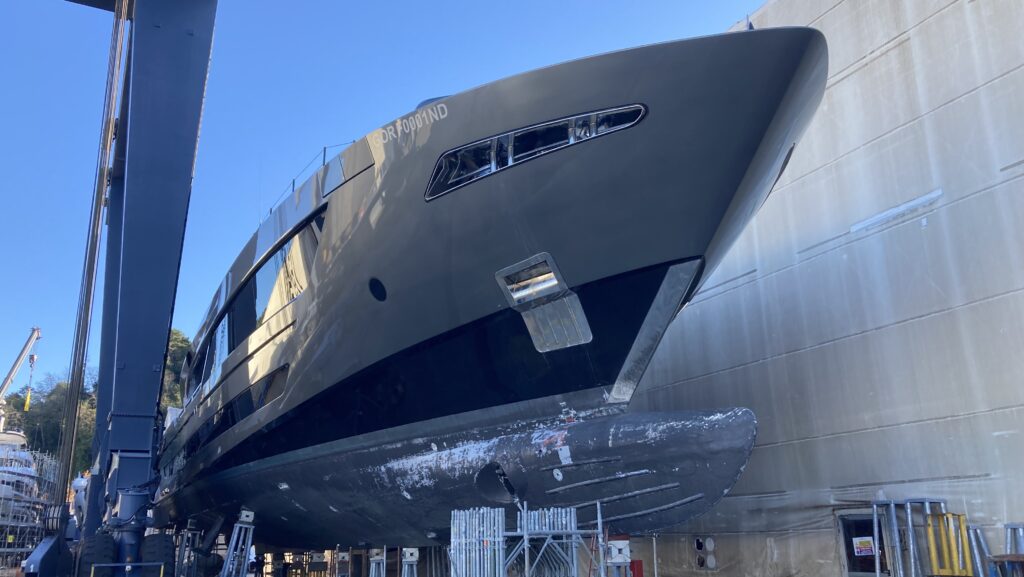
Right now, the company’s looking for materials to go onboard which won’t impact the environment, says Egidio Bisson, executive director.
“For example, we are trying to find a different kind of wood for the floor, the exterior, instead of teak. But this depends on the owner. Owners that are below 50 years old ask to have special attention on the materials, for the environment.”
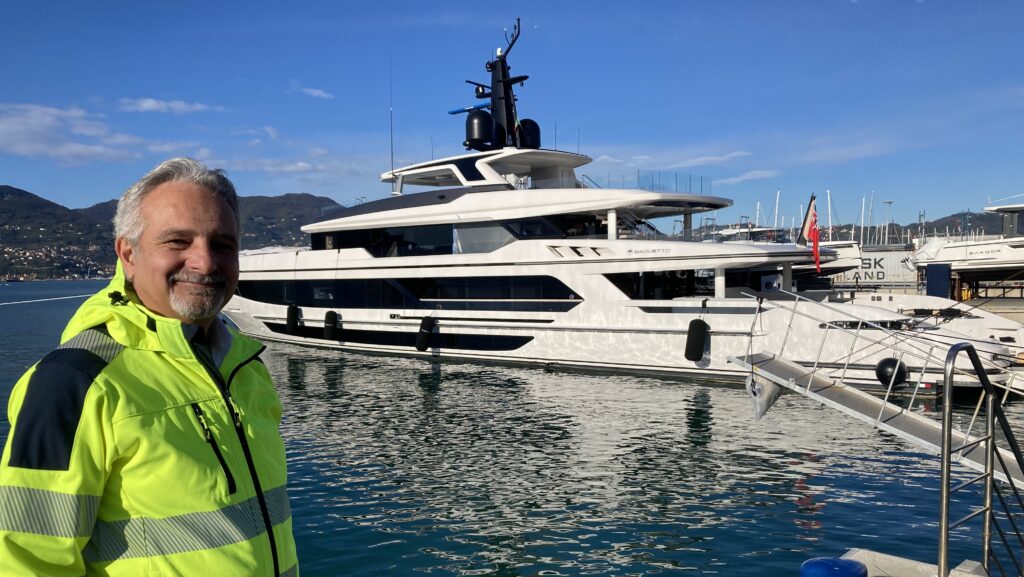
Networking fuels innovation and product discovery
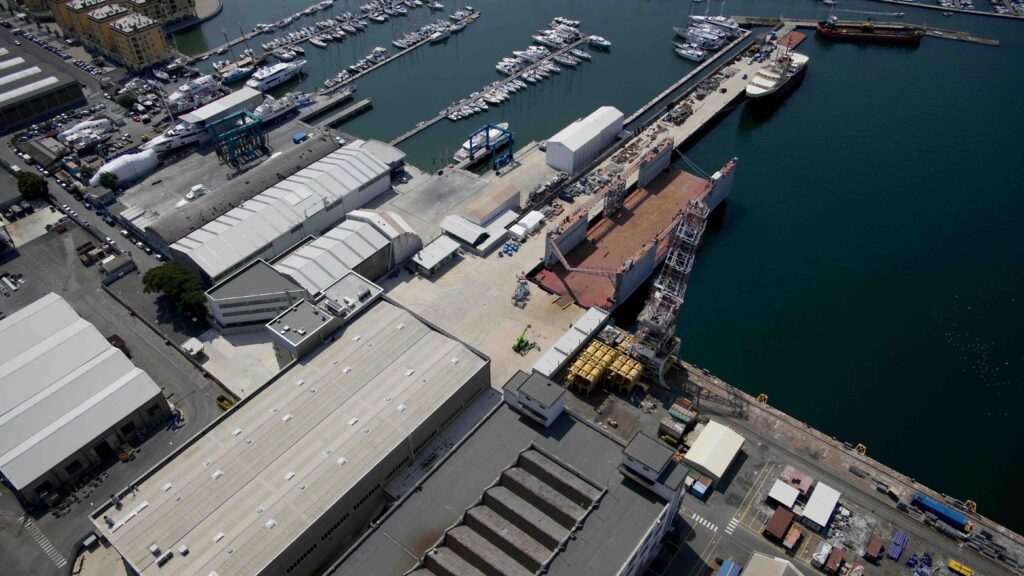
The shipyard has undergone significant growth over the past couple of years – it expanded by acquiring a large area in Civitavecchia near Rome, which allows it to control the entire yacht construction process in-house. Ten yachts can now be built simultaneously with three to four yachts being delivered a year.
Despite this expansion, Tankoa aims to remain a ‘boutique shipyard’ focused on quality and customer relationships.
It takes a custom approach to yacht building, working with different designers to satisfy client preferences, and is committed to innovation and sustainability.
Most recently it’s been testing an organic antifoul – developed by a company in Genoa – which it is then looking to roll out onto other vessels.
“All of us are very focused on innovation,” says Picco, “for two reasons. One is from a technical point of view – innovation can help in building, in saving time, in saving cost, and in keeping quality very high. The second reason is that owners ask for innovation.”
She cites looking for environmentally friendly outcomes and says that learning about innovations depends on attending seminars, meeting people – networking. “In this way you
have ideas.”
Whether it’s innovation, service reach, sustainability, or sheer reliability, Italy’s yacht builders are aligning around the same message: the future belongs to suppliers who act like partners and who can support owners anywhere in the world. As new competitors enter the market and expectations reset, only those willing to adapt will find a place on tomorrow’s boats.