MAIB highlights systemic safety failures in fatal pilot transfer incident
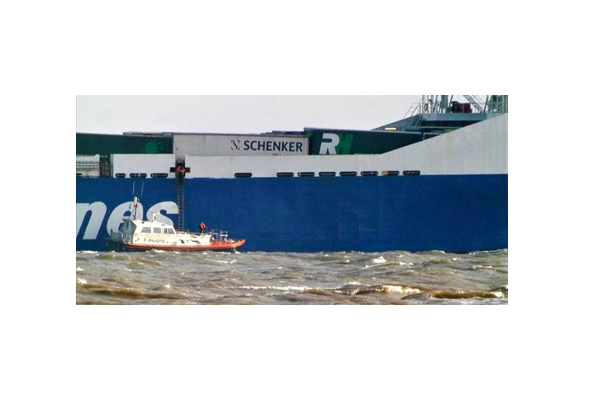 Finnhawk and Humber Saturn. Image courtesy of Michael Ludlow
“Pilot transfers are challenging and potentially hazardous,” says MAIB’s chief inspector of marine accidents, Andrew Moll.
His comment comes as the Marine Accident Investigation Branch’s latest report is released – this time into a pilot’s fall from a ladder while attempting to board Finnhawk in the Humber Estuary on 8 January 2023. Tragically the incident ended in the “respected and experienced marine pilot” losing his life.
“While superficially this was a simple accident, our investigation identified safety concerns across the training, equipment, medical standards and emergency response, and this report addresses all of these,” says Moll.
Defective recovery equipment and delayed rescue
The Humber pilot fell from the pilot ladder after (probably) suffering a cardiac event while boarding the roll-on/roll-off cargo vessel Finnhawk. He hit the deck of Humber Saturn (pilot’s vessel) before falling into the water and losing consciousness. The pilot was quickly recovered onto the smaller boat’s semi-submerged man overboard recovery platform.
But, that could not be raised.
The pilot remained semi-immersed in cold water for over 40 minutes until he could be transferred to a lifeboat. He was then evacuated to hospital by a coastguard helicopter where he was later pronounced deceased.
The fact that the pilot vessel’s man overboard recovery platform had defects has been raised as key safety issue – leaving the pilot semi-immersed for over 40 minutes until evacuation, reduced his chance of survival.
Medical fitness and stop work procedures questioned
But other factors played into the event.
MAIB says that despite several interventions and concerns about his fitness being raised by his colleagues, the port authority’s ‘stop work’ procedure was unsuccessful in preventing the pilot from working on the day of the accident. Plus, the seafarer’s medical certificate issued six months before the accident should not have declared him fully fit for duty … given that he suffered from several chronic health conditions that might have affected his fitness to perform his role.
MAIB adds that the port authority had not risk assessed the physical capabilities required of its pilots to establish an occupational standard for the role.
MAIB recommendations for ports and regulators
Recommendations have been made to the Maritime and Coastguard Agency to issue guidance that non-SOLAS vessels carry an alternative means of recovery of an unconscious person.
Associated British Ports has been recommended to review its risk assessment and, where necessary, update its pilots’ personal protective equipment to improve their survivability in cold water and align the safety training given to pilots with industry guidance.
Port industry bodies have been recommended to issue guidance on the setting of occupational standards for marine pilots and the provision of suitable personal protective equipment to improve pilot survivability in cold water.
“While the MAIB has been encouraged by the actions of the port and industry bodies to address these safety issues, I strongly urge all harbour authorities with a pilotage service to learn the lessons of this accident and take action,” concludes Moll.