Pioneer Yachts’ first solar-electric PY60 catamaran hits the water
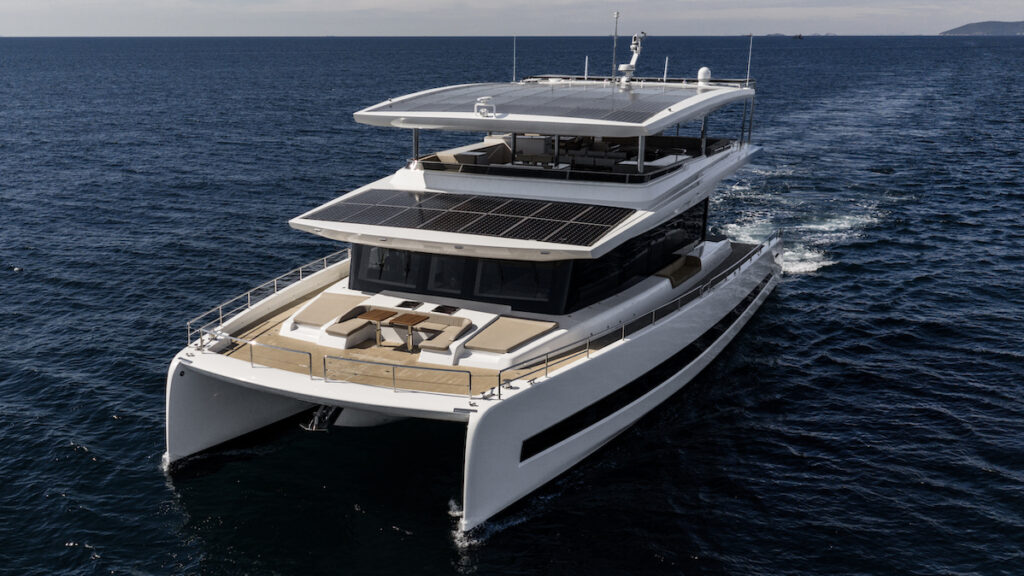
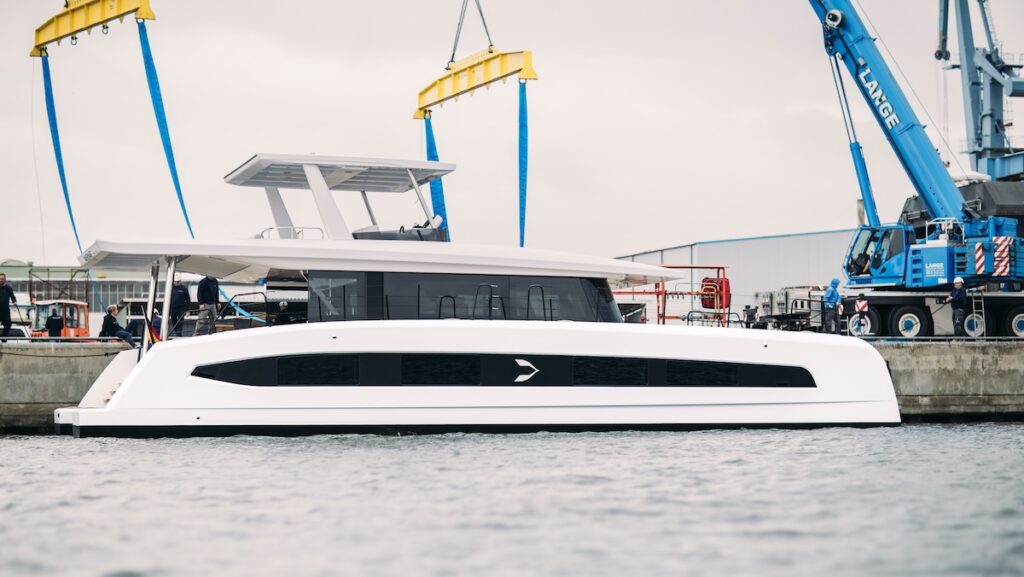 The PY60 solar electric catamaran.
Stralsund-based boatbuilder Pioneer Yachts has launched the first unit of its PY60 solar-electric catamaran, marking a major production milestone for the brand just two years after its founding. Named Pioneer One, the 18-metre vessel will now undergo extensive sea trials to validate its performance under real operating conditions ahead of its world premiere at the Cannes Yachting Festival 2026 (8 to 13 September).
Engineered and built in Germany, the PY60 catamaran platform integrates advanced technical systems with a focus on reliability and real-world cruising efficiency.
Pioneer One is set to serve as both the brand’s flagship and an operational development platform. The shipyard’s founder, engineer and entrepreneur Mike Frank, plans to operate the yacht personally to gather empirical cruising data, which will be used to refine and optimise future production models.
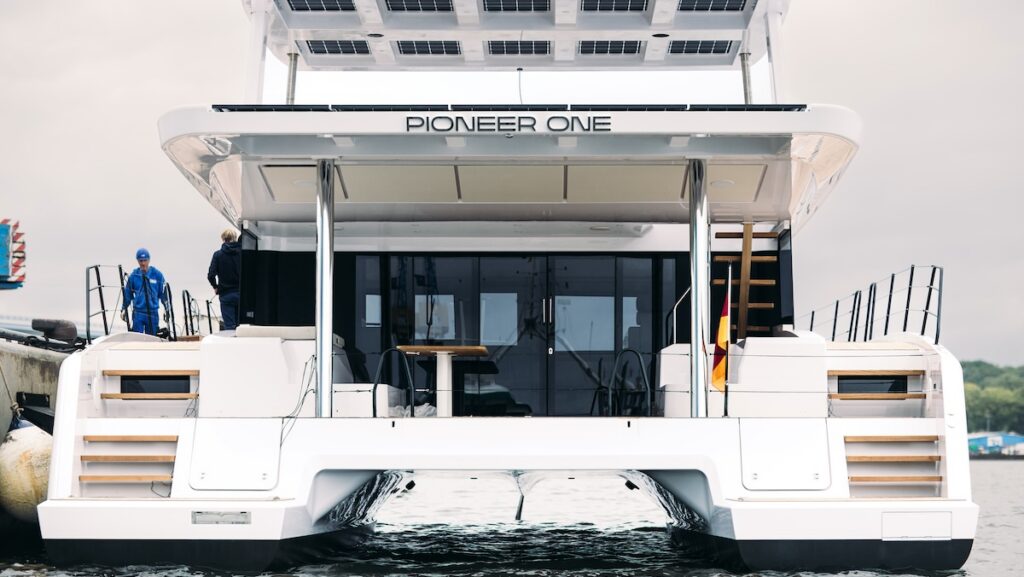
Designed around solar-electric propulsion
Commenting on the launch, Frank adds: “Seeing Pioneer One in the water is one of those moments you don’t forget. This isn’t another electric catamaran. It’s a completely new kind of yacht for this segment, built for real operation. I’m sure the sea trials ahead are where that gets proven.”
The PY60 was developed with a firm objective of creating a solar-electric yacht that works reliably in real-world conditions. Rather than adapting a conventional powerboat platform to electric propulsion, the yacht was conceived from the outset around solar-electric energy generation, storage and propulsion.
Pioneer Yachts was established after Frank recognised a gap in the market for a genuinely capable solar-electric yacht designed for continuous use at sea. Drawing on the expertise of a team whose combined yachtbuilding experience exceeds 275 years, the company set out to create a practical cruising platform built around efficiency, autonomy and operational simplicity.
The PY60 measures 60ft in length and brings together German engineering with contemporary Italian design. Its exterior is from Cossutti & Ganz, an Italian studio behind Bavaria Yachts’ sailing range and championship-winning racing yachts. Interiors are penned by Micheletti + Partners, which has worked with Baltic Yachts and Nautor’s Swan superyachts.
Its solar-electric propulsion architecture has been developed to maximise autonomy and reduce reliance on shore-based infrastructure, enabling extended periods of independent cruising. The boat integrates solar panels, electric propulsion and diesel generators into an energy-management system designed to support reliable, long-term operation at sea. The PY60 has a claimed top speed of 11 knots and cruises at 7.5 knots.
An integrated energy ecosystem
At the heart of Pioneer One is Pioneer Yachts’ Integrated Energy Architecture. Through this platform, propulsion, solar generation and energy storage operate as a single coordinated system. The yacht’s expansive solar roof generates the energy required for typical cruising operations, while onboard battery banks store energy for silent navigation and extended autonomy.
Efficiency informs every aspect of the yacht’s architecture. Hull geometry, weight distribution and superstructure proportions were specifically developed to support solar-electric propulsion, reducing energy consumption while maintaining the onboard comfort expected of a modern cruising yacht.
Built for owner operation
The PY60 has also been designed to meet the standards expected for private ownership and operation. Electric propulsion, simplified onboard systems and intuitive manoeuvring controls allow owners to handle the yacht without a professional crew.
The PY60 operates on a 48-volt electrical backbone that allows major onboard systems to function efficiently without the complexity of high-voltage architectures. This low-voltage system has been designed to maximise safety, reliability and ease of maintenance, supporting long-term operation and ownership.