Survey reveals severe labour concerns across Australia’s marine industry
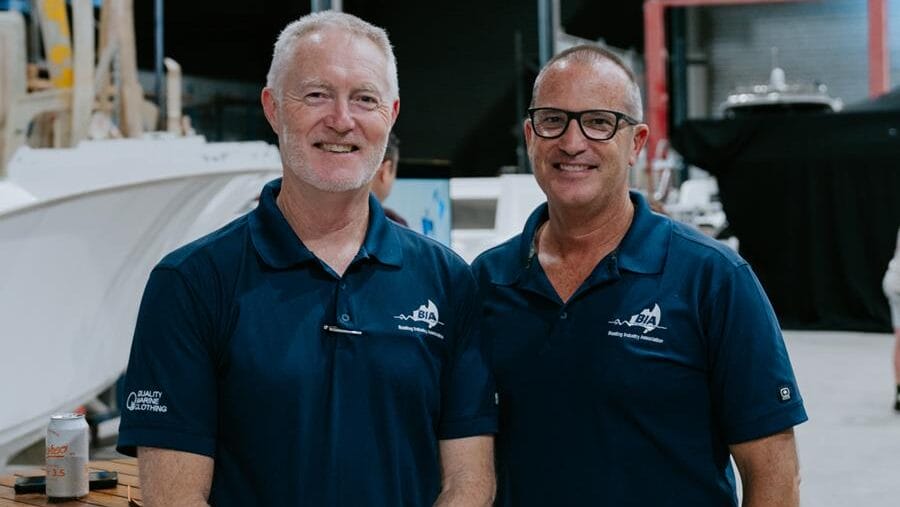
 Shipwrights and boatbuilders are the most sought-after roles. Image courtesy of BIA
More than 90 per cent of Australia’s marine industry is concerned about a shortage of skilled labour, according to the latest data released by the Boating Industry Association (BIA).
The 2026 BIA National Jobs & Skills Survey highlights workforce challenges across Australia’s recreational marine industry, with respondents reporting that labour shortages are affecting both day-to-day operations and financial performance.
The findings come from an industry that generates more than A$10.2bn (US$7.28bn) in annual turnover and employs around 35,000 people across more than 2,000 businesses. Those businesses include designers, manufacturers, retailers, marinas and a wide range of trades.
Australia’s marine workforce data
BIA is the leading representative body for the recreational and light commercial marine sector in Australia. BIA CEO Andrew Fielding says the survey points to a need for further investment in workforce development, education and vocational training.
“The 2026 National Jobs & Skills Survey confirms workforce shortages are no longer just an administrative headache – they are a direct threat to industry prosperity,” Fielding says. “When nine out of 10 businesses tell us they are worried about skilled labour and apprentice pipelines, it is a clear call to action.
“Crucially, these shortages are hitting the hip pocket of our members, 75 per cent of whom operate small family businesses. Over half of our industry is suffering direct revenue losses, and nearly half are losing valued customers simply because they cannot find the hands to do the work.”

Fielding notes that boating remains a significant recreational activity in Australia, with almost one in five households owning a watercraft and more than five million people taking to the water each year.
“If our businesses cannot build and service vessels, it directly impacts the lifestyle of millions of everyday Australians.”
The survey found that:
- 90.1 per cent of businesses are concerned about the availability of skilled labour
- 88.4 per cent are concerned about apprentice shortages
- 52.1 per cent report direct revenue losses linked to workforce shortages
- 42.1 per cent report project delays and delivery backlogs
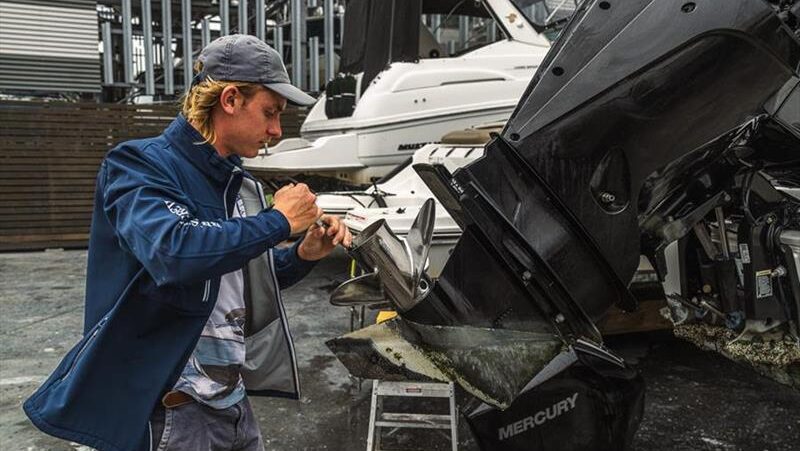
Demand for technical trades remains concentrated in several maritime specialisations. Among businesses looking to recruit apprentices, shipwrights and boatbuilders are the most sought-after roles at 38.8 per cent, followed by marine mechanics at 21.5 per cent and marine trimmers at 12.4 per cent.
These trades play a central role in maintaining Australia’s boating fleet. According to the BIA, family runabouts up to 6m in length, including aluminium tinnies, account for more than 90 per cent of registered vessels nationwide.
The survey also points to demand beyond traditional trades. Nearly half of respondents, 48.2 per cent, are seeking skilled operational staff, while 25.9 per cent are recruiting sales and marketing personnel.
With 71.9 per cent of marine businesses reporting active recruitment during the past year, the survey also assessed the performance of different hiring channels.
Digital job boards and recruitment marketplace Seek recorded a 70.3 per cent usage rate among respondents and a 35.6 per cent employer success rate. Marine Jobs, the BIA-owned recruitment platform, was used by 35.9 per cent of businesses and achieved a 34.8 per cent success rate.

Marine recruitment methods play crucial role
The findings suggest that local and relationship-based recruitment remains effective. Word-of-mouth hiring was used by 67.2 per cent of businesses and achieved a 37.2 per cent success rate. School and college engagement programmes were used by 25.0 per cent of businesses and recorded a 37.5 per cent success rate.
“The data proves that a multi-pronged, targeted approach works best,” Fielding says. “While mass-market boards have a role, specialised platforms like Marine Jobs, blended with grassroots school engagement and word-of-mouth, provide the most financially viable pathways to secure the next generation of marine professionals.
“The BIA is a not-for-profit body that reinvests all surpluses back into the growth, safety, and promotion of the boating lifestyle. We remain fully committed to working alongside State and Federal governments, training providers, and our membership base to bridge this gap, protect small family businesses, and promote world-class marine career paths.”