
Tech, trends and 2026: What are business owners anticipating?
The global marine industry is entering 2026 with a blend of cautious optimism and hard-edged realism. Across the sector, leaders paint a picture of a market slowly recovering but still wrestling with tariffs, cash pressures and uneven consumer demand.
Electric propulsion is gaining momentum, the rental and experience economy is strong in marine but fighting for visibility elsewhere, and several brands are doubling down on new technologies to engage customers who no longer want to own traditional boats at all.
The message is consistent: growth is possible, but only for companies willing to diversify, educate new audiences and rethink how boating fits into a changing world.
MIN sat down with nine industry experts to find out what’s shaping their particular specialities, and what they see coming in 2026.
Andrew Scott, chief operating officer, Quantum Sails (sailmaker)
Tariffs in the United States has been a big challenge, but we primarily do most of our production overseas in Sri Lanka and Malaysia and so all the tariffs from those countries haven’t changed into Europe. We’ve always been very flexible there. We have a good production facility in Spain (Palma) so they’ve been able to continue to operate normally.
Opportunities are in continuing to build racing and cruising sales for the general market. We’re focused on a high-quality, high-performance type sail and a high-performance type sailor and that doesn’t necessarily mean he has to be racing a TP52. They could be wanting to do something amazing with his cruising. Our focus is delivering a high-level service and not just delivering a white triangle to somebody.
We’re expanding into Europe more than we ever have, so we have a clear focus and push to expand our European operations and where we are all based around Europe.
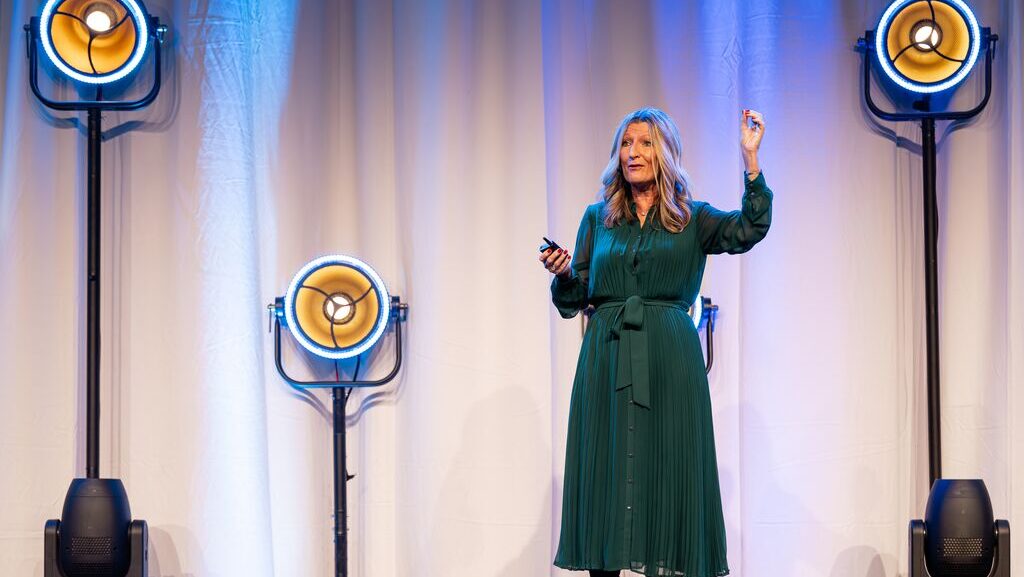
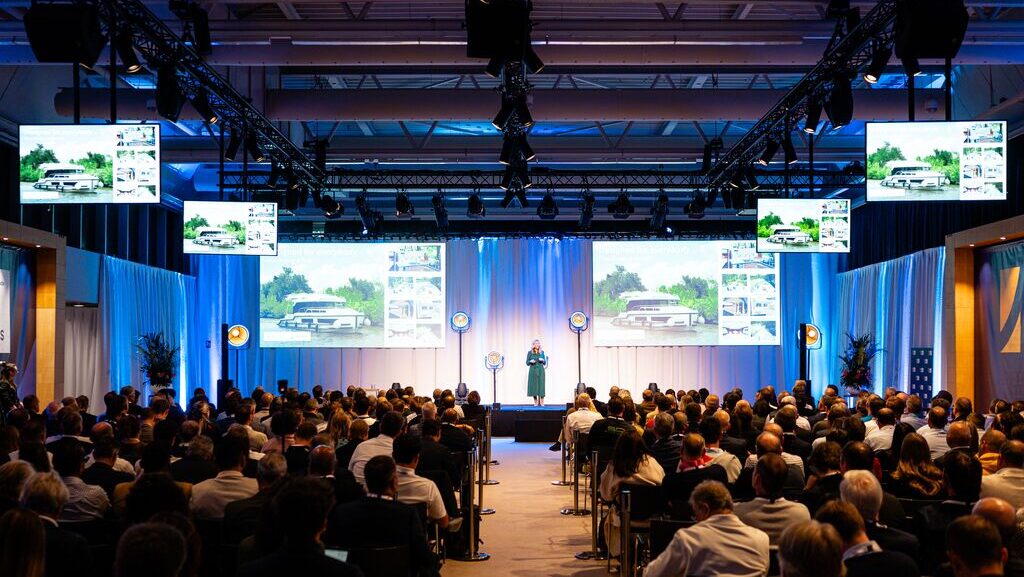
Cheryl Brown, managing director, Le Boat (boat rental)
We’ve got all of the issues with the economy right now. Tariffs are hurting our business. Boatbuilders are potentially sitting on too much stock. We can’t get enough cash into our business. It’s really challenging.
The reality is our industry is in decline. If you look at most of the statistics people are buying fewer licenses. There are fewer boats on the water. Take France as an example, there are 14 per cent less boats on the inland waterways versus 2019.
It is a constant challenge to grow. So we are offering a different way to holiday. I’m really working hard to get that message across.
We’re constantly looking for new distribution, making sure that the boat is an option for everybody. Our biggest challenge is, you’ll wake up one day and think: ‘where are we going to go on holidays next year?’ And if you’re not a boater, you don’t think ‘I’m going to hire a boat’, because you’ve got no idea, without experience, that that is available to you. So it’s a real challenge to our business to get that awareness across.
We’re constantly looking for new audiences, whether it’s through paid social/video. And we are looking for the future owners of our boats. It’s all about fighting for growth. And of course, we have a limited budget that has to stretch across the world. So we need to make sure that we are spending our money wisely.
Daniel Henderson, managing director, Sea Sure (marine accessories)
I think 2026 is going to be very, very similar to 2025, where leisure marine is going to remain pretty tough. Commercial marine is still quite strong. With everything that’s going on in the world, the commercial side (and military) and anyone that supplies them will probably have a pretty good year.
We remain okay because, although the leisure side is down pretty significantly, our commercial and military supply is good. If you’re a company that purely supplies the leisure side, I think it’s going to be quite tough.
Daniel Henderson took over as managing director of Sea Sure in 2025.
Danielle Wayne, entrepreneur, Topargee (water tank gauges)
In Australia we feel that the marine industry is growing very much into the superyacht space as well as just growing generally into the leisure space. We’re obviously looking to educate about our brand. Most people don’t actually realise that there is a product like ours available. We specialise in water tank gauges that tell you – to the litre – how much water is left in your tank.
Like everywhere in the world at the moment, there’s a lot of uncertainty and there’s a lot of financial concerns over tariffs and logistics. But we’ve got to look at solutions, not problems.
For us it’s really about networking and connecting, brand awareness and offering a solution.
Danny Tao, co-founder and CEO, ePropulsion (electric propulsion)
We are quite positive that there should be some recovery. Both for the European and US market, we see signs that it will go up again. We are quite well prepared for whatever needs to come, but I think as long as we keep the momentum, for the electric propulsion sector, we are still going forward.
The major challenge is still our ultimate challenge – always trying to convince more people to go electric. We are not trying to compete with other players in the market, but as a market leader, what we should always do is try to have more people make the turn to electric.

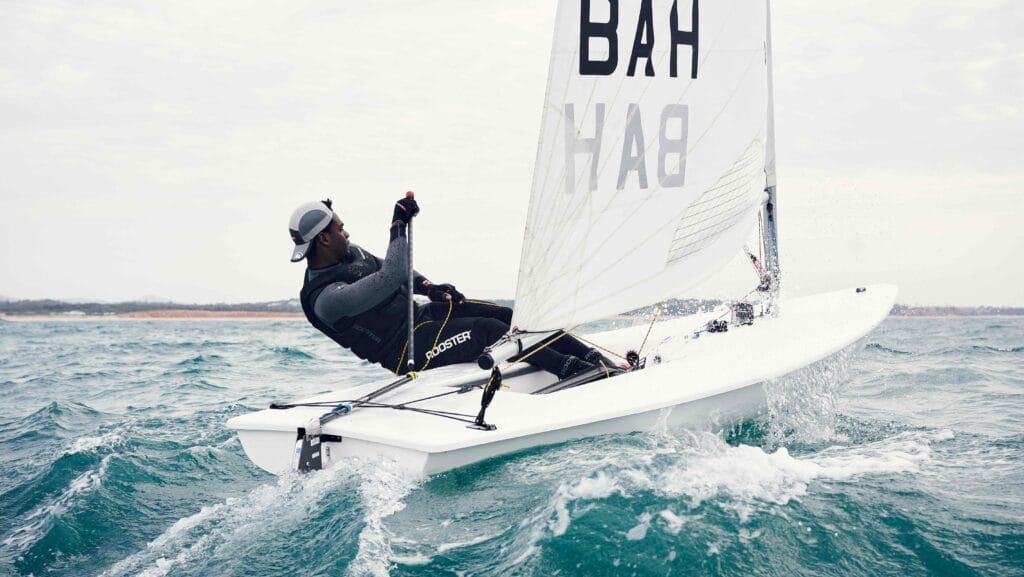
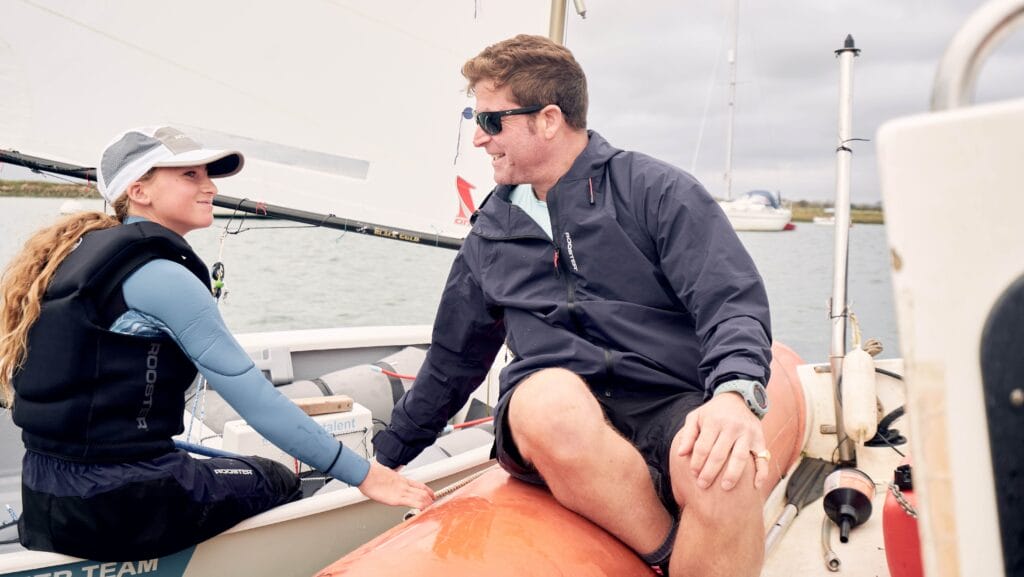
Luke Morrison, managing director, Rooster (sailing equipment and clothing)
At the moment it’s starting to stabilise reasonably well. It’s been volatile over the last few years where, if you look at the B2B network, there’s been a lot of overstocking.
From our perspective, we’re seeing customers wanting to reinvest in not just traditional products but new innovative products we’ve put in.
From a European perspective, the economies in the EU are still difficult. Nevertheless, our core dealers are willing to invest and be a part of that next year, so that’s positive. There is an underlying trend that dealers are continuing to struggle against the expansion of e-commerce sales.
Being a brand, we also sell directly in the UK and worldwide. Although we do that in the fairest way (we sell at a higher price versus what our B2B customers do), that inevitably is taking some market share.
For dealers to have shops where people walk in, it’s not like it was five, six, seven years ago. But I think over the next one to two, perhaps even three, years there’s a positive income there.
Markus Kastner, export business development manager 2-wheel & marine, Liqui Moly (oils and additives specialists)
2025 in terms of numbers was very good for us. Within Liqui Moly the marine range is still a small part of the overall turnover, but it’s one of the fastest growing segments in percentage. It was a little tricky because our most important market is the US. We are affected by the tariffs but on the other hand, several other markets developed very well. We managed to find new distribution partners which is actually also the biggest challenge – to find the perfect distribution partner for every market.
Several countries are performing very well to substitute what we’ve missed in the US.
The development of last year [means] that we are not that dependent anymore on one or
two single markets. Diversifying is [still] one big challenge, finding the right distribution partners, being visible, achievable, available in all the relevant markets.
The US market is an important market for us, it’s a very promising market with a lot of potential. It is the most challenging to keep our position, and to keep the growth rate.
Overall it seems a little like people are keeping their hands off bigger investments [boats], so you see strong markets like Scandinavia being stable, not really growing. What we expect is not these big growth rates, but growing ourselves by getting into more markets, finding more distribution partners and so keeping the growth rate.
Markus Rantanen, marine division director, Smartdeck (heated decking)
It’s very problematic because the younger generation (at least back at home in Finland, and the same applies to Sweden and Norway) don’t want to own anything. They don’t want to buy anything. They are concerned about the environment.
And we keep building boats with more engines, bigger engines. It’s really ridiculous. Think about the situation, you drive your Tesla or electric car to the dock and then you start the engines of your boat, thousands of horsepower, with diesel or gasoline engines.
The younger generation think differently and that will have an effect on the kind of boats. It could take another ten years, but ten years is a short time. We have to be aware of how the younger generation is, what they are, how they see boating.
But we’ve had a lot of requests about our heated decking. This is the first show that we have introduced it into the market. What’s surprising is that the requests are also from the Mediterranean region.
Ryan Luter, director of business development, Supersede (plywood replacement)
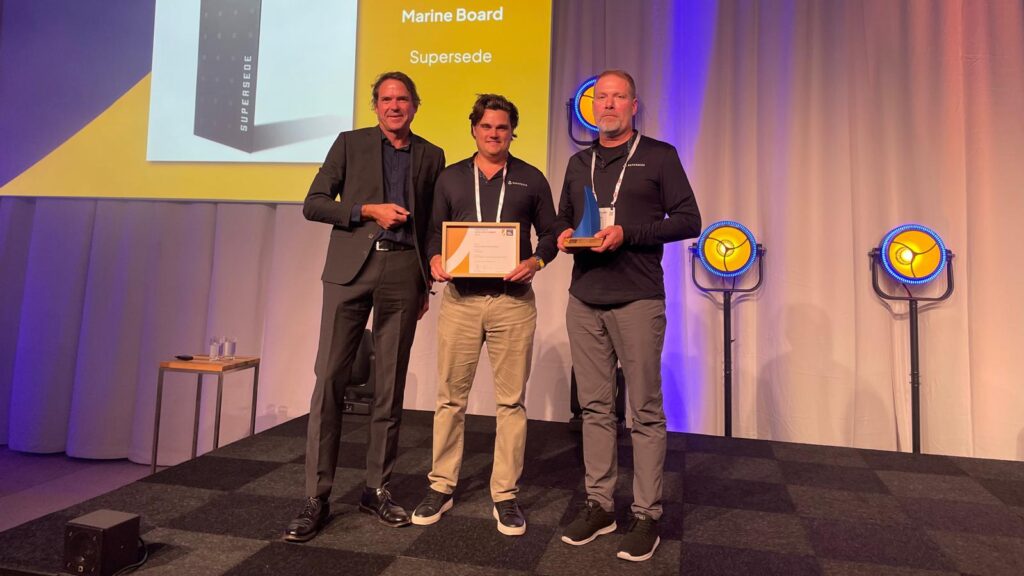
Everything that we are hearing and learning from this environment is that it’s good. It’s still in growth mode. The tariffs and such things are a little bit up in the air.
I see people starting to spend a little bit more money recreationally.
There are some opportunities in work boats too, but it seems to me that the market is slowly recovering. Personally, I’m not too concerned about it because I can see the RV industry rebounding and usually that’s the first indicator that everything is okay. Everything comes behind that.
Despite the pressures and contradictions running through today’s market, the conversations point to a sector that’s far from standing still.
Innovation is flourishing across propulsion, materials, hardware and user experience, and businesses are finding new ways to reach audiences who would never have considered boating before.
Challenges remain, but so does momentum – and as more companies diversify, collaborate and rethink how they serve tomorrow’s boater, the space for growth is wider than the headlines suggest.










Leave a Reply