Dayboat innovation has “enormous potential”, says SAY Carbon Yachts
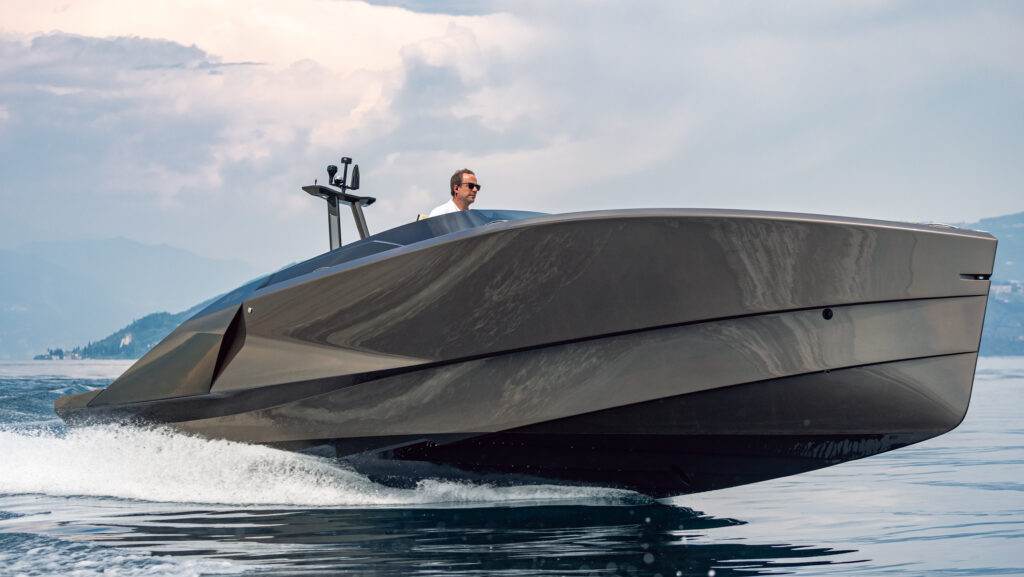
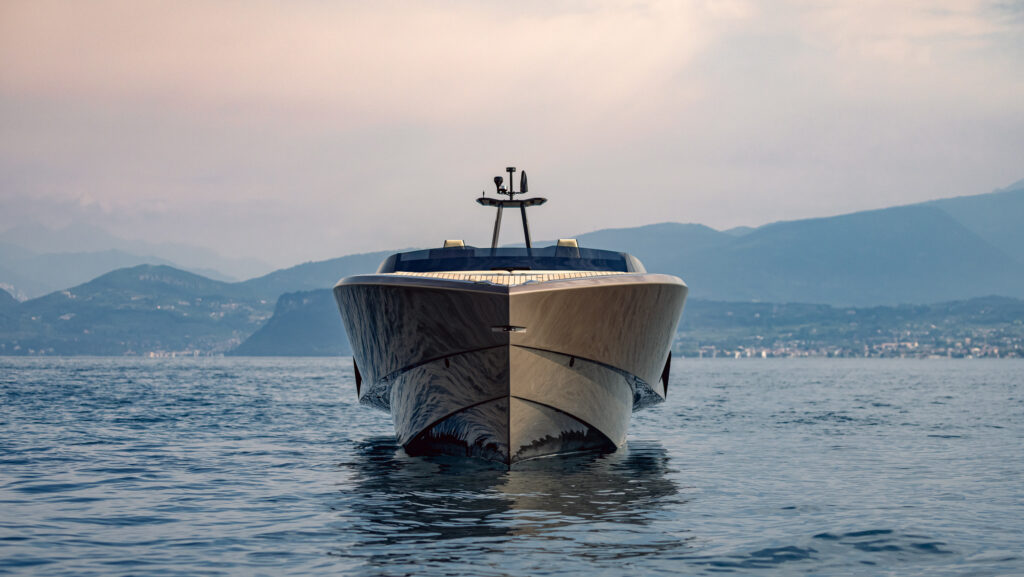 SAY 32 from SAY Carbon Yachts
Whether its practical tenders, occasional-use craft or lifestyle accessories, the dayboat narrative is shifting. Shipyards, designers and market observers are increasingly pointing to changing owner behaviour signifying great potential.
One of those supporting this theory is SAY Carbon Yachts’ sales director, Constant Colders. He believes that the dayboat segment is likely to keep growing year after year.
Why the dayboat category is attracting attention
“From a shipyard perspective, it’s an incredibly exciting category because there is still enormous potential for innovation across design, handling, materials and onboard technology,” Colders states.
“Across the industry, we’re seeing some shipyards rethink what a modern dayboat should be, particularly within the premium performance segment. Traditionally, dayboats were often viewed as relatively simple leisure boats or tenders, but today they are becoming far more sophisticated in both design and capability.”
Colders says SAY continues to see strong momentum. This is because smaller, highly agile yachts offer a unique sense of freedom and exploration. Plus, the German headquartered company’s carbon fleet is firmly positioned in the luxury segment. As he notes, “historically, the luxury sector has shown strong resilience.
“Of course, geopolitical and economic uncertainty will always influence consumer confidence to some degree, but we remain very optimistic about the future of the dayboat category, particularly within the premium market where innovation, design and exclusivity continue to drive demand.”
Changing buyer behaviour reshapes boating priorities
Recently Australia’s Salt Yachts described a behavioural shift away from traditional cruising priorities with a trend towards Mediterranean-style day boats gaining in popularity in key yachting grounds. Craig Lindsay, founder/designer, says: “There is a definite transition from overnight boating” toward “day boating” centred on social use, speed between anchorages and easier entertaining. He links this to “a new wave of younger owners looking for a different style of vessel.”
Marc Forné, sales manager at Maxim Yachts, argues that charter expectations are also shifting toward practicality and flexibility. Forné says the dayboat market is clearly gaining momentum. He frames this as a “transformation rather than simply a recovery” in entry-level and dayboat segments.
Is growth manufacturer optimism or hard data?
But the question is whether this growth reflects product repositioning and manufacturer optimism rather than hard data?
The US’ National Marine Manufacturers Association (NMMA) reports total new US powerboat retail sales were down an estimated 8–10 per cent in 2025, but activity remained concentrated in “smaller boats that can be trailered to local waterways.” This accounted for more than 90 per cent of retail unit activity.
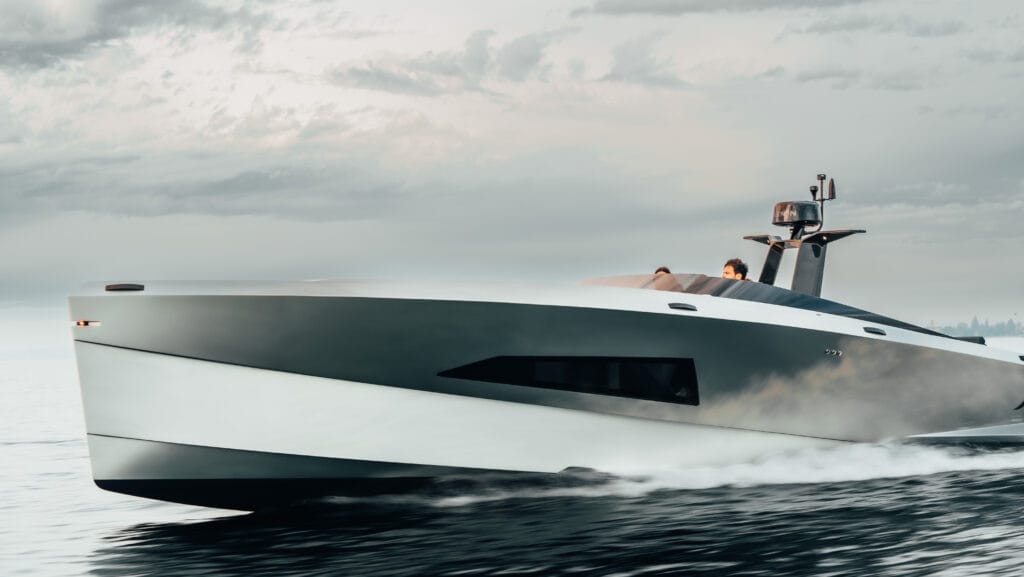
SAY’s confidence (via Mordor Intelligence research) indicates that within the global yacht market, yachts in the 20–40-metre category made up about 44 per cent of the ‘luxury yacht’ market in 2024, with motor yachts dominating in this space (holding circa 67 per cent of the luxury yacht market sales). SAY’s portfolio currently includes 52 and 42-foot models, with a new 32-foot model launching at the Venice Boat Show (pictured above). They’re all ultra-light, high-performance luxury yachts built entirely from carbon fibre.
“The powerboat market is slower but with some noticeable trends depending on exactly what sort of powerboat,” said Clarke and Carter, yacht brokerage, earlier in 2026.
“Dayboats, as with 2024, are having a tough time . . . . new and used boats in this category are both suffering so . . . for 2026, prices may fall further unless something changes within the demographic that usually buys this sort of boat.” But, “similarly to 2024, the bigger the motorboat, the better the market. Sports cruisers & flybridge motor yachts are less affected by cost-of-living pressures and they are still selling in relatively good time and for good prices although buyers know they have the negotiating power at the moment.”
SAY Carbon Yachts gains momentum
Colders is clear that there is a new, younger generation of tech-savvy, rich owners stepping forward and says that over the past year the brand has experienced significant momentum. It’s expanded its model range, established new partnerships and dealer relationships, and entered new markets.

Colders took on his role as sales director in January. He’s been tasked with building the commercial ecosystem around SAY’s product and continuing to elevate the brand internationally (while maintaining exclusivity).
Luxury boat shows are a prime tactic. The company’s invested heavily in marketing and sales functions over the past few years, increasing presence at shows including Palma, Cannes, Genoa and Monaco.
“These shows provided an important opportunity for us to introduce the SAY brand to a wider audience, and the response from both dealers and prospective owners has been extremely encouraging,” details Colders.
“In many ways, it feels less like a recovery and more like a rebirth, an opportunity to reintroduce SAY to the market with renewed energy, ambition and a very clear vision for the future.”
SAY GmbH filed for insolvency in January 2024. That was due to a slower than expected growth in sales following its investment to expand SAY boat models. The firm relaunched in July 2024 after securing an investment from Danish entrepreneur Martin Pedersen. In early 2025, SAY revealed details of its plans – looking for ambitious global growth. Part of the vision is about elevating the joys of dayboat ownership.

Dayboat owners are about the right – rather than biggest – yacht
One of the differences with dayboat owners is less about having the biggest yacht and more about having the right yacht for a certain lifestyle, explains Colders.
“Ultimately, modern dayboat owners are looking for versatility and freedom. They want a yacht that supports a more flexible lifestyle.” That flexibility might look like an afternoon on the water, or a weekend trip or simply bringing guests onboard.
“Owners now expect much more from these yachts. They want the performance and excitement of a sports boat combined with the comfort, technology and social spaces you would normally associate with larger yachts.”
Another benefit of a dayboat is that they allow owners to reach private islands, secluded beaches and other tucked away places that larger vessels cannot always reach. He adds SAY is seeing growing demand for flexible layouts, integrated entertainment systems, premium materials and smart onboard technology that enhances the overall ownership experience.

Easy-to-operate and sustainability key drivers in dayboat sales
Ease of use is also increasingly important for buyers looking for practical, easy to operate craft.
Colders, who’s worked across global dealer development, international market expansion, customer experience and commercial strategy, says the conversation around sustainability in yachting has evolved significantly over the last few years.
“Initially, sustainability may have been viewed more as a marketing discussion, but today our clients are genuinely interested in efficiency, fuel consumption and environmental impact,” he says and adds that there’s a generational shift taking place.
“Younger buyers in particular [are] more conscious of environmental issues and [are] actively looking for brands that align with their values. Although sustainability alone may not be the reason someone purchases a yacht, it is becoming an important part of the decision.
“Carbon fibre construction gives us a real advantage. By significantly reducing weight, we can achieve exceptional performance with lower fuel consumption compared to more traditional builds. Clients immediately understand the practical benefits of that.
“Lightweight carbon construction … allows us to combine speed, handling and efficiency in a very unique way.”

Note: This article was edited on 29 May 2026 to make clear that the research figures in reference to yachts in the 20–40-metre category came from a third party, and not from SAY’s own team.