Funding boost won’t fix Britain’s waterways crisis, warns IWA
 IWA says extra £6.5m for canal network is a one-off payment, not systemic reform
A fresh injection of government funding should have been good news for Britain’s canals. Instead, it has reignited a long-simmering debate over how the nation pays for one of its most fragile and valuable assets. Shortly after DEFRA (Department for Environment, Food & Rural Affairs) announced a £6.5 million boost for canal resilience, the Inland Waterways Association (IWA) warned that the real problem remains untouched.
As the only independent, national charity dedicated to supporting and regenerating Britain’s 5,000 miles of navigable rivers and canals, IWA says the £6.5m – while welcome – is a one-off payment, not systemic reform.
Funding welcomed but labelled a stopgap
DEFRA says that with canals facing pressure from extreme weather and maintenance costs, the funding will go to the Canal and River Trust (CRT) and comes in addition to the £52.6 million of annual government funding already provided to the trust. DEFRA believes the investment will extend the life of critical canal assets such as canal embankments, culverts and reservoirs and reduce future repair bills. It will also enable essential works to be completed on schedule, supporting public safety and keeping waterways open and operational for boats and millions of visitors.
But, according to IWA, the additional funding is targeted at discrete projects (eg reservoirs) rather than addressing the broader maintenance backlog. It provides no support for the 3,000 miles of Britain’s navigable waterways not managed by CRT, many of which (particularly those managed by the Environment Agency) face critical infrastructure challenges due to chronic underfunding.
Climate risk exposes fragile infrastructure
“Our Risk Index shows that climate change poses one of the biggest threats to canal and river infrastructure, so investment specifically targeting resilience to extreme weather is a priority,” says Mike Wills, IWA chair.
“Last year’s disastrous breaches demonstrated the costs of fixing problems after they happen.”
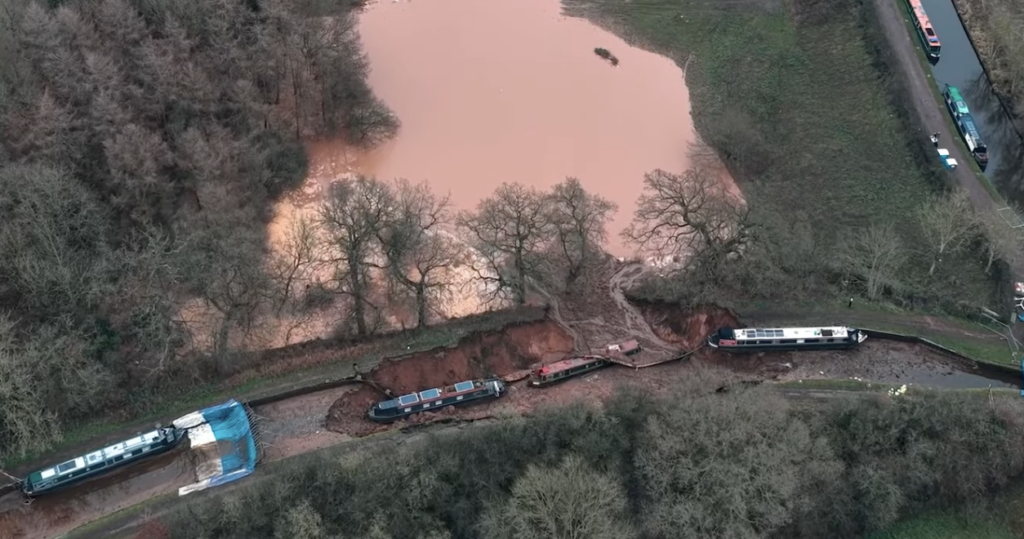
DEFRA says that the money was allocated before the recent Llangollen Canal breach, where an embankment collapsed trapping two narrowboats and stranding seven others.
3,000 miles left outside the safety net
Wills continues: “Our Risk Index also shows that much more is needed. This is a one-off capital grant for specific projects, not the first instalment of ongoing investment, nor part of a comprehensive review of long-term funding requirements. It does nothing to change the government’s overall funding approach to waterways, and it does nothing for the 3,000 miles of Britain’s canals and rivers managed by the Environment Agency and other navigation authorities.
“We need the government to develop a long-term funding plan that addresses the needs of all 5,000 miles of Britain’s navigable waterways. Piecemeal project grants won’t build the resilient network the country needs.”
Why project-based grants fall short
Key projects identified by DEFRA include works on the Peak Forest Canal, Tame Valley Canal, and the lift bridge connecting London Docklands to the River Thames.
A number of the nation’s oldest reservoirs built to feed fresh water into the canal system will benefit, improving their resilience and ensuring they continue to supply water. These include reservoirs from the industrial age that supply the Birmingham Canal Navigations, Grand Union Canal, Huddersfield Narrow Canal, Leeds & Liverpool Canal, Peak Forest Canal and Staffordshire & Worcestershire Canal.
Calls grow for a national funding strategy
“Although built in the industrial age, a resilient canal network is perfectly placed to help meet many of the challenges of modern society,” says Campbell Robb, chief executive of CRT. “The investment in reservoirs speaks to the potential of navigable canals to store and move water around the country for domestic supply, serving the nation by moving water from areas with excess to areas where there isn’t enough.”
While that may be the case, IWA is calling on the government to conduct a comprehensive review of funding requirements across all Britain’s waterways, develop a funding strategy that covers maintenance and climate resilience and extend its support beyond CRT waterways to the entire 5,000-mile network.
Britain’s canals have survived industrial decline, decades of financial neglect and a changing climate but their future now depends on long-term thinking rather than short-term fixes. With extreme weather becoming the norm and maintenance backlogs growing, the question is no longer whether investment is needed, but whether government is willing to fund the entire network before the next breach forces its hand.