Inside the Ferrari partnership changing Boero’s yacht coatings
Working alongside Ferrari inevitably attracts attention. But for Boero Yacht Coatings, the real prize isn’t the branding. It’s the opportunity to tackle engineering problems that simply don’t encounter on conventional yachts – and then turn those solutions into products for the wider marine industry.
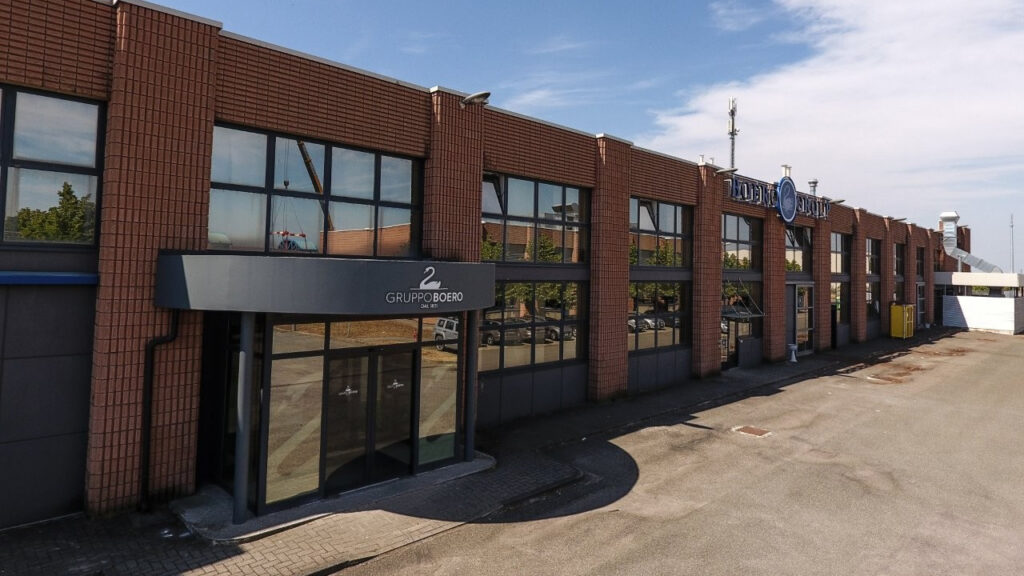
MIN visits Boero’s Genoa headquarters to see how that process is unfolding.
Ferrari sailing project creates new coatings challenges
Boero’s partnership with Ferrari is doing more than raising the coatings company’s profile. It is reshaping how its engineers think about the future of yacht paint systems.
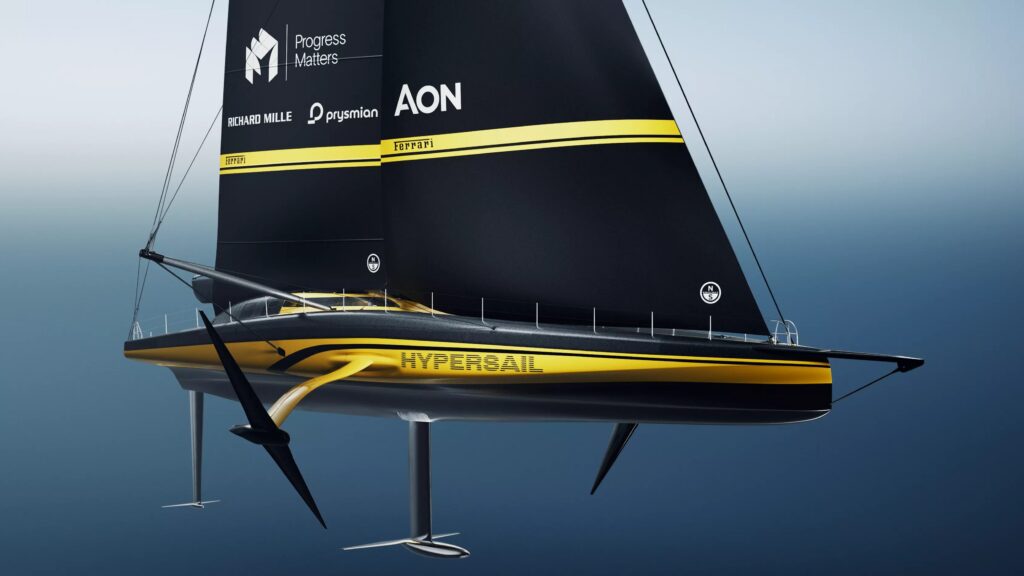
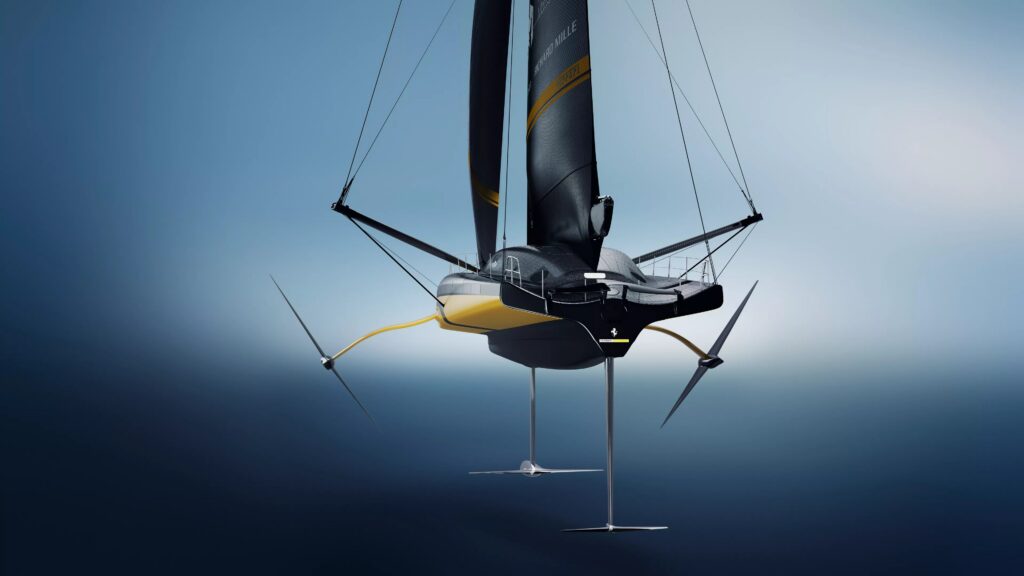
The Italian coatings manufacturer is supplying paint technology and technical expertise for Ferrari’s forthcoming sailing programme, which is developing a high-performance foiling yacht as a research and innovation platform… as well as being a racing boat.
For Boero’s research team, the collaboration has become an opportunity to solve problems rarely encountered in traditional yacht construction.
“We’ve been given some challenges we’ve never worked with before,” says Marcus Reynolds, senior brand and product manager.
The biggest challenge has been balancing three competing priorities: reducing weight, maintaining long-term protection and preserving performance.
Traditional yacht coatings are designed primarily around durability. Ferrari’s project demands something different.
“Reducing the weight of the painting system while maintaining the quality and protection has been quite complicated,” says Simone Garofoli, hull formulation manager for Boero’s yachting business unit.
The project has required repeated cycles of laboratory development, application testing and validation before arriving at coating systems capable of meeting Ferrari’s performance targets. Ferrari recently revealed its livery.
Every gram of paint matters
On a foiling yacht, every gram counts.
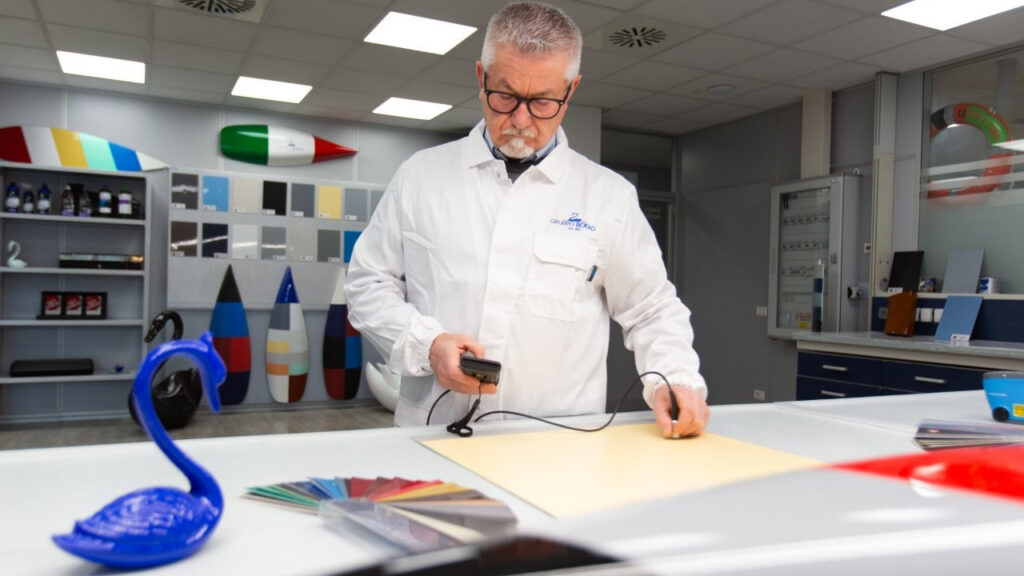
Garofoli says engineers spent months testing coating thicknesses, application systems and sanding processes to determine how little material could be used without compromising durability or appearance.
“We’re using a lot less paint than we thought,” adds Reynolds.
The work has also forced Boero to rethink traditional coating systems. “We’ve learned some things,” he continues. “We’ve even made a couple of new materials.”
Rather than remaining unique to the Ferrari project, those developments are already feeding into products for other customers.
Boero coatings business
Founded in Genoa in 1831, Boero has evolved from an architectural paints manufacturer into one of Europe’s leading marine coatings suppliers. Now part of Portugal’s CIN Group, the company produces more than 22 million litres of coatings annually, employs around 500 people and serves customers in 15 countries.
While architecture and decorative coatings remain its largest business, Boero’s yachting division accounts for around 20 per cent of revenue and has supplied coatings for more than 1,000 yacht and superyacht projects. The company combines in-house R&D, manufacturing and technical support with a growing international dealer network, while recent investment has focused on product innovation, sustainability, applicator training through the Boero Academy and partnerships including Ferrari.
Solving the solar panel grip problem
The Ferrari programme has also introduced Boero to the puzzle of solar panels forming part of the yacht’s deck. Those surfaces created an unusual engineering challenge. Crew members need enough grip to move safely around the yacht at speed, yet conventional non-slip coatings reduce the amount of light reaching the solar cells underneath.
Boero therefore developed a transparent anti-slip coating system designed to maintain traction while minimising losses in solar efficiency.
Engineers worked alongside Ferrari and the solar panel manufacturer, testing different coating formulations, particle sizes, layer thicknesses and clearcoat systems to achieve the best compromise between grip and energy generation.
Initial testing reduced solar efficiency by around 12 per cent. Through successive refinements, that figure has been reduced to approximately three to four per cent.
“It’s not 100 per cent perfect, but it’s the best we’re going to get with a non-skid surface,” says Reynolds.
The project also required Boero to develop coating systems for new lightweight substrates, including advanced composites used throughout the yacht.
Ferrari becomes a laboratory for future products
The lessons are already influencing products beyond Ferrari.
Boero says technologies developed for the programme are being applied to other racing yachts, while some newly developed materials have already entered the company’s wider product portfolio.
“We’ve actually used some of the stuff on other boats since,” says Reynolds. “So it’s helping us with the race boat market.”
The company also believes the experience supports its wider product strategy.
Across its research programme, Boero is working to reduce coating weight, lower VOC emissions, simplify paint systems and shorten application times without compromising finish or protection.
The Ferrari programme has accelerated that thinking by forcing engineers to solve multiple challenges simultaneously.
“I think what we’ve learned is probably as valuable as what we’ve invested,” says Reynolds.
Racing technology feeds commercial yacht coatings
For Boero, the collaboration with Ferrari represents far more than a marketing exercise.
Working alongside one of Italy’s most recognised engineering brands inevitably brings visibility, but the greater value lies in solving engineering problems at the limits of current coating technology.
The project is already influencing how Boero approaches racing yachts more broadly.
“We’re doing more and more racing yachts because it’s definitely becoming an industry,” says Reynolds.
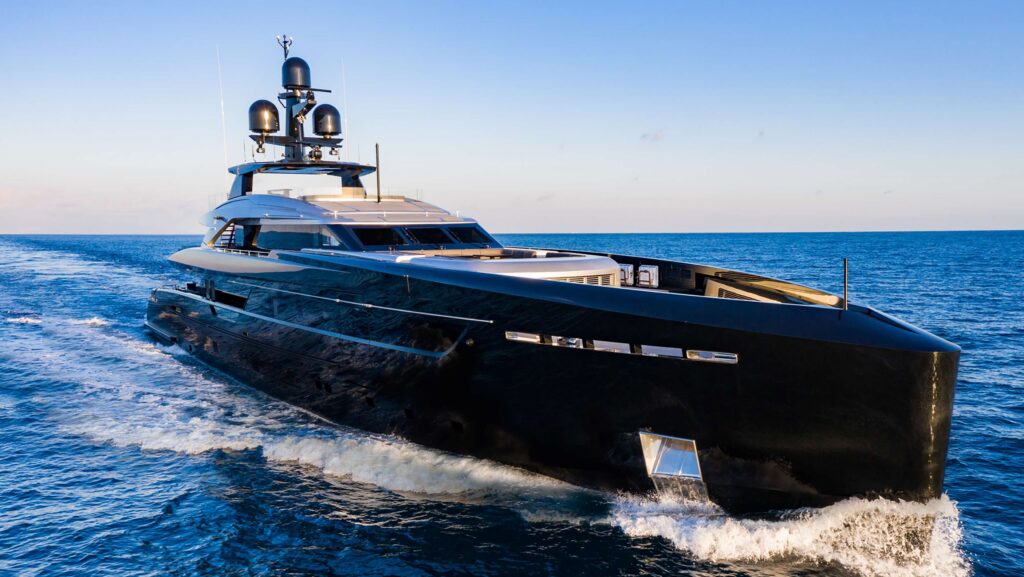
The company also sees foiling as a growth area of the market and expects many of the solutions developed for Ferrari – including lightweight coating systems, new composite technologies and specialist surface treatments – to transfer into future performance yachts and, eventually, the wider superyacht sector.
For Boero, the collaboration has become a route into technologies that would otherwise be difficult to develop. Ferrari has become a full-scale development platform where Boero can test new materials, application methods and coating technologies under some of the most demanding conditions in modern yacht design – innovations that may ultimately benefit builders and owners across the wider marine industry.
This article was edited on 17 Sept 2026 to correct Reynolds job title.