Lloyd’s Register survey warns on yacht safety risks
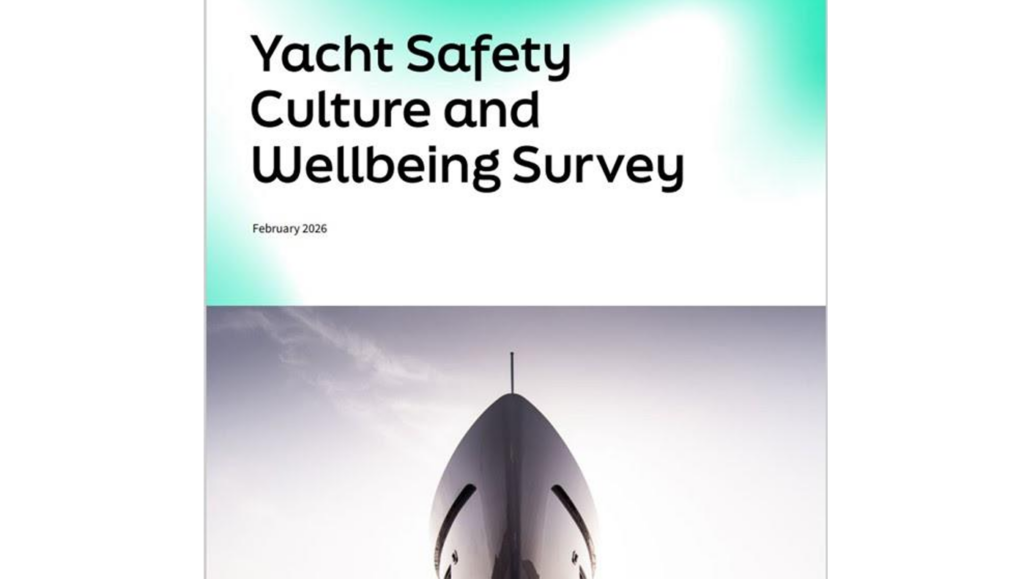 The Lloyd’s Register’s Yacht Safety Culture and Wellbeing Survey gathered responses from crew and shore-based professionals working across yachts above 24m
Inconsistent leadership and differing safety priorities are contributing to operational risk across parts of the yacht sector, according to findings from a new safety survey conducted by Lloyd’s Register.
The Lloyd’s Register’s Yacht Safety Culture and Wellbeing Survey gathered responses from crew and shore-based professionals working across yachts above 24 metres, covering a range of operating models and vessel sizes.
The results indicate that formal procedures are not always followed consistently, while current levels of crew engagement limit the industry’s ability to identify and respond to perceived or emerging risks onboard.
The survey indicates that, generally, safety-critical rules, checklists and safety meetings are well-established across the sector. However, their practical effectiveness is being reduced by financial constraints, operational pressures, guest expectations, crewing levels and workload demands.

Process and procedures, plus good internal communication, were identified as areas that support onboard safety culture. Crew respondents generally reported an understanding of basic risk principles and noted that structured safety meetings can help improve operational awareness. The findings also indicate considerable variation between yachts in how consistently these practices are applied.
Engagement was identified as an area requiring improvement to strengthen reporting culture, trust and safety performance. Respondents reported limited confidence in reporting concerns, challenging decisions or raising issues without fear of negative consequences. Engagement levels were lower on yachts under 500 GT and among long‑tenured crew, who reported declining confidence that safety observations and suggestions for improvement would be followed up.
On smaller yachts in particular, respondents described unclear roles and responsibilities as a factor that weakens accountability and makes it harder for crew to raise concerns.
Owner and management company priorities, along with onboard leadership behaviour, were identified as significant influences on safety outcomes. Some captains and senior crew were seen to encourage engagement with safety processes, while others were perceived as prioritising schedules, guest experience or commercial considerations.
Fatigue and workload pressures were widely reported across the survey responses. Long working hours, reliance on overtime and limited recovery periods were frequently cited, particularly during busy operating seasons. Engineers and senior officers recorded the lowest wellbeing scores, reflecting sustained operational responsibility and workload pressures. The findings indicate that when fatigue becomes accepted as routine, operational risk is increased.
The survey also highlighted challenges in how lessons are drawn from incidents. Respondents indicated that improved reporting practices could strengthen learning outcomes. While investigations are carried out, respondents described inconsistent follow‑up and limited sharing of lessons learned across crews. Some crew members also said that frequent reporting of minor issues diluted the impact of more significant safety concerns and reduced confidence in reporting systems.
Positive wellbeing was associated with improved focus and safer behaviour onboard. Respondents cited factors such as quality food provision, reliable connectivity and regular contact with home as important contributors to wellbeing. However, the survey indicates that support related to stress, fatigue and mental health varies widely between yachts. Some crew said they were hesitant to raise wellbeing concerns because of inconsistent follow‑through and limited trust in reporting systems. Overall, the findings show that wellbeing systems exist but are inconsistently implemented.
Stephanie McLay, human factors team lead for LR Advisory, says: “The survey shows strong procedural and communication foundations across the yacht industry, with improved risk awareness offering real potential to enhance safety and engagement. But it also reveals the need for more consistent practice to improve safety culture and everyday life for crew. People are the industry’s greatest asset, and supporting their wellbeing is the most powerful safety intervention we can make.”
Engel-Jan de Boer, LR’s global yacht segment director, adds: “The findings underline the need for stronger leadership behaviours, more effective fatigue management and a reporting culture that encourages early intervention. Without action, the industry risks higher underlying safety exposure and the loss of experienced crew.”
A full copy of the report can be downloaded from the Lloyd’s Register website.