Marine life ‘thriving’ in Great Pacific Garbage Patch, study says
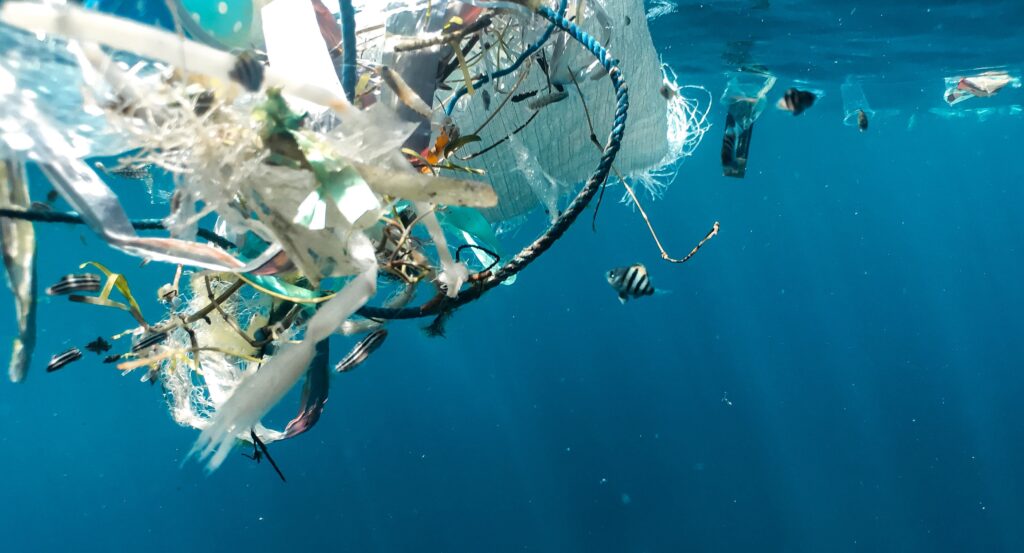
Researchers studying the Great Pacific Garbage Patch have found dozens of different species of marine life thriving amid the piles of swirling plastic and debris — including species that are usually only found in coastal habitats.
According to a new study published in the Nature Ecology & Evolution journal on 17 April 2023, coastal species such as crabs and anemones were found on more than 70 per cent of the debris samples collected between November 2018 and January 2019.
The scientists identified 484 marine invertebrate organisms on the 105 pieces of debris collected, accounting for 46 different species, of which 80 per cent were normally found in coastal habitats. They say their findings suggest plastic pollution in the ocean might be enabling the creation of new floating ecosystems of species that are not normally able to survive in the open ocean.
The study’s authors comment: “Our results demonstrate that the oceanic environment and floating plastic habitat are clearly hospitable to coastal species. Coastal species with an array of life history traits can survive, reproduce and have complex population and community structures in the open ocean.”
It was also noted that the Great Pacific Garbage Patch may now provide “extraordinary new opportunities for coastal species to expand populations into the open ocean and become a permanent part of the pelagic community, fundamentally altering the oceanic communities and ecosystem processes in this environment with potential implications for shifts in species dispersal and biogeography at broad spatial scales.”
If historical growth trends continue, global production of primary plastic is forecasted to reach 1,100 million tonnes by 2050, according to the UNEP.
According to The Ocean Cleanup, which assisted with the study by collecting the samples, the Great Pacific Garbage Patch now covers an estimated surface area of about 1.6 million square kilometres, an area twice the size of Texas or three times the size of France.











I worry about invasive species finding their way to other environments and destroying other delicate ecosystems. Nothing good will come of this.