
Osculati targets logistical efficiency to counter market pressures
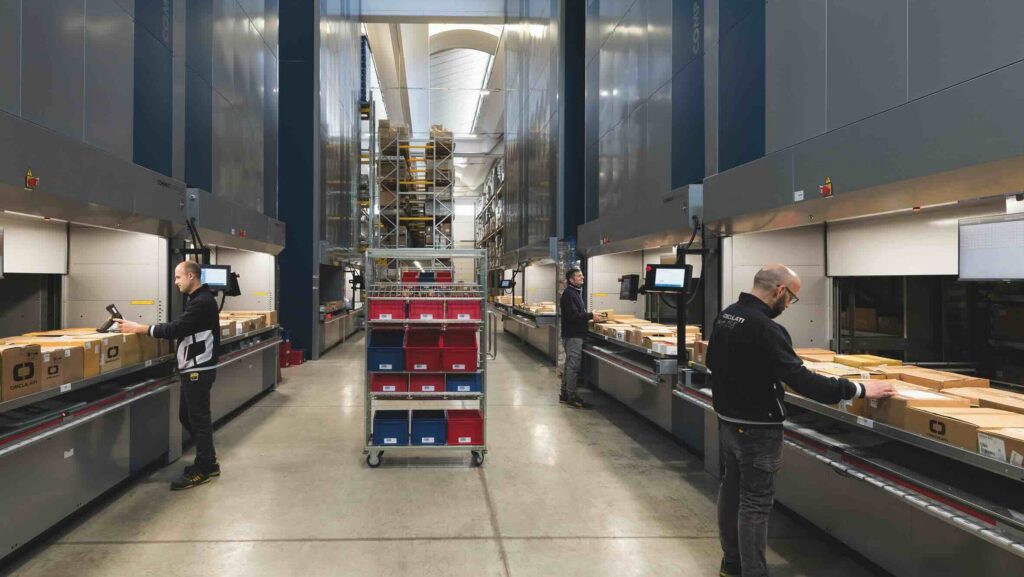 Inside Osculati’s operation
Changes to Osculati’s manufacturing are being driven by market dynamics, says Francesco Caramaschi, head of sales at the marine accessories maker, speaking in advance of the company’s attendance at Cannes Yachting Festival.
He cites factors such as marine customers expecting automotive / industrial levels of service (which Osculati is more than ready to accommodate) and consumer behaviour patterns moving into the B2B market as drivers.
“Customers increasingly expect the same level of reliability, availability and speed of service that they experience in other industries,” says Caramaschi. “Whether they are boatbuilders, dealers or marine professionals, they place great value on having products available when needed and being able to plan with confidence.”
This availability is coupled with expectations around not only product quality, but also design and ever-increasing ease of installation. “Customers are looking for solutions that simplify onboard integration while maintaining high standards of performance and aesthetics.”

Supply reliability becomes a competitive advantage
Because boat owners now have access to products from global marketplaces, and professional customers increasingly expect the convenience, speed and transparency that they experience elsewhere, this also means marine equipment is becoming a service – as much as a product – business.
Customers are buying availability, speed, technical support and compliance as well as the product.

Caramaschi (pictured) says this has influenced Osculati’s investment priorities.
“Beyond continuous product development, we have been investing heavily in logistics, automation and inventory management, because we believe that service quality and supply reliability are becoming as important as the products themselves.”
The company’s focused on increasing efficiency throughout the organisation. The investments above are helping it to maintain competitiveness as margin pressure remains a reality.
“Our approach is therefore not simply to react to margin pressure by reducing costs (which is not always possible),” he says, noting that boatbuilders continue to face challenging market conditions in several segments and are understandably focused on cost control.
For manufacturers and suppliers facing cautious demand, efficiency gains are a viable route. If suppliers simply reduce costs, they can potentially compromise stock availability, service or product development. Automation, digitalisation, logistics and process optimisation offer another route: maintaining service levels while trying to protect margins.
“Reliability of supply, breadth of product offering, technical support and delivery performance increasingly contribute to the overall value proposition,” Caramaschi says.
Online marketplaces add pressure to distribution
Looking at the global picture, Caramaschi says competition remains strong, with customers having access to a wider range of suppliers than ever before. And that comes with its own challenges.
“The marine industry is beginning to face some of the same dynamics already seen in other consumer sectors. End users now have direct access to an increasing range of products through large global online marketplaces, including suppliers from the Far East.”
Caramaschi raises the possibility that the global marketplace may gradually change purchasing habits.

Regulation creates costs and opportunities
This wider shift could potentially put pressure on margins, local distributors and specialist marine businesses. But it will also give established suppliers an argument for their value, with the service element on top (technical knowledge, compliance, availability, support and reliability).
“At the same time, the European regulatory environment continues to become more demanding, with new product, compliance, documentation and sustainability requirements,” he says.
Regulation increasingly affects materials, products, sustainability and documentation throughout the boatbuilding supply chain.
“While these regulations often require significant investment and organisational effort from companies committed to high standards, they can also create opportunities for well-structured businesses to differentiate themselves through quality, reliability, compliance and professional support.”
Thus, in this environment, adaptability becomes critical. “Companies that can react quickly to market changes, maintain strong inventory availability and support customers consistently will be in the best position to grow. That is exactly what we are working towards.”
Osculati will therefore use compliance and documentation as part of its value proposition.
Like many before, and after him, Caramaschi is keeping a wary eye on “the increasing uncertainty affecting many aspects of the global economy. Demand patterns can change quickly, geopolitical developments can influence trade flows, and customers are becoming more cautious in their purchasing decisions.”
New cleats and ladder headline Cannes launch
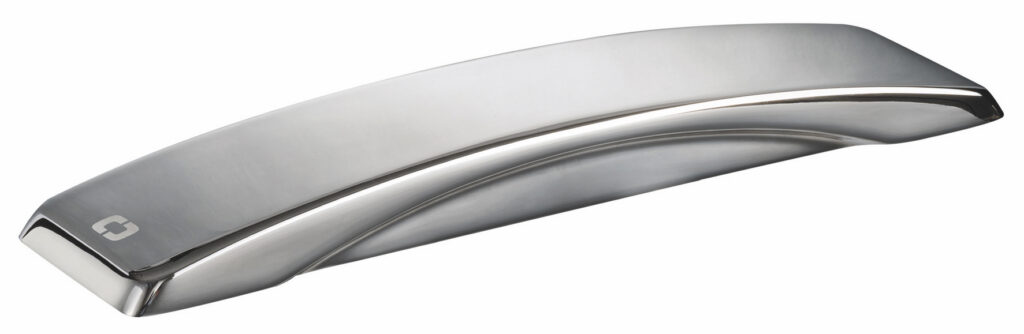
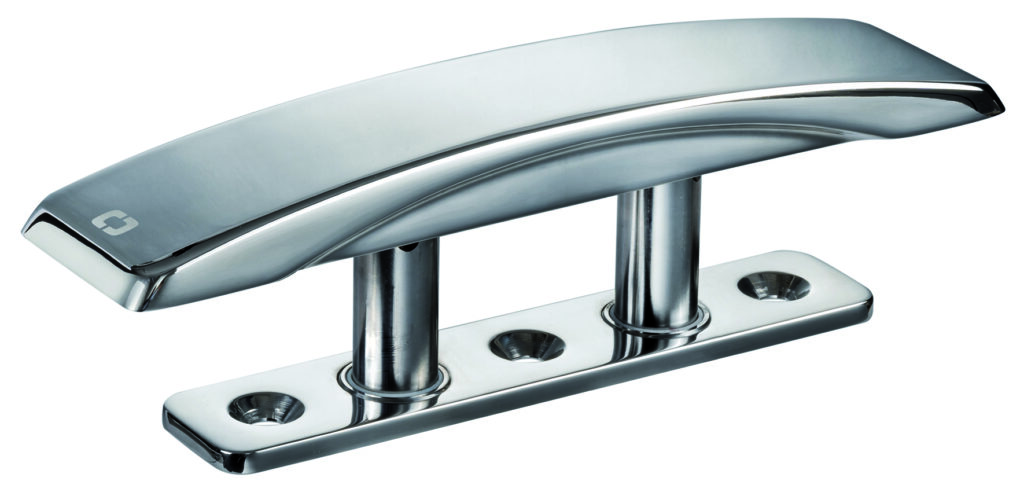
For Osculati, Cannes Yachting Festival provides an important opportunity for the company to showcase its new products. Among them is Halo, a new range of cleats and fairleads. These feature “an elegant design developed in collaboration with the renowned yacht designer Marco Casali,” says Caramaschi. Osculati’s also introducing Lingtotto (a new range of retractable cleats), and Java (a new line of telescopic ladders with teak steps).
“These products reflect our ongoing commitment to combining functionality and refined design,” he concludes.
More information about Osculati’s products is available on its website.