Saim CEO: AI, sustainability and the technologies changing yachts
 Avikus Neuboat
“Just think about how much the market has changed in just a few years,” says Marco Donà, Saim Group’s CEO. Ahead of this year’s Cannes Yachting Festival, he’s focused on sustainability. He says it’s no longer just about developing products with a lower environmental impact, but also about creating solutions that can make yachts more sustainable, improve their efficiency and reduce their impact while cruising.
“End users are becoming increasingly aware of these issues. Yacht owners, charter clients and especially younger generations are paying more attention to the protection of the marine environment and to technologies that can make a tangible contribution to safeguarding it.”
DPF technology moves towards the mainstream
And this is changing how Saim has been thinking about its offering.
“Until recently, installing a DPF filter on a generator’s exhaust was far from being an obvious choice,” he says.
DPF technology (advanced diesel particulate filters) provide passive exhaust gas purification technologies for marine vessels. Rather than relying on active, fuel-burning cleaning cycles that increase fuel consumption, Saim’s DPF solutions focus on highly efficient passive regeneration via a ceramic substrate core that traps around 98 per cent of harmful solid soot particles while letting clean gaseous exhaust pass through.
“Since we launched our solution, however, customer demand has been steadily increasing, leading us to believe that this type of technology could soon become standard equipment across a wide range of yachts.”
Donà’s comments on DPF filters indicate that emissions technology is moving from something customers had to be persuaded to buy towards something they increasingly expect to see fitted – with knock-on consequences for engine suppliers, builders and equipment manufacturers as environmental expectations become embedded in product specification.
The company’s also looking at artificial intelligence. It’s “becoming increasingly integrated into electronics onboard, opening new opportunities to make navigation safer, more efficient and more intuitive.
“We are moving in the same direction and are about to launch a new product that is designed to revolutionise the way we sail, bringing a new level of technology and innovation on board,” says Donà.
Autonomous navigation in European yachting
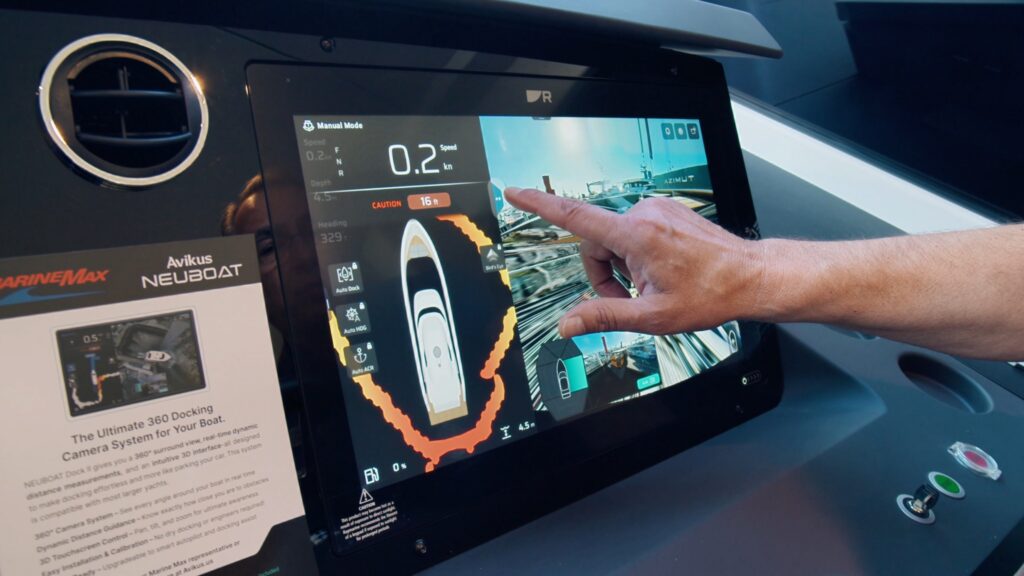
Saim’s taking Avikus to CYF. The Korean developer of autonomous navigation technologies has been exclusively represented in Italy by Saim since January this year. Visitors will be able to experience the latest Neuboat solutions, including Neuboat Dock II, Neuboat Navi, and Neuboat Control.
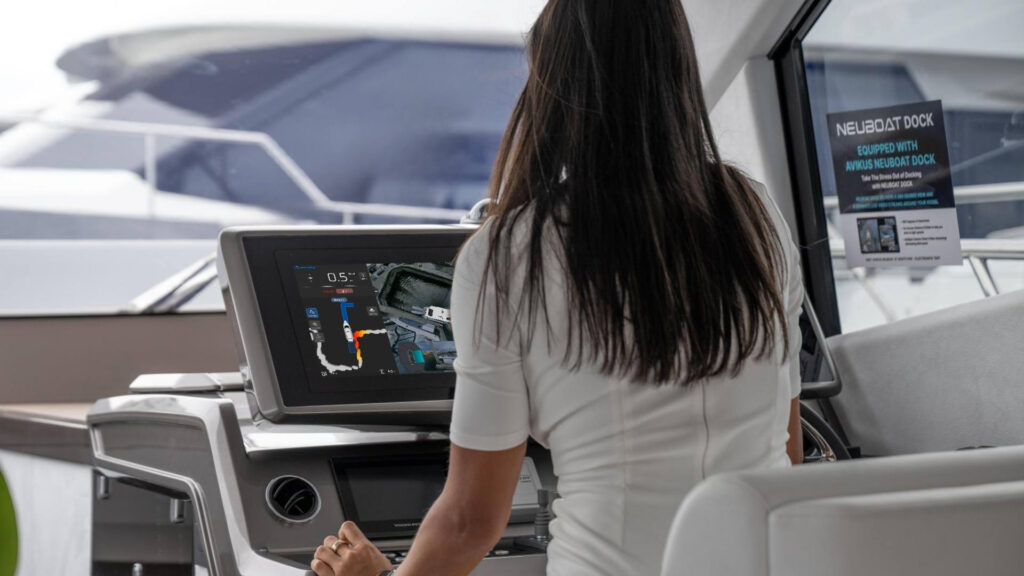
By combining LiDAR sensors, artificial intelligence, and 360-degree vision technology, these systems make navigation, route planning, and docking safer, easier, and more intuitive, Donà explains. They provide captains and yacht owners with enhanced situational awareness, greater control, and increased confidence in the water.
“Avikus technology has already been installed on a new yacht built by an Italian shipyard, which will be showcased. This represents an important milestone for the adoption of autonomous navigation solutions in the European yachting market and further strengthens SAIM Marine’s commitment to bringing innovative technologies to the industry,” notes Donà.
As AI moves from experimentation into practical onboard applications it points towards a wider change in the role of electronics onboard: from individual systems towards increasingly automated, integrated decision-support.
Service and quality come at a price
Across the sector, technology adoption is increasingly shaped by the tension between innovation and price.
While Donà says the company’s ‘mission’ is “to combine excellent product quality with a high level of service, which we provide both directly and through an extensive network of highly qualified dealers” the approach comes at a cost.
“In some cases [it] does not allow us to compete on price with competitors who claim to offer the same standards at a lower cost. This is particularly the case when customers (boat builders/ shipyards) prioritise the lowest price, rather than considering the quality of the product and the value of the service.”
Donà’s comments about Saim’s service-led approach not always competing with lower-cost alternatives, highlight a major industry issue. As sophisticated safety, emissions and efficiency technologies become increasingly in demand, manufacturers and boatbuilders have to find ways of absorbing (or demonstrating the value of) those additional costs.
Geopolitics remains a concern for marine businesses
That said, what concerns him most are “the sometimes-reckless decisions made by certain political figures and the potential repercussions of these choices on global economic and financial stability.
“Added to this is the current international geopolitical situation, with conflicts that risk escalating and creating new fronts of instability.”
As Saim heads to Cannes, Donà sees an industry being reshaped by several forces at once: greater environmental expectations, rapidly advancing artificial intelligence and a growing appetite for technologies that can make boating simpler and safer. The challenge, however, is ensuring that investment in quality and innovation can continue in a market where price remains a powerful factor.