South Africa’s superyacht servicing: Cape Town’s evolving role in Indian Ocean yachting
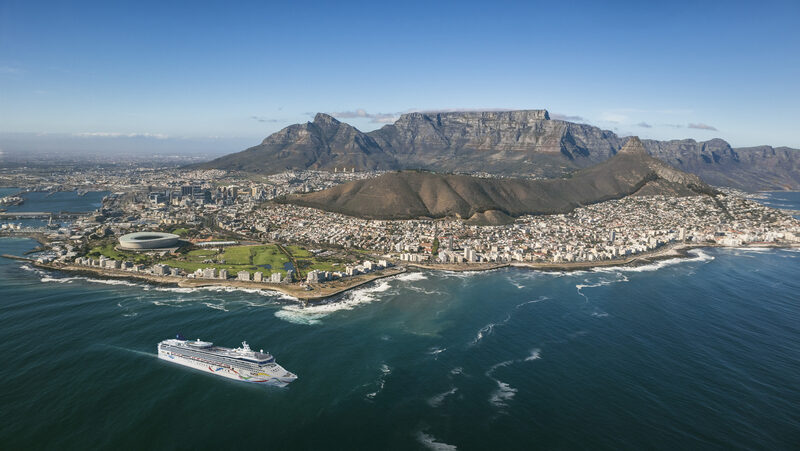 Cape Town, South Africa
MaryAnne Edwards from the African Boating Conference, outlines how Cape Town is shaping the future of Indian Ocean yachting.
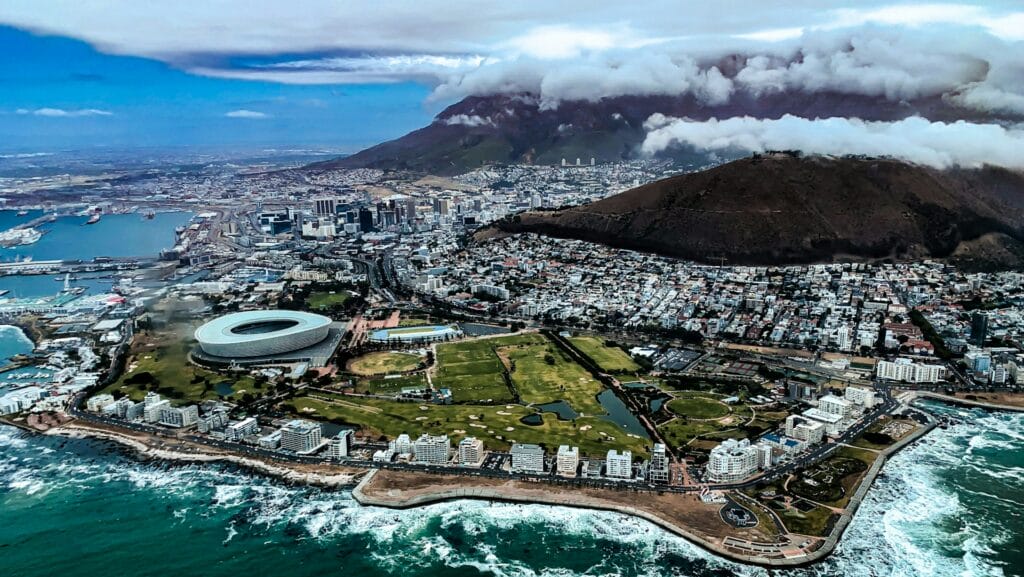
Cape Town’s marine sector is entering a new phase – one defined not only by ambition, but by demonstrable capability. For years, the city has been recognised for its boatbuilding pedigree, specialist skills and strategic location on key global cruising routes.
What is becoming increasingly clear, however, is that Cape Town is no longer simply a place of promise. It is becoming a place of proven delivery, particularly in the refit, repair and aftersales space.
The South African marine cluster is transitioning from a high-export manufacturing base into a full-lifecycle service hub, leveraging its strategic position on the east-west transit route.
Confidence builds in Cape Town’s superyacht capabilities
The city’s ecosystem now combines skilled technical labour, established ship repair infrastructure, marine manufacturing experience, specialist project management and a growing support network tailored to visiting yachts. That matters because the international superyacht and broader marine industries do not choose destinations on aspiration alone. They choose destinations that can solve problems, manage complexity, and deliver work to international standards.
There are few cruising grounds in the world where technical capability and raw adventure exist in such close proximity. At the southern tip of Africa, Cape Town is fast emerging as exactly that — a destination where superyachts don’t just arrive for the scenery, they stay for the substance.
At the heart of this evolution is a maturing refit sector. Leading facilities such as Dormac Shipyard, supported by a dense network of marine engineers, fabricators, electricians, painters and specialists, are increasingly taking on complex scopes — not just routine maintenance, but major technical works and rebuilds.
One recent project illustrates this shift clearly.
Refit case study: M/Y Asteria
When M/Y Asteria suffered significant engine room flooding, the scale of the challenge was immediate. This was not a routine repair; it required a complete strip-out, system rebuild and a coordinated approach across multiple technical disciplines.
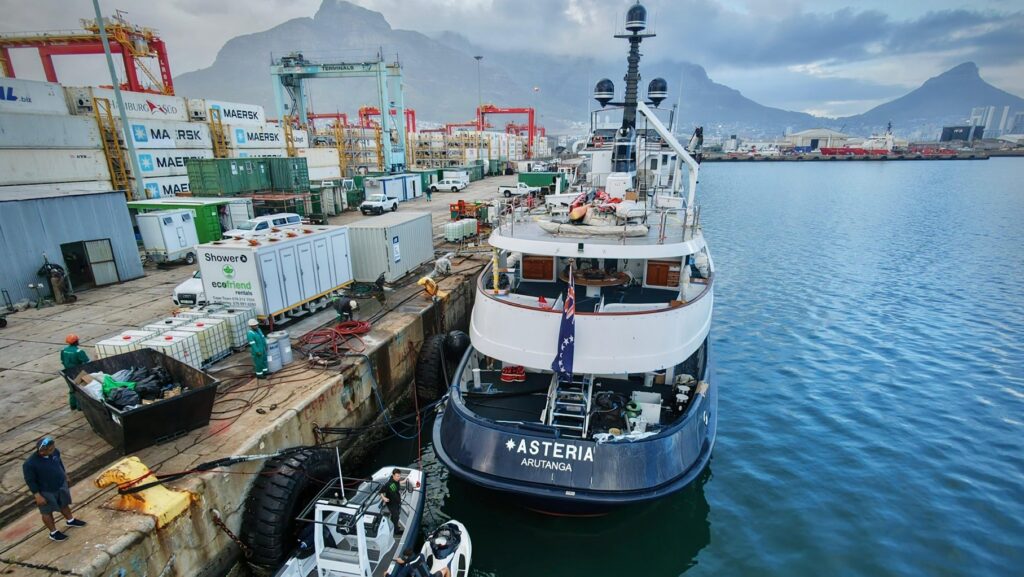
Under the management of V.Yachts, and with execution support from Dormac, the vessel underwent a full transformation. Damaged systems were removed, new systems installed, electrical infrastructure rebuilt, and critical mechanical and interior works carried out. Beyond restoration, the yacht was modernised – repositioned as a more resilient, future-ready vessel.
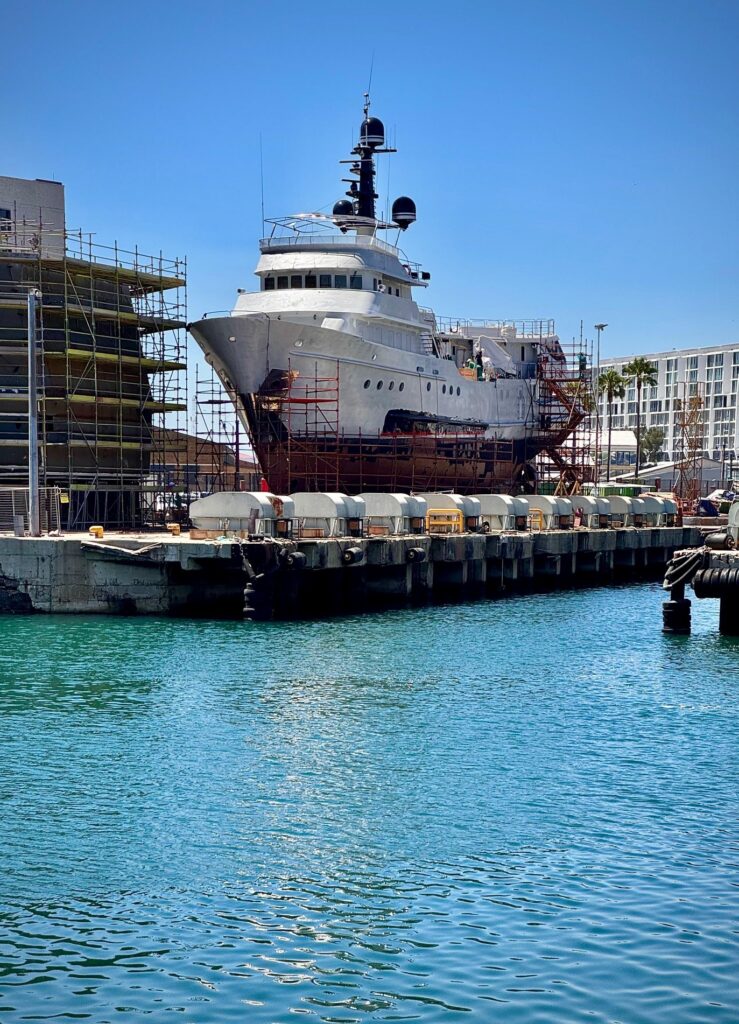
The significance of Asteria lies not just in the technical achievement, but in what it represents: confidence. Confidence that complex refits can be undertaken – and successfully completed – in Cape Town.
Confidence that the ecosystem, from shipyard to specialist contractor, can deliver at the level expected by the global fleet.
Cruising grounds: South Africa
That confidence is being reinforced by investment in Cape Town itself. At the V&A Waterfront, the development of a dedicated superyacht marina at Quay 7 is set to further elevate the destination.
he development of Quay 7 is a critical piece of the industrial puzzle, providing the purpose-built berthing required to complement the city’s existing dry-docking and lifting capacity.
Positioned alongside key lifting and dry dock infrastructure, it will create a seamless transition between arrival, service and departure – an essential ingredient in any serious refit hub.
Yet Cape Town’s appeal extends beyond the dock.
From Cape Town, a yacht can chart a course into one of the most diverse and underexplored cruising regions in the world. The granite-fringed anchorages of the Seychelles offer crystalline waters and secluded bays. Further west, the vast and largely untouched coastline of Madagascar delivers a sense of expedition rarely found in more established routes. Mauritius provides a refined blend of luxury hospitality and protected cruising grounds, while the iconic atolls of the Maldives remain a benchmark for tropical yachting.
This is a cruising ground where one week might be spent alongside in Cape Town — immersed in world-class dining, culture and technical works. The next, anchored off an uninhabited island, where the only schedule is dictated by tides and light.
For owners and guests, that balance is powerful. It offers something increasingly rare in global cruising: authentic discovery paired with dependable support.
The Rise of regional capability
Supporting this experience is a growing network of regional expertise. Superyacht agents, destination managers and marine professionals across Southern Africa and the Indian Ocean are becoming more connected – working collaboratively to guide vessels through logistics, permits, provisioning and technical requirements across multiple jurisdictions.
This is not a single-destination story. It is the emergence of a cruising corridor, where each location plays a role.
There is also increasing momentum behind simplifying regulatory frameworks and improving the ease of movement between destinations. While progress is incremental, the direction is clear: a more accessible, better coordinated region that encourages yachts to stay longer and explore further.
Industry bodies such as South African Boat Builders Export Council (SABBEX) and BlueCape are central to this evolution. Through advocacy, industry coordination and international engagement, they are working with Superyacht Cape Town, helping to align stakeholders and ensure that Cape Town’s growth is connected to a broader regional strategy.
Cape Town’s rise is not built on marketing alone. It is being earned through delivery – project by project, season by season. The refit capability is real. The infrastructure is evolving. The regional story is strengthening.
For those within the industry, this is a destination – and a region – worth watching closely.
The African Boating Conference, scheduled to run 20-21 October offers a unique opportunity to do exactly that. Bringing together shipyards, agents, policymakers and global stakeholders, it provides a platform to engage directly with the people shaping this emerging marine hub.