Succession planning for Cannes – Sylvie Ernoult reveals her secrets
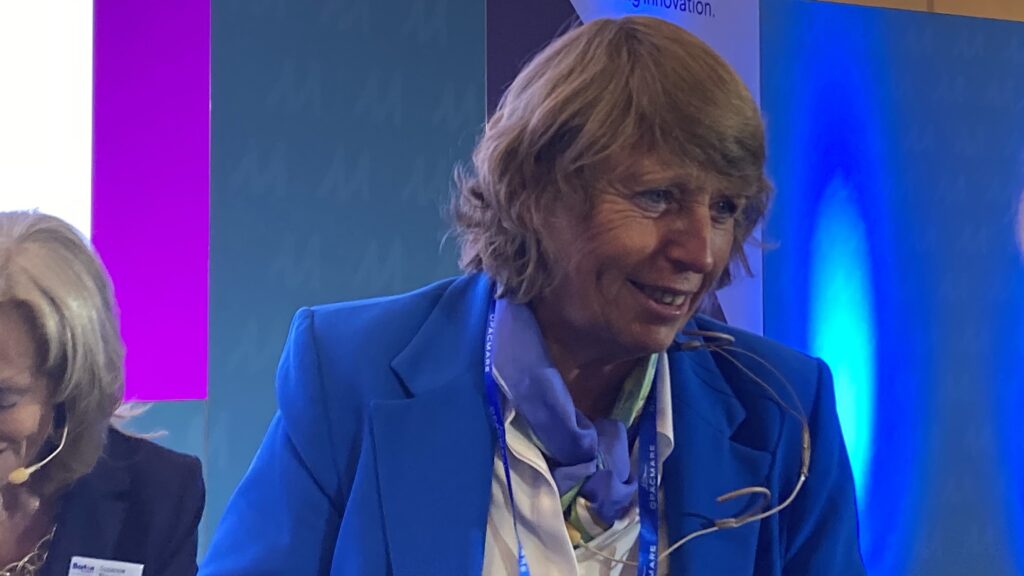
Sylvie Ernoult’s about to retire. For the past 13 years, she’s been the director of the Cannes Yachting Festival.
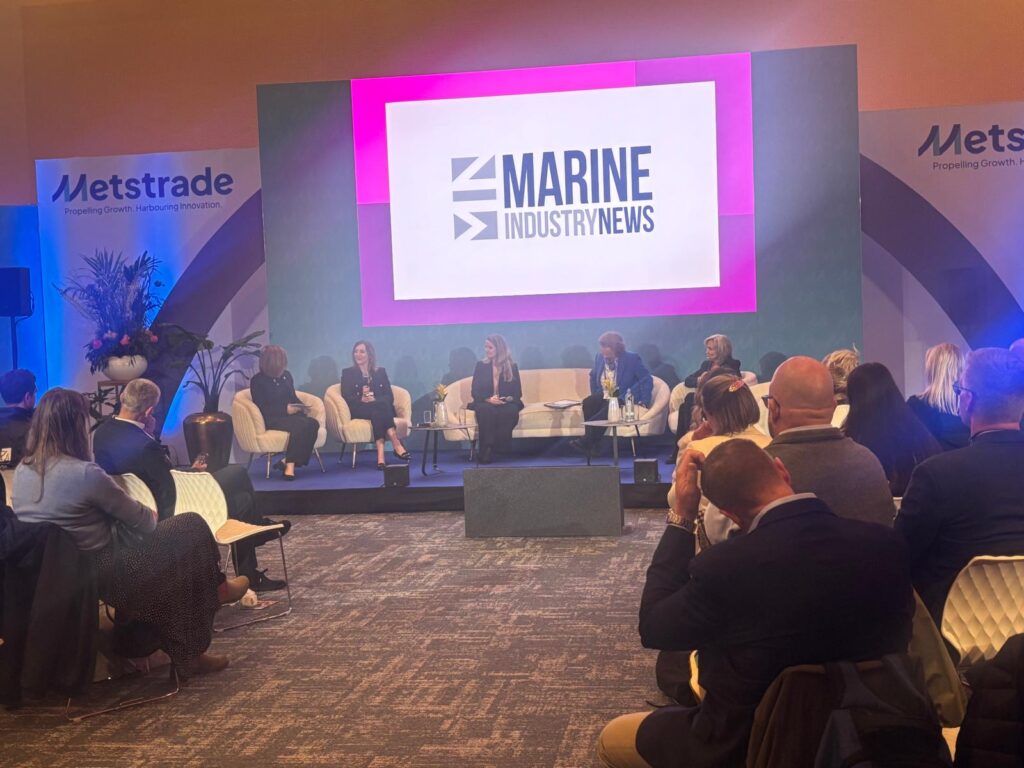
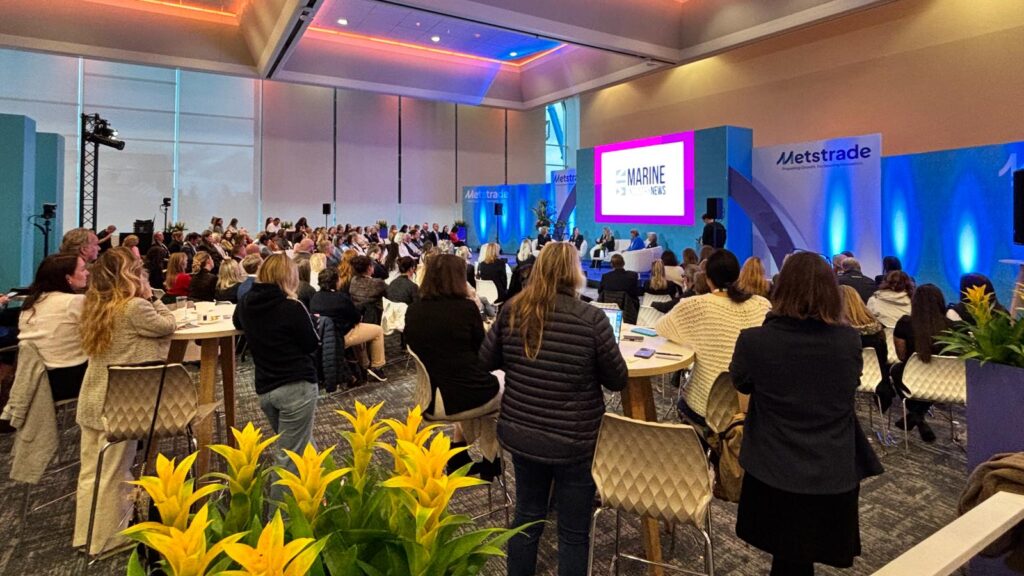
At the Women in Marine stage at Metstrade — sponsored by Marine Industry News — Ernoult says that she believes that passing the helm should be more than a three-month process. In fact, she advocates for 12.
“Sometimes in a specialised job, like ours, the input you can give training somebody for one year will make things smoother and save you three years at the end.”
With management buy-in, she’s been able to put this longer handover in place and speaks highly of her replacement, Constance Brément, who has taken over the show’s management as deputy director. “She’s great … it’s going to work very well.” It’s imperative that Brément be able to negotiate and make sure that the right exhibitors get the right space for the overall show, not always what they necessarily want.
“The content is the key to the success of a show,” says Ernoult. “So you have to focus on what you’re going to exhibit. Quality content is the key.”
Curating this requires skills, particularly as Ernoult has more clients than space: “A problem that not so many people have today.
“It’s not easy to solve because you have to say ‘no’ to your clients.” She mentions that many companies want more space than their neighbours (and competitors).
“You [can] imagine how it’s a competition like in every business,” she says. “I have to fight with those guys. And I say, ‘no’, you’re going to have this and this and this.” Plus, she needs to save space for new business.
“In this industry, we have something like five, six big internationals.” Given their dominance, Ernoult says the first step is to concentrate on them, “and to make everything easy for them and develop them and consolidate them. In the meantime, you have to work on the new innovation, you have to work on the new key players in this industry to have so many innovations, small startups and small companies. You cannot leave them out.
“You always have to compromise between the two.
“And at the end, if the equity is controlled, if everybody has the same, it works. It’s always a compromise.”
Cannes Yachting Festival planning process unpicked
The CYF wheels are of different sizes, but Ernoult keeps them running in tandem. The strategy (and working towards that) is a three-year long-term vision, while the management of building the show is a one-year cycle.
“It’s so important to have a clear process. Clearly, my job is to have both vision, and to have both actions.” She says she has to think 18 months ahead about the strategy for the coming three years.
And to develop that strategy? She’s travelling with clients, “doing all this crazy activity” and assessing her ideas, the market, and CYF evolution. She shares her vision of where the next three years will take the industry.
Pre-lunch meetings make people focus
To deliver a successful show, Ernoult says the team, including sales, technical, communication, and more, meet once a week for “two hours maximum” to share progress and planning for Cannes Yachting Festival. “We make it before lunch, so we are sure that in two hours it’s done because everybody’s starving.
“We negotiate the teamwork together.” This means sharing information and making common decisions. “It’s so important to have the team involved in this kind of work.”
Ernoult describes the depth of ‘project mode’. It involves putting all actions on a plan, and then all teams meeting once a week and discussing progress for the week ahead and the week just gone. This allows open and frank discussion about success. The entire team’s enabled to say: “I did it, I didn’t do it, I don’t want to do it like this, I made a mistake, I’m asking you to change or to postpone the day or whatever. And we negotiate the team, the teamwork together.
“At the end, of course, the boss has to make decisions when needed. But believe me, in this process, I would say 80 per cent of the problem, the information and the solution is being done by my team.
“I give them the big picture. So they know where to go and what they do not have to do. Sometimes I still just say, ‘No, don’t do this, don’t do that.’ We don’t have the time; it’s not our priority. Please concentrate on this. ‘Look ahead, within two years, we have to go, so you cannot do this.’
“It’s a bigger, complicated team involvement, but if you do it through this process, it works very well.”
There’s no doubt that moving on from a long-term role is daunting, especially one where you’ve made your mark. Ernoult knows her worth. “My experience is great,” she says. “I took a great show, and I made it the number one European show, so [that’s a] good job, okay?” Although she caveats her words, saying: “A lot of people, instead of me, could have done it.”
Topics covered at Women in Marine, Metstrade 2025
Other topics addressed by the Women in Marine panel included the importance of agility, flexibility, and resilience in business planning, and the need for innovation to anticipate customer needs before customers know them.
The conversation covered balancing data with instinct in decision-making, technological transformation in marine, and creating time for strategic thinking amid busy schedules. The panel concluded with optimistic views about the industry’s future, emphasising sustainability, increased participation, and the importance of bringing younger generations into boating. Throughout the discussion, the importance of women’s leadership and representation in the marine industry was highlighted, with several speakers mentioning initiatives to support women in the sector.
As well as MIN, other sponsors of the stage included British Marine, Metstrade and Soundings Trade Only.