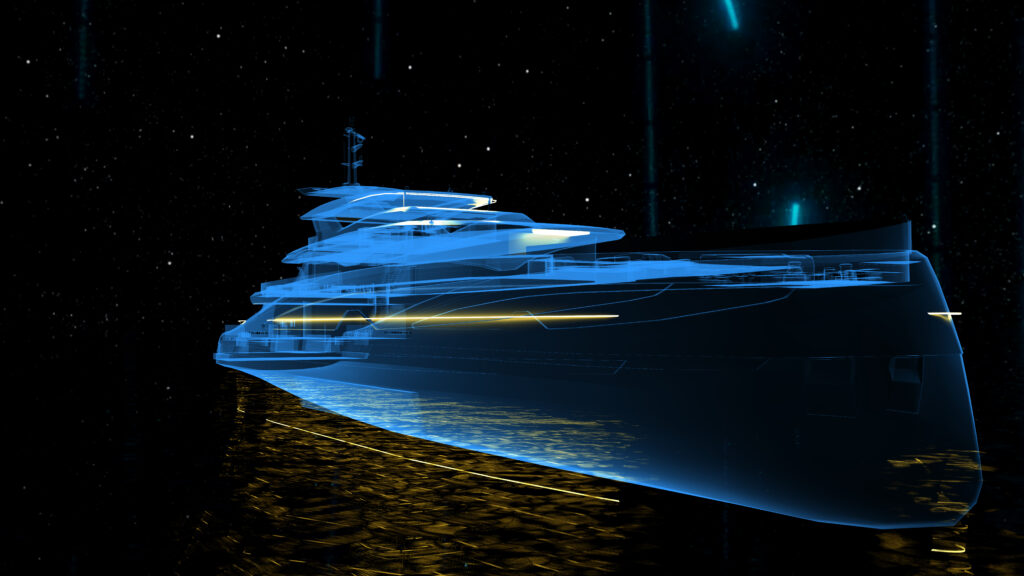
Videoworks launches integrated security ecosystem for superyachts, including panic rooms
As geopolitical tensions rise and digital threats multiply, superyacht owners are demanding far more sophisticated protection at sea. Videoworks has responded with a new end-to-end security suite that combines panic rooms, advanced perimeter sensors, drone detection and AI-driven monitoring into a single integrated onboard ecosystem. Designed to be installed from the earliest stages of a yacht build — or retrofitted during refit — the system brings physical and cyber defence under one unified technological backbone.
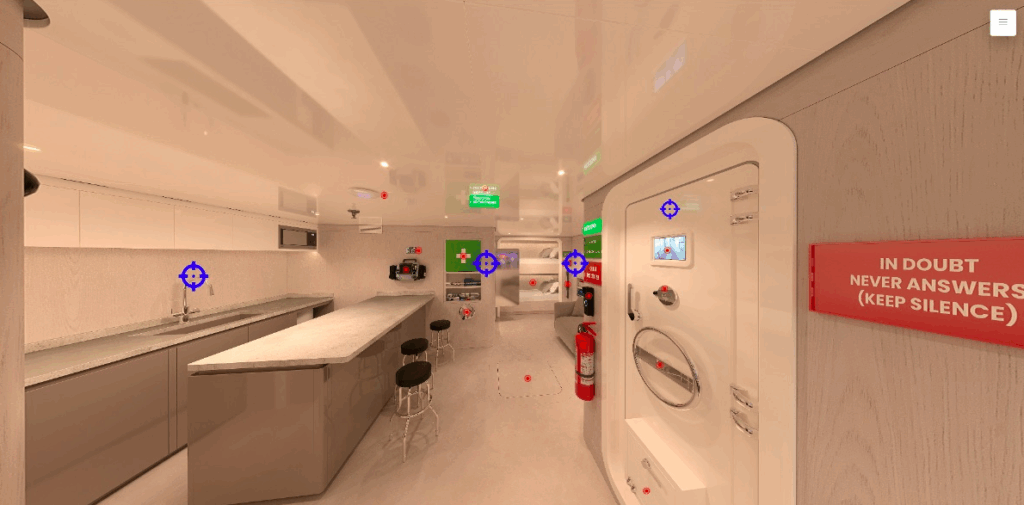
For yachts over 1,500GT, there is both the available space and a pressing argument to create a dedicated panic room as part of a broad range of security solutions, says the company.
Within it, advanced CCTV surveillance is relayed to the room using visible and hidden cameras, while redundant power systems and secure communication channels assure both autonomy and a reliable line to the outside world. Dedicated weapon storage, remote control and strategic deterrents can also be integrated. At its heart is a stand-alone power supply that keeps the system running even if the main power on board is cut.
Videoworks believes having a panic room can lower insurance premiums, increase charter desirability, boost resale value and enhance an owner’s reputation for proactive safety.
At Videoworks, we see technology not as an add-on, but as an integral part of yacht design and onboard life,” says CEO Maurizio Minossi. “Our mission is creating systems that are easy to use, keep guests comfortable and keep people on board connected and secure.”
Videoworks works alongside the shipyard, exterior and interior designer. Other elements of the system can be retrofitted.

Minossi says it’s important to ensure that crew understand how to use the technology, and the company supports dedicated training sessions.
Besides CCTV standard and infrared cameras, Videoworks’ system can employ a number of advanced security sensors. One of these is LIDAR – a sensor that uses invisible laser beams to precisely measure the range and bearing of objects. It is the same technology used by self-driving cars to determine what obstacles lie around them, and it has a range of around 85m.
These signals are fed into Videoworks’ security software, which scans for threats. The system can distinguish in real-time between presence in authorised and unauthorised areas, also discarding movement from wildlife or passers-by. In this way, it can set up virtual fences around critical areas, such as deck perimeters or access points, and warn instantly of a breach.
Another first in the yachting sector is the use of floor sensors capable of detecting footsteps and recognising movement patterns. Being embedded under decks, these are not visible on the floor’s surface. Their deployment in sensitive areas provides an additional level of protection. Also drone detection can be integrated to other security systems to detect, identify and track from the bridge as well as from any other security consoles.
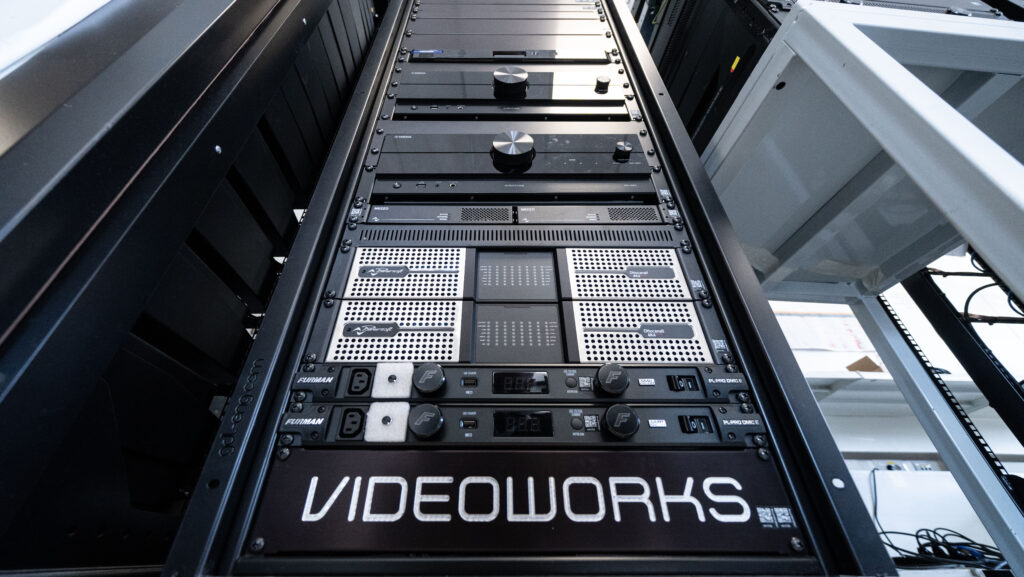
This approach means that shipyards and owner’s teams no longer need to go out and source different solutions from different suppliers. By integrating the yacht’s IT infrastructure, audio-visual capabilities and security systems, Videoworks pulls all these functions together.
Because it runs on the yacht’s IT backbone, it is also feasible to retrofit the technology as part of a refit programme.

“We see more and more that the shipyard or client prefers to have a proper backbone,” says Govert Hermsen, Videoworks Europe a program manager and system engineer for the company. Aside from the developments in security, he’s focused on how that backbone will be utilised. For example, he says that AI will learn about owners onboard. “The user interface and the way of using your system onboard will be even more intuitive. So I think it will start learning what are your favourite programs are. . . . also the lights in your cabin . . . maybe the system will recognise you coming in and go already into your preferred light scenes for the time of the day and the position where the boat is.
“We are getting more and more connectivity inside of the boat.”
He says the challenge that Videoworks faces is to constantly evaluate and keep up-the-speed. “But that’s common in our industry.”