
Boero goes beyond coatings in battle for superyacht paint market
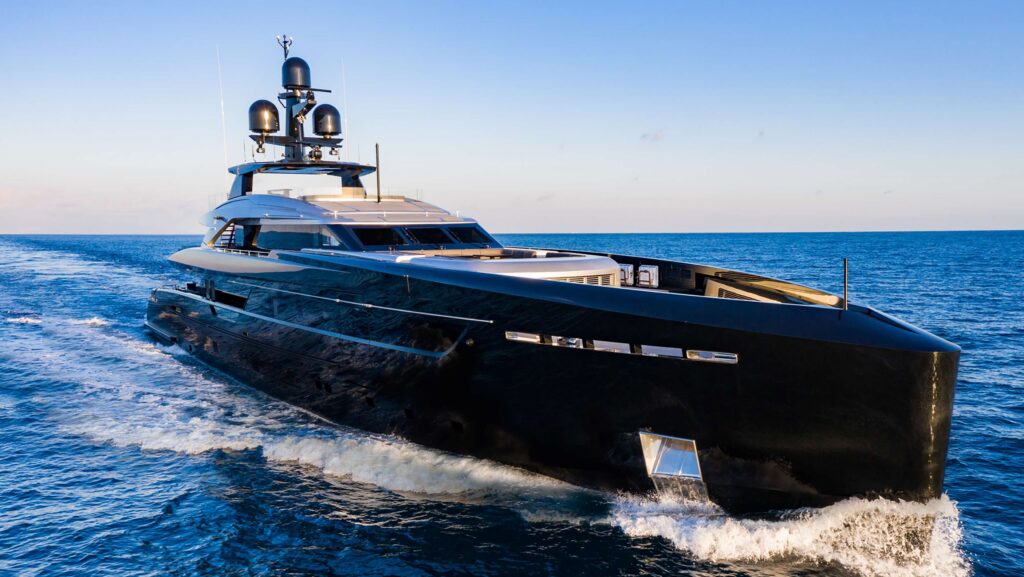 Tankoa’s Olokun with Boero finish
When a superyacht owner asks for the exact colour of a Bentley, the challenge is not simply matching a shade. The coating must survive years of UV exposure, saltwater, cleaning regimes and global cruising. MIN sits down with Boero YachtCoatings to understand how these demands have changed the role of a paint supplier into something much broader.
Winning a superyacht project is no longer simply about supplying a coating system, says Boero. The Italian coatings manufacturer believes the real opportunity begins before a yacht is painted and continues throughout the vessel’s operational life. Technical support, crew education and ongoing maintenance are now as important as the chemistry inside the can.
Despite competing against significantly larger multinational coatings companies, Boero believes its advantage lies in flexibility, closer customer relationships and a solutions-led approach. The company’s smaller size allows it to work more closely with shipyards and adapt to specific superyacht requirements, rather than simply supplying standard products.
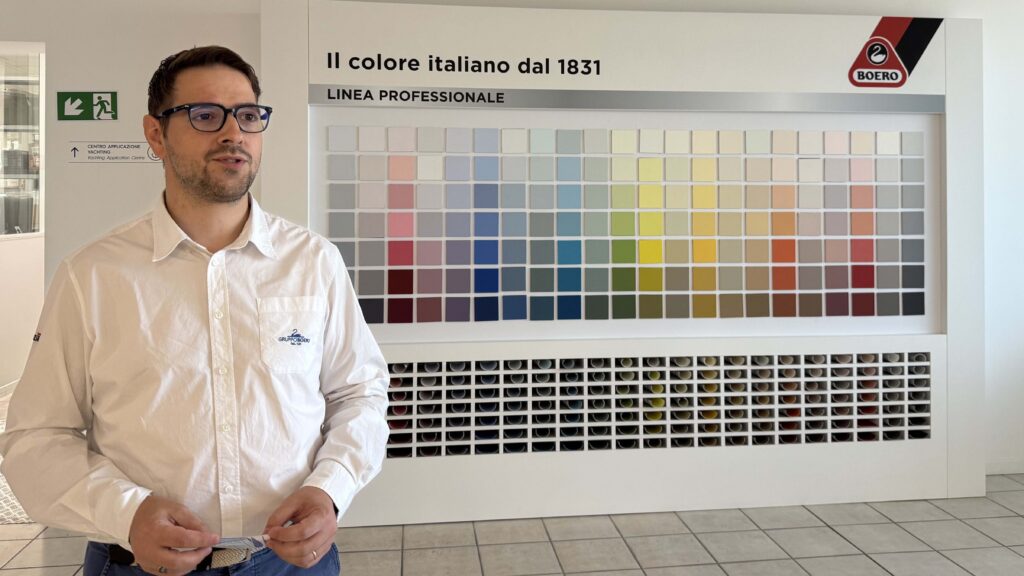
As Simone Garofoli, hull formation manager at the firm’s yachting business unit, explains, the goal is not simply to create products, but to solve customer problems.
“To create a solution, I have to satisfy a customer need; otherwise, I can create a magical product, but if I don’t satisfy a need, my product is not used,” he says.
The strategy reflects a wider shift in the superyacht supply chain, where owners, shipyards and designers increasingly expect suppliers to provide expertise beyond the product itself.
So over the past few years, Boero’s built a strategy around superyacht customers increasingly needing support throughout the entire process – from specification and application through to maintenance – with technical expertise and guidance as important as the product itself.
“One thing is giving you the right product – and this is something that we can do,” says Garofoli. “But giving you the right assistance, from the very beginning to the end, is a different thing.”
Superyachts cannot be treated like commercial vessels
He draws a clear distinction between coatings developed for commercial marine markets and those designed specifically for luxury yachts.
“The priorities between the marine sector, the commercial boat, and yachting or superyacht sectors are different.”
While commercial vessels are primarily focused on operational efficiency and keeping costs low, superyacht owners are seeking products that enhance luxury, aesthetics and the overall ownership experience.
Garofoli believes many competitors develop products for marine applications – and then adapt them for yachting. Boero takes a different route.
“We prefer to create yachting products starting from the base.”
For superyacht owners, the lab develops bespoke coatings that aim to preserve colour, gloss and finish quality for years, despite exposure to UV, saltwater and changing climates.
Product development begins with the specialist yachting team developing coatings for applications above and below the waterline. As well as the finished look, emphasis is placed on making products straightforward for applicators to use in real-world shipyard conditions.
New coatings follow a structured development process that starts with identifying customer or market needs before moving through formulation, laboratory testing, field trials and final industrialisation. Prototype products are assessed for characteristics such as adhesion, durability, weathering, gloss retention and antifouling performance, depending on their intended application, before being tested by shipyards and professional applicators to gather feedback ahead of commercial release.
From design stage to ownership
Now Boero’s Lifecycle programme, set up in 2022, works with designers and naval architects before construction begins, advising on coating choices, colours and operational consequences.
One example is in colour selection. While owners may prefer darker finishes, Marcus Reynolds, senior brand and project manager, says colour choice can influence onboard temperatures and energy use.
“If you change the colour of the boat, it can change 30 per cent of the heat transfer inside the boat,” he says. “If you save 30 per cent heat transfer, you save 30 per cent air conditioning, you save fuel, you save CO2.”
Sustainability through performance
For Boero, improving sustainability is completely tied to coating performance. Keeping hulls clean reduces drag, fuel consumption and emissions.
“The important thing is to keep the hull as clean as possible,” explains Reynolds.
He says the anti-fouling systems can provide protection for up to 36 months, depending on application thickness and operating conditions, helping reduce dry-docking frequency while improving efficiency.
Bespoke finishes for individual owners
Superyachts are increasingly demanding individuality, with owners requesting unique colours and finishes rather than standard specifications.
Boero’s colour laboratories – which Garofoli heads up – are designed to reproduce highly specific requests, including matching finishes from luxury vehicles.
“In our sector we speak about millionaires, billionaires, so the requests that we receive sometimes are … curious.”
Superyacht owners increasingly expect coatings to deliver highly personalised finishes, with Boero receiving bespoke requests that go beyond standard colour options. The company was asked to recreate the exact blue finish of an owner’s Bentley. Boero analysed the vehicle’s colour, recreated the formulation, presented it for owner approval and then applied the bespoke finish to a 52-metre yacht.
Once created, bespoke colours are added to Boero’s digital database, allowing them to be reproduced globally.
“We have a database of over 245,000 colours. We are adding to them every day. As soon as the formula is in there, anybody who uses our software can mix a litre or two litres.”
This means that paint can be easily reproduced in Singapore, Turkey, or wherever the boat stops, meaning crews can add any touch-ups. But that brings its own challenges.
Building knowledge through the Boero academy
Boero’s approach to training is formalised through its academy programme, which provides theoretical and practical education for crews, applicators and shipyards. The company argues that protecting a superyacht finish requires understanding not only which products to use, but how coating systems should be applied, maintained and repaired throughout the vessel’s life.
The academy combines classroom-based sessions with practical application training, allowing participants to understand the technical reasons behind maintenance procedures rather than simply following instructions.
The company also takes the training directly into the field, working with shipyards and applicators in their own environments.

Crew training becomes part of the coating system
Crew education is seen as critical to protecting expensive finishes; it is about protecting a significant financial investment. The company highlights cases in which improper maintenance practices can gradually damage premium finishes, particularly when crews rely on traditional methods unsuitable for modern coating systems.
Using unsuitable cleaning products, polishing salt deposits without first rinsing the surface, or failing to address small areas of damage can create micro-scratches, accelerate contamination and eventually lead to more extensive deterioration.
The solution is a preventative approach, with training covering everything from routine cleaning to minor repairs and early corrosion treatment. The aim is to ensure crews understand how to maintain the coating system throughout the yacht’s life rather than relying on corrective work after problems appear.
“Training is really important, education is really important,” says Reynolds.
He highlights the example of an owner who had spent €6m on a yacht repaint, only for crew to unintentionally compromise the finish by using vinegar to remove streaks – a practice Boero says can begin breaking down the coating surface.
Another issue is cleaning salt deposits incorrectly.
“Salt crystals are abrasive. It scratches; you get micro scratches. As soon as you get micro scratches, you get dirt into the scratches. They get worse.”
Reynolds believes preventive education is more effective than repair to help crews keep up with the chemistry.
“We see that training the crew is quite important. And it’s not only cleaning, but it’s also how to touch up.
“If the owner walks down the side with [their] Rolex and scratches it, you need to just be able to touch it up and hide it. We train them how to do things like that.”
Global support is key
Boero’s support model extends beyond delivery, with the company aiming to maintain a relationship with yachts throughout their operational life. As well as providing crew training and maintenance resources, it stays in contact with yachts on an ongoing basis to monitor coating performance and provide support when required.
“The maintenance team follows the boats on AIS,” says Reynolds.
“We check with the captain, how’s the performance of the paint, if they have problems, if they need to buy paint somewhere?”
More information about the company’s work with superyachts is available on its website.
Reducing risk on high-value assets
For superyacht builders and owners, coating failures are not simply cosmetic issues.
A defect in one layer of a coating system can mean significant time and cost implications because multiple layers may need to be removed and reapplied.
Reynolds highlights the importance of testing products to ensure they perform under different conditions.
The company operates testing facilities in different regions, including Italy, Singapore, Dubai and Northern Europe, because environmental exposure varies significantly.
“We want to test our products in the environment where we have the business,” he says.
The company also stresses that coating performance depends heavily on correct application.
Boero says coating failures are often linked less to product performance and more to application conditions, surface preparation or maintenance practices. The company investigates reported issues by analysing samples to identify potential causes such as grease, oil or dust contamination. These investigations, it says, also provide valuable feedback for product development, helping the company make coatings more flexible, less sensitive and better suited to real-world conditions.