Bruntons Propellers says boat shows remain key as propulsion tech firm adapts to softer market
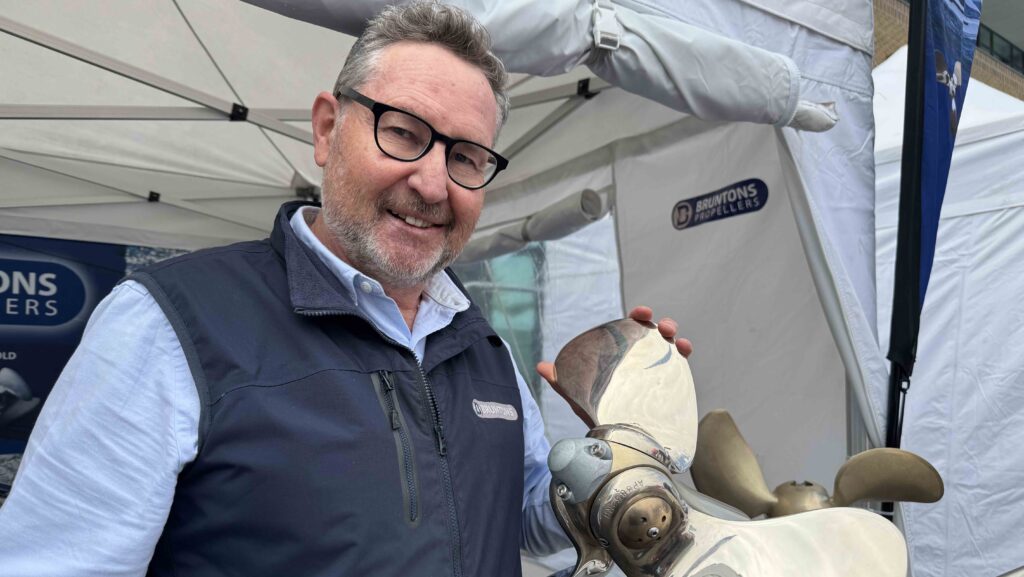 David Sheppard, sales and marketing director, Bruntons Propellers
For Bruntons Propellers, exhibitions remain less about immediate sales and more about putting complex engineering directly into the hands of potential buyers. They’re important visibility tools for the industry, even as footfall and market conditions show signs of softening.
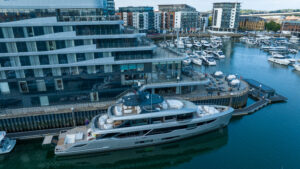
Speaking at the recent South Coast and Green Tech Boat Show, David Sheppard, sales and marketing director for the Essex-based propeller manufacturer, says attending shows is now as much about presence as sales.
Why in-person demos still win
The company continues to rely on exhibitions as a key way to demonstrate its technology, particularly because of the physical nature of its products.
“Our products are very tactile. People need to come and play and see how they work and see what they do.”
Bruntons develops propulsion systems for sailboats, motorboats and commercial vessels, with a focus on efficiency and performance improvements.
How the Autoprop self-pitching system works
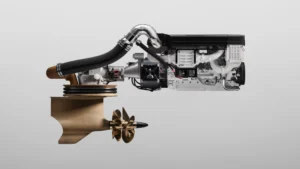
Its flagship technology is the Autoprop, described as the world’s only self-pitching propeller. The system automatically adjusts blade angle depending on speed and conditions, improving efficiency outside a vessel’s optimal cruising range. It’s a feathering propeller for cruising sailing yachts and displacement motor vessels, to 350hp (technical details can be found on the company’s website).
“It effectively changes its pitch angle with the speed of the vessel,” Sheppard says. “It auto sets its pitch with the conditions.”
Unlike conventional propellers, the system is designed to maintain efficiency across varying speeds and loads.
“With a conventional propeller, it’s only efficient at the maximum period speed and power because that’s what it’s designed for – but outside that operating condition, the pitch is not right, so that’s where you lose efficiency.”
Sheppard says the technology delivers meaningful fuel savings and improved range.
An upgraded hybrid-focused version, the Autoprop Eco Star, has been developed for diesel-electric systems and vessels incorporating regeneration technology.
“We’re seeing a lot more in new hybrid systems, there are some sailing catamarans that are going for hybrid because they can regenerate [power],” he says.
Propeller innovation is “tweaks, not revolution”
The firm also produces folding propeller systems, including the Verifold, used on larger sailing yachts to reduce drag when under sail.
Sheppard says innovation in propeller design remains incremental rather than revolutionary.
“Propeller design hasn’t changed in a century. So they’re tweaks, really.”
Maintenance remains a key consideration, with systems requiring regular servicing and periodic bearing replacement, depending on usage.
While innovation continues to push propulsion systems towards greater efficiency and hybrid capability, the company argues that the fundamentals of the industry remain largely unchanged. For now, understanding the product still depends on seeing it, touching it, and meeting it face to face on the show floor.