D-Marin’s 50-marina ambition: “There’s plenty of room for us all”
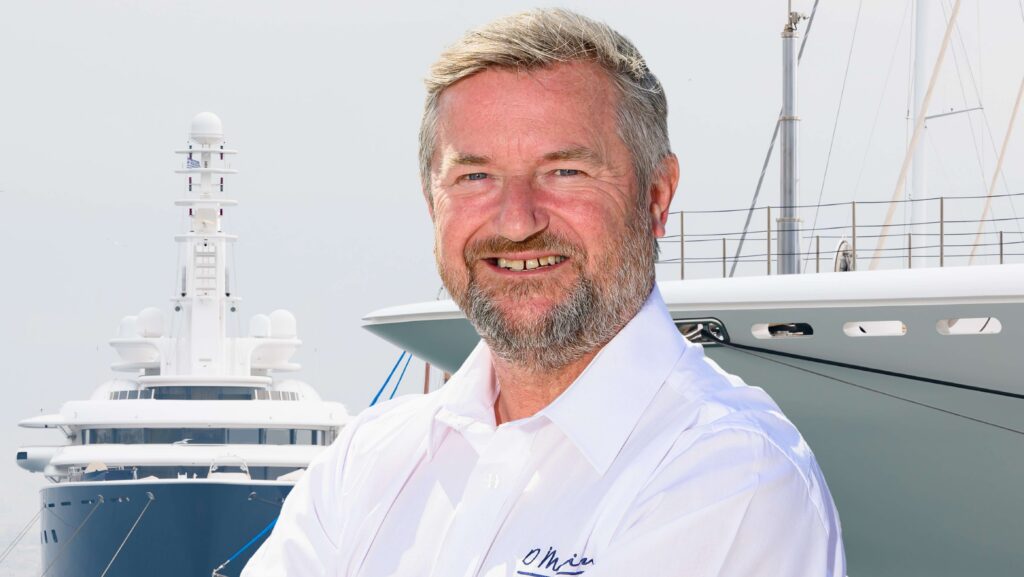 Dean Smith, D-Marin
D-Marin is preparing for another five years of expansion, with a target of growing its portfolio from 28 to 50 marina properties while a change in ownership progresses towards completion. The group says the arrival of InfraVia Capital Partners is expected to bring continuity rather than a change of direction, with investment, acquisitions and consolidation remaining central to its strategy.
“There’s plenty of room for us all,” says Dean Smith CCO of D-Marin – the marina group which announces new marinas entering its fold with almost clockwork regularity. “There are so many marinas that it’s almost impossible for us to imagine we could take over them all.”
In early July 2026 the group – operating in nine countries – announced that global private markets manager CVC Capital Partners had agreed its sale to European independent private equity firm, InfraVia Capital Partners.
The deal’s expected to complete in Q4 says Smith, although he acknowledges that while the groundwork’s done, it’s not in his gift to understand the timeline due to the complexities of lawyers and banks and funding.
Ownership change, strategy stays the same
But while that’s humming along in the background, D-Marin continues to focus on building a larger, integrated network of premium marinas across the Mediterranean and UAE. Its strategy combines acquisitions with investment in infrastructure, technology and customer services, bringing individual properties onto a common operating platform while retaining local management and expertise.
The group currently operates 28 properties. But it’s not stopping there.
“We’d like to double the size of our group. Fifty properties is something we believe we can achieve across multiple territories within the next five years. We believe we can get there.”
Smith says the current management team is planning over a 10-15-year horizon, while recognising that private equity investors typically have a five-to-seven-year ownership horizon and need to generate returns within a defined period.
Under CVC Capital Partners’ ownership, D-Marin identified the growth it believed it could deliver during the investor’s holding period, while maintaining a longer-term strategic plan. When CVC Capital Partners decided to sell, D-Marin sought a new owner aligned with the existing strategy.
Smith says Infravia was selected through an open market process and is aligned with the company’s five-year growth plan. The expectation is that the ownership change will not alter the strategy or management team.
“It’s kind of rinse and repeat to get that scale we’re looking for,” Smith says of the successful operating model.
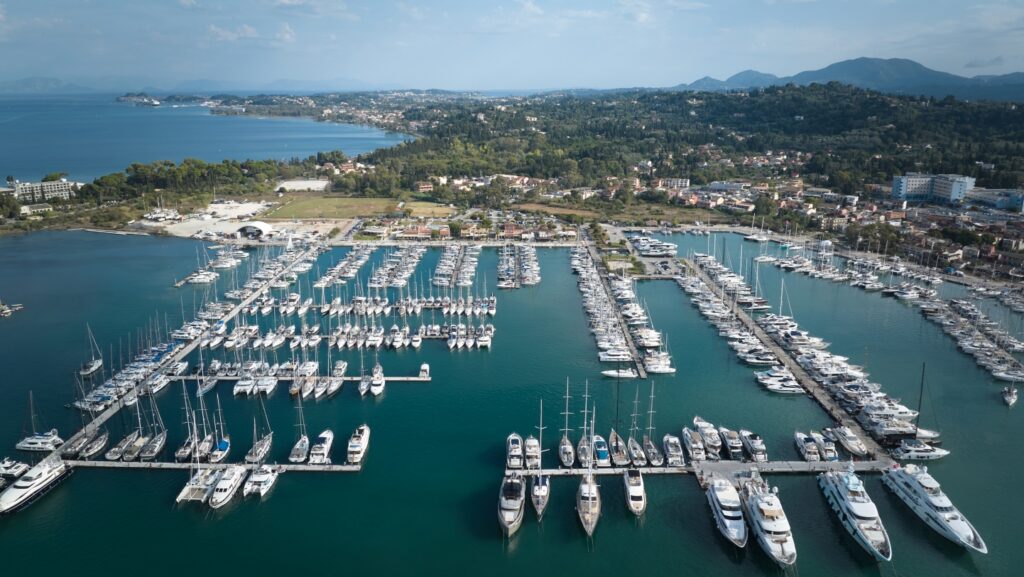
Mediterranean and UAE remain core growth markets
As such, D-Marin will continue its Mediterranean and Gulf corridor strategy, even while geopolitical tensions rumble on.
Smith says D-Marin hasn’t been impacted too much by the current climate.
The company views geopolitical uncertainty as a continuing feature of international markets.
“Although we’d like to believe they are not, they [variables] are a constant. Somewhere, something is being badly handled by some organisation.
“We see constant change in the geopolitical situation by territory. We don’t think that’s going to stop because it’s pretty much been doing the same thing for the last 40 or 50 years post-war. There’s always been something going on.”
It expects to adapt its operations in the short term when necessary, while maintaining its longer-term strategy.
“I’m delighted to say that no one’s been hurt in the Middle East in any of our properties. That, whilst it was very confusing in the beginning to see all sorts of military equipment being thrown at from one side of the Gulf to the other, the yachts are still there, the properties are still there, and we continue without closing for one day.”
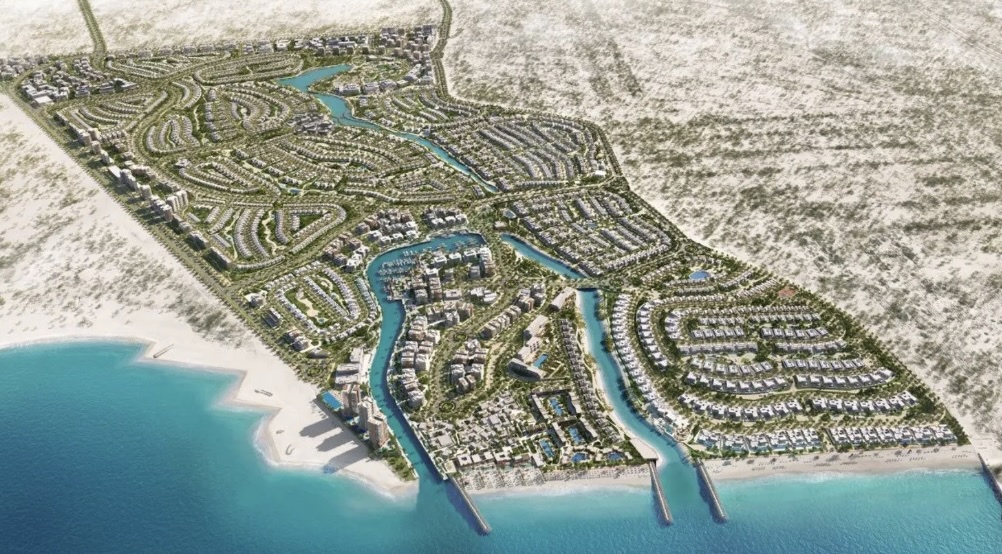
Partnerships offer a route to growth
Thus, the Gulf remains one of D-Marin’s five-year plan growth opportunities, alongside markets including Italy and Spain. However, Smith says the company doesn’t identify a single territory as its main focus, instead considering opportunities across its different markets according to available resources.
“We’re never going to say no to opportunity,” Smith says. “We’re looking at everything all the time. But it has to make sense to us and our investor.”
Making most of opportunity is personified by the group’s partnership with Azimut-Benetti.
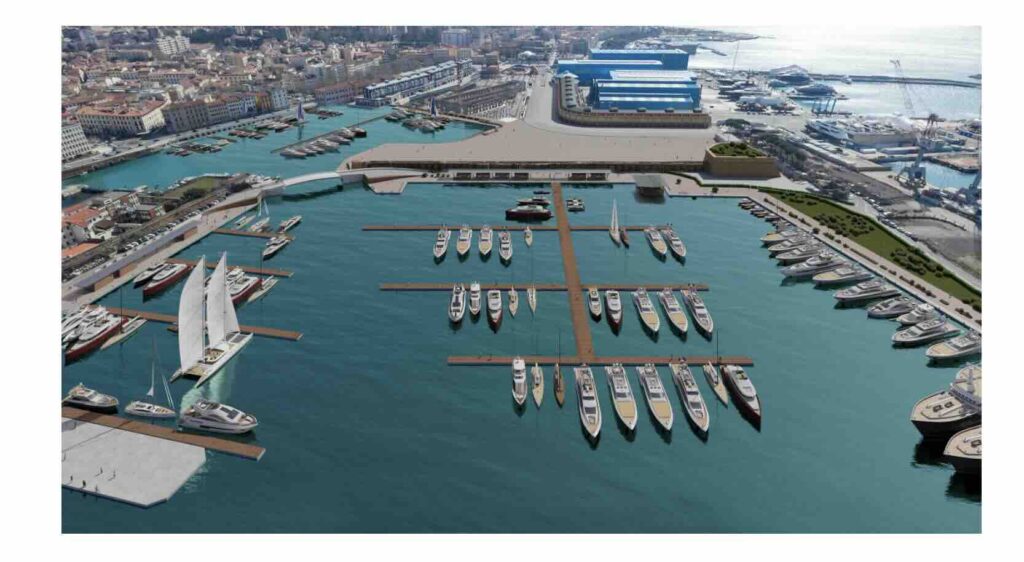
In 2024, D-Marin and Azimut-Benetti Group began a €15m Livorno marina build. The idea was to focus on combining the yacht builder’s knowledge of yacht production, R&D, development and innovation with D-Marin’s expertise in marina operations.
Under the arrangement, Smith says Azimut-Benetti focuses on what clients need from the yacht itself, while D-Marin focuses on providing the services and infrastructure required when the yacht is in port or a marina. The two companies are also sharing knowledge and intentions around improving the overall customer and cruising experience.
He describes the agreement as a “win-win” based on improving the service provided to clients and yachts and says that the partnership is “a wonderful place to start. I’m not going to say that we will, never, ever, reach an agreement with anyone else . . . we said we would work together for the benefit of both parties to build a better experience, and that’s where we are today.
“We don’t have a big list of people who are saying, ‘Right, we want to partner with these guys’. We’re looking for the right opportunity for win-win.” Smith says.
“Whether in five years’ time that includes five sailing brands and, another two motorboat brands, perhaps in a different sector, who knows?” Smith says.
“We are super open-minded. We’re super creative in our approach. We try to think as much as we can like a startup, so every problem’s to be solved today.”
Building the platform for further expansion
In order to achieve further expansion, Smith is pleased that ‘phase one’ of D-Marin’s latest journey is complete (it was founded in 2003). That was all about establishing the company’s consolidated operating platform and testing its ability to scale across multiple territories, tax regimes and currencies.
It built the platform because it could not find an existing marina software system capable of operating across its different markets. It now connects D-Marin’s existing assets, allowing it to share systems, data and operational synergies. Membership schemes also enable customers to consent to their information being shared across different D-Marin properties, supporting a more seamless experience when using marinas in different territories.
Phase two focuses on the next five years
Smith says the strategy is not a fixed sequence of phases, but an evolving business plan that is reviewed and adjusted annually according to performance, opportunities and challenges.
But phase two covers the next five years of D-Marin’s growth and is based on what the company believes it can execute with its team, partners and investors – while looking to gather fifty marinas in total.
“So that’s kind of phase one and phase two.
“And then our phase three, four, five, six, seven, eight, nine, ten, depending on how many years we’re all involved in doing this, will be aligned with the opportunity available to us,” Smith says.
Plenty of room for independent marina operators
For those owning ‘mom and pop’ marinas who may be concerned about what – for example – phase seven might hold, Smith says they’ll still have a place in market particularly where owners retain the passion, focus and succession plan needed to operate the business.
“These mom and pop guys want to work. They want to keep delivering an amazing facility for their amazing customer base,” Smith says, but notes a challenge for many independents has been succession, as founders reach retirement age without someone in place.
“There aren’t successors for these original owners with the same passion, the same focus.”
But he vehemently believes the marina market’s size means there’s significant scope for further consolidation without eliminating independent operators. “If I think about, the Mediterranean, for example, we’re at 3 per cent of the properties, and we look like a big group.”
For Smith, the scale of the marina market leaves room for both consolidation and independent operators. D-Marin intends to keep expanding where the opportunity makes commercial sense, while its investment in a common platform, infrastructure and technology is designed to make each new addition more closely integrated into the wider group.
This article was edited on 21 August to state D-Marin operates in nine countries (not over nine), and to include CVC Capital Partners’ full name. ‘Successful operating model’ was added to clarify that ‘rinse and repeat’ refers to the model.