A manufacturer responds to tragic death on superyacht caused by pad eye
While the marine sector offers many terrific stories of derring-do, teams battling and survival against the odds, it can also be a dangerous world where horrendous outcomes devastate families, friends, colleagues and the wider community.
Last week, MIN reported that a coroner concluded professional sailor Sam Richmond’s death in 2022, during training for the Superyacht Challenge Antigua, was caused by fatigue cracking that led to a pad eye fracture, resulting in a block striking him fatally.
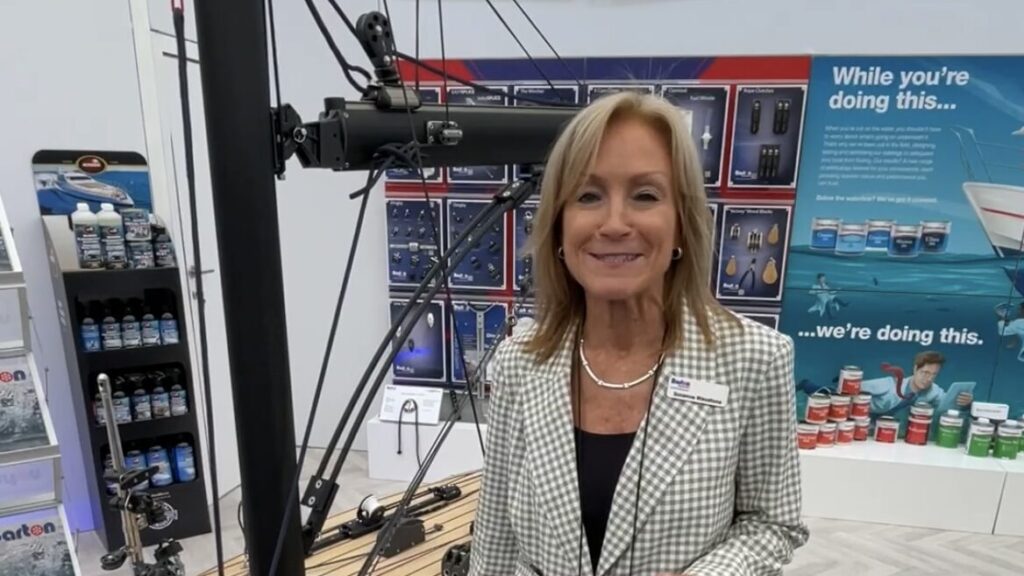
Although Barton Marine was not involved and does not supply the superyacht sector, Barton manufactures over 2,000 parts of hardware and deck equipment for yachts up to 50 feet. Barton chief executive Suzanne Blaustone was deeply affected by the story of the sailor’s death and agreed to speak with MIN and offer her third-party perspective about safety issues. She says that, tragically, it’s very possible that no evident cracks or tension pulls can be noted prior to a break. But, she says, there are ways that boat owners and builders can help protect themselves from this onboard.
“Failures to solid metal parts are sometimes impossible to see or realise up front,” she says. But to protect against what happened onboard Farfella — the yacht Richmond crewed onboard — happening again, “a yacht architect or specifier should do everything they can to determine the quality of the components used in their designs. It’s prudent to use the highest quality equipment from suppliers, based on the loading attributed to the vessel. Metal parts can be forged, pressed, cast or machined, and the way a part is manufactured can determine its strength.
“Data sheets and MSDS sheets for pad eyes and other brought-in components should specify safe weight loads and break loads to determine they are strong enough for the job.”
She notes that builders must be discerning about whom they buy from.
“OEMs and all end-users of boat equipment need to work with reputable companies that are trustworthy and honest in their selling practices,” says Blaustone. “And it helps to work with manufacturers who make their own products. Companies that have their products made abroad are not always fully aware of the quality control, materials and assembly as those companies that oversee their own production.”
Manufacturer’s responsibility for quality procedures
Blaustone says that Barton is committed to constantly improving quality procedures to not only test components up front during R&D design and build, but also to spot check production batches on an ongoing basis to further ensure no changes have occurred with raw materials or designs that could affect reported safe load ratings. The company also has long-term relationships with its raw material suppliers and makes its products in its own UK factory.
“The new GPSR packaging regulations already required in Europe and soon to be established in the UK and USA, require batch notification on the packaging of equipment so any failures found can be traced back to the batches that may still be in stock or circulation. This is another safety standard that may help curb injuries or breakages in the field,” she says.
But it’s not all down to what’s on the boat at the outset. It’s also how it’s looked after.
“Just like the care of your car, regular maintenance, cleaning and repair is essential for all boat owners, captains and crew.
“Parts do wear over time and there can be faults that go undetected in even the most controlled production environments, so regular attention to signs of wear and tear is essential.”
During the inquest, Sam Laidlaw, speaking on behalf of the yacht owners, said new processes are already in place. Laidlaw told the inquest that more stringent checks have now been implemented. Pad eyes will be inspected and replaced every two years, and new, stronger titanium fittings are in use.
“The pad eye is genuinely thought to be solid, it’s a very solid piece of metal, you would expect the rigging to fail, or training blocks to fail, but you wouldn’t expect the pad eye to be the weak link,” says Laidlaw.
“I hope lessons will be learnt about rigging design and boat design. There have been modifications to more recent boats, which hopefully will prevent this from happening . . . I hope lessons will be learnt and this will never happen again.”
Blaustone agrees that inspection is essential.
“Captains and boat owners should create a checklist of maintenance tasks to remind them of what is required every season to ensure part fatigue is found and fixed before failure occurs,” she says. “When buying or specifying equipment for your build or boat, discuss the production and care of those products with your manufacturer upfront and ensure the boat user understands and has instructions on how to maintain the equipment provided.
“Boat owners have a right to ask the seller about countries of origin, warrantees, specifications, liability insurance and maintenance instruction.”
At Barton, Blaustone says, engineering, safety and quality come at the forefront of everything the company does. “We would never take the chance at putting boaters at risk. It’s our ethic and noted in our mission statement and I’m proud that our fault rate on products across our full range is less than .01 per cent,” she says.
“We have a three-level quality control program and do our own in-house testing in our test lab to ensure break loads are represented properly. We also now video our break testing so we can catalogue and report clear test results that you can see and gauge.
“Outside of some hardware components, we have a few products we purchase to add to the range from the wider marine market. Those not manufactured by Barton still require the same ongoing testing and quality control process before we ship them out to our customers.”