
MCA faces mounting questions over coastguard volunteer payments
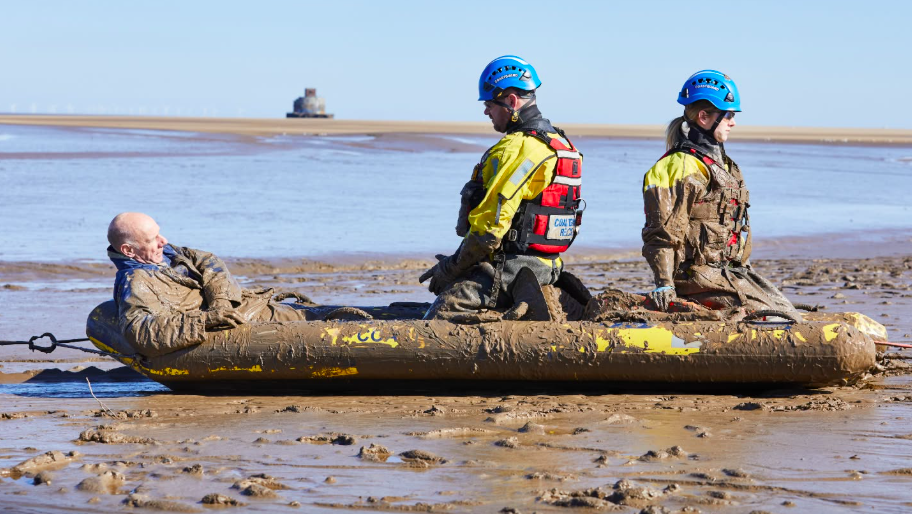 Image courtesy of MCA via Facebook
The UK’s Maritime and Coastguard Agency (MCA) is facing growing political pressure over its decision to end hourly payments for thousands of Coastguard Rescue Officers (CROs), with ministers and senior officials accused of misleading MPs about whether the move was legally required. At the centre of the row is a simple question: did the Court of Appeal force the MCA to stop paying its volunteer rescue officers, or did the agency choose that course to avoid the employment rights that come with worker status?
The allegations, reported by The Guardian, have transformed what began as an employment tribunal into a debate about the future of one of the UK’s largest volunteer emergency services.
The stakes could be significant.
HM Coastguard responded to more than 39,000 incidents during 2024/25 using around 3,500 volunteer CROs backed by about 100 employed operational staff. Any change that affects the recruitment or retention of those volunteers has implications across the wider maritime sector.
The reason that the dispute erupted
The dispute dates back to 2020, when long-serving CRO Martin Groom challenged the MCA after it refused his request to be accompanied by a trade union representative during an appeal against his dismissal. Groom argued that because CROs received hourly payments for call-outs, training and other authorised duties, they should be treated as workers rather than volunteers. MCA disagreed, maintaining that the payments did not alter CROs volunteer status.
After circa six years of legal proceedings, the Court of Appeal settled the question in January 2026. It was ruled that CROs carrying out paid duties are workers in law. The judgment found that the practical reality of the relationship – not the label attached to it – was decisive. This means that hourly payments, payslips, P60s and the obligations placed on rescue officers all point towards ‘worker’ status.
Employment lawyers immediately described the ruling as one with implications beyond HM Coastguard. Organisations across the charity, emergency services and voluntary sectors have been looking at whether volunteers who receive regular payments could also qualify for statutory employment rights.
But rather than extending rights to CROs, MCA announced that hourly payments would end from September 2026, returning the service to a fully volunteer model. The agency says that approach is essential to preserve the flexibility that allows volunteers to respond to incidents while balancing other jobs and family commitments.
That explanation is now under intense scrutiny.
Critics argue that the Court of Appeal never required the MCA to stop paying CROs. Instead, they say, it simply confirmed that if the agency continued making those payments it would also need to recognise the employment rights attached to worker status. In other words, they argue the decision to withdraw payments was a policy choice rather than a legal obligation.

Claims ministers misled MPs over legal position
That disagreement was highlighted this week as MPs questioned whether Parliament had been given an accurate picture of the legal position, while campaigners claimed consultation responses from volunteers had been presented selectively. The House of Commons Library briefing prepared ahead of the debate sets out the legal background and the arguments on both sides.
According to The Guardian, there are claims that maritime minister Keir Mather and MCA chief executive Virginia McVea misled MPs by suggesting that ending payments was effectively the only option following the court ruling. Both the MCA and ministers reject that interpretation and continue to insist the changes are needed to protect the long-term sustainability of the Coastguard Rescue Service.
Meanwhile, many CROs say the payments were never regarded as wages but as modest compensation that enabled them to leave work at short notice, travel to incidents or arrange childcare while responding to emergencies. People Management reports that the MCA intends to retain reimbursement of expenses but end hourly payments from September.
Recruitment and retention concerns grow without data transparency
MIN is unaware of any routinely published dataset showing CRO recruitment and attrition trends in the way comparable emergency services publish workforce statistics. This makes it difficult to independently verify the scale of any workforce impact following the Court of Appeal ruling. MCA does not regularly disclose turnover rates, regional recruitment patterns or availability metrics for CROs in a way that allows trend analysis across time or geography.
What has emerged is anecdotal evidence and localised reporting from coastal stations and volunteer accounts, alongside parliamentary concerns recorded in the House of Commons Library briefing. Stakeholders have raised concerns that removing call-out payments could disproportionately affect availability in areas where volunteers rely on remuneration to offset lost wages (or childcare costs) when responding to incidents. However, without published data on recruitment pipelines, retention rates or missed call-out response rates, the scale of any emerging risk remains without evidence.
Public reaction: sympathy for volunteers, uncertainty for future resilience
Away from Westminster, the public mood has been largely sympathetic towards CROs. Across boating forums, discussions and comment sections, the overwhelming concern is not the legal ruling itself but the potential impact on search and rescue capability if experienced volunteers leave the service.
Many contributors argue the Court of Appeal merely clarified the law and that MCA chose to remove payments rather than recognise workers’ rights, while others believe Parliament should create a new legal framework similar to that used for retained firefighters.
On one sailing forum, commentators describe the situation as one where ‘nobody wins’. Several warn that volunteers are being forced to pay the price for a legal and management failure.
Another forum echoes those concerns, with contributors debating whether HM Coastguard has become too dependent on volunteers and warning that whatever solution is adopted, recruitment and retention are likely to suffer.
The same themes have emerged beneath national media coverage, where readers have questioned whether ending modest call-out payments risks weakening a vital emergency service at a time when coastal communities are becoming increasingly busy.
That sympathy is echoed by multiple voices. In Devon, North Devon MP Ian Roome describes CROs as volunteers who work “in all weather, at all hours, often in dangerous conditions, to keep others safe,” warning that cutting their pay to nothing risks damaging morale rather than saving money. In Cornwall, community figures have voiced similar concern for local teams – Boscastle café owner Ray Nash says “Boscastle knows better than most the value of our coastguard teams,” as councillors and MPs prepared a cross-party motion urging the MCA to reconsider.
In Scotland, GMB Scotland secretary Louise Gilmour puts it bluntly. She argues that “the MCA knows the price of everything and the value of nothing.”

A wider question over the UK’s emergency workforce model
There is broad agreement that the dispute now poses a much bigger question about the long-term resilience of the UK’s volunteer coastguard service.
Whatever the outcome of the political row, the case has already become a landmark for the UK’s volunteer sector. For the maritime industry, the bigger question is whether the MCA’s new model can maintain the experienced volunteer workforce on which coastal search and rescue depends. If recruitment or retention falters, the consequences will extend well beyond employment law and into the resilience of the UK’s maritime emergency response.
How UK emergency services handle hybrid workforce models
The CRO model sits in a position between several established UK and international emergency workforce structures, none of which map perfectly onto MCA’s evolving approach.
Retained firefighters, for example, operate under a formal ‘on-call’ contract with structured availability payments and incident-based remuneration, creating a legally defined employment relationship that recognises both flexibility and worker status. At the other end of the spectrum, organisations such as the RNLI operate a largely volunteer model with no hourly wage, relying mainly on expense reimbursement, training, culture and institutional commitment – though the charity does make limited payments in specific circumstances, such as a contribution toward lost earnings for residential training. Mountain rescue teams follow a similar unpaid volunteer structure, typically supported by charitable funding and local operational autonomy. Internationally, some ambulance auxiliary and community responder schemes adopt hybrid arrangements that include stipends or availability payments without necessarily triggering full employment status, although these vary significantly by jurisdiction and legal framework.
MCA’s model has historically sat between these systems – offering modest remuneration for attendance while retaining a volunteer classification. But now there’s a clear binary choice between a recognised employment relationship or a return to a strictly unpaid volunteer structure, rather than the blended approach that previously existed.