Video: California fire ignited by stranded sailor’s flare burns 14,500 acres
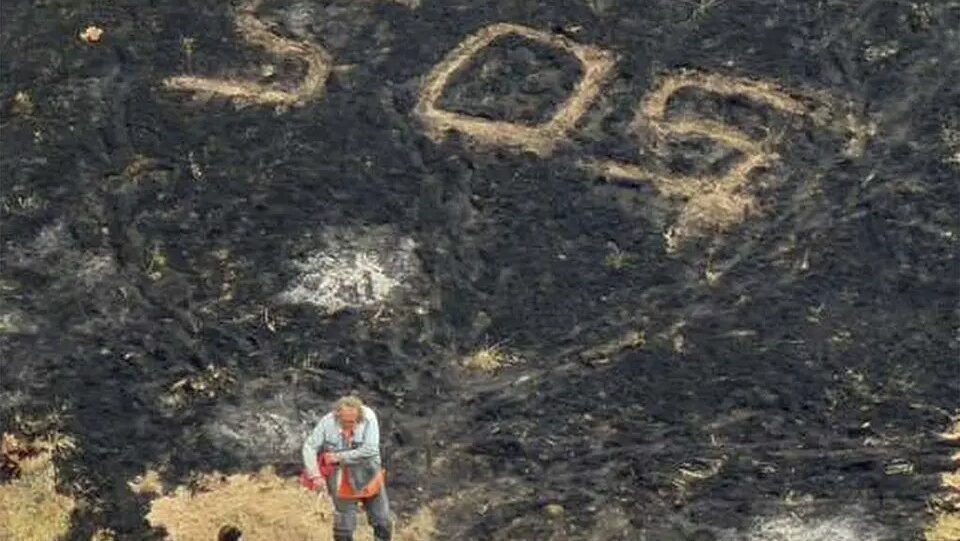 A stranded sailor ignited a fire on Santa Rosa Island after using a flare. Image courtesy of US Coast Guard Air Station Ventura
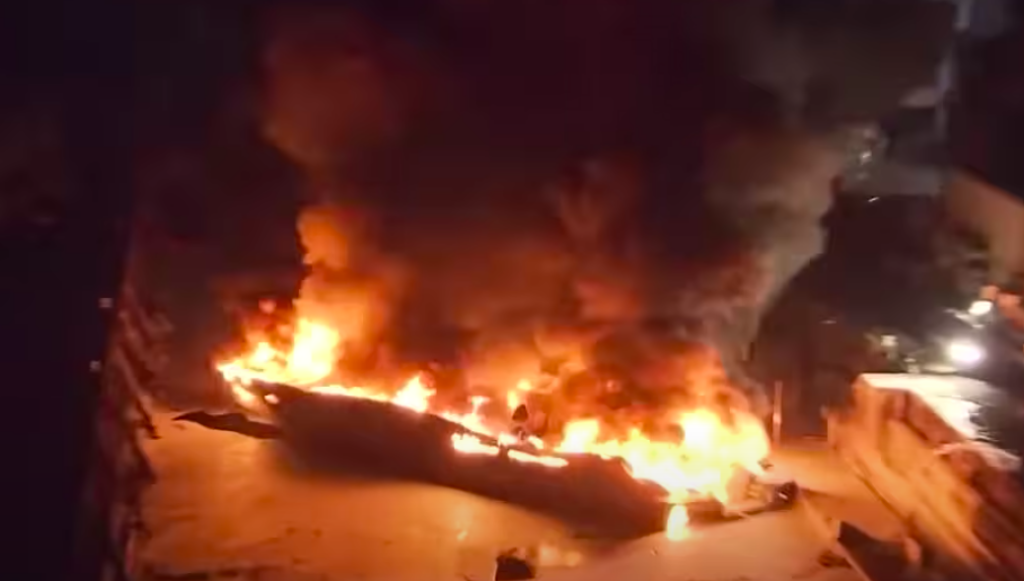
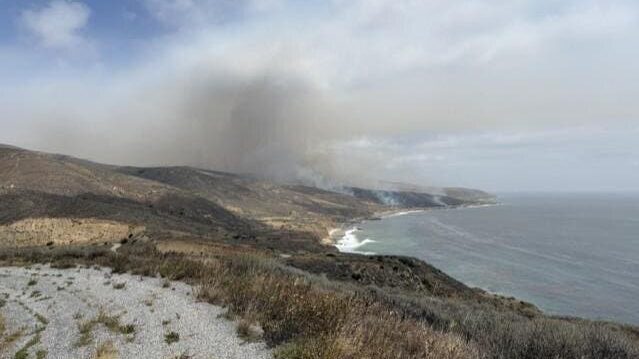
A wildfire believed to have been sparked by emergency flares from a stranded sailor has burned through more than 14,500 acres on Santa Rosa Island in Channel Islands National Park, putting rare wildlife habitats and historic buildings at risk on the remote island off the Southern California coast.
Still uncontained on Monday evening (18 May 2026), the blaze has become the largest wildfire in California so far this year and the biggest recorded on Santa Rosa Island in modern times. Fire crews have faced steep terrain, rough seas and strong winds while trying to slow its spread across the island, which sits about 40 miles from Ventura.
The fire started after a 67-year-old sailor wrecked his boat along the island’s rocky shoreline. Stranded overnight, he fired emergency flares in hopes of being spotted by passing vessels.
“We do know that he launched some flares to try to get some attention,” Kenneth Wiese, a spokesperson for the US Coast Guard’s south-west district, told media in a statement. “It paid off for him. We were able to get him out of there.”
Boaters who noticed the wreck alerted authorities. Rescue crews later found the sailor standing near burned vegetation after he scratched “SOS” into the charred ground. The Coast Guard rescued him by helicopter on Saturday. Officials have confirmed the sailor was not seriously injured.
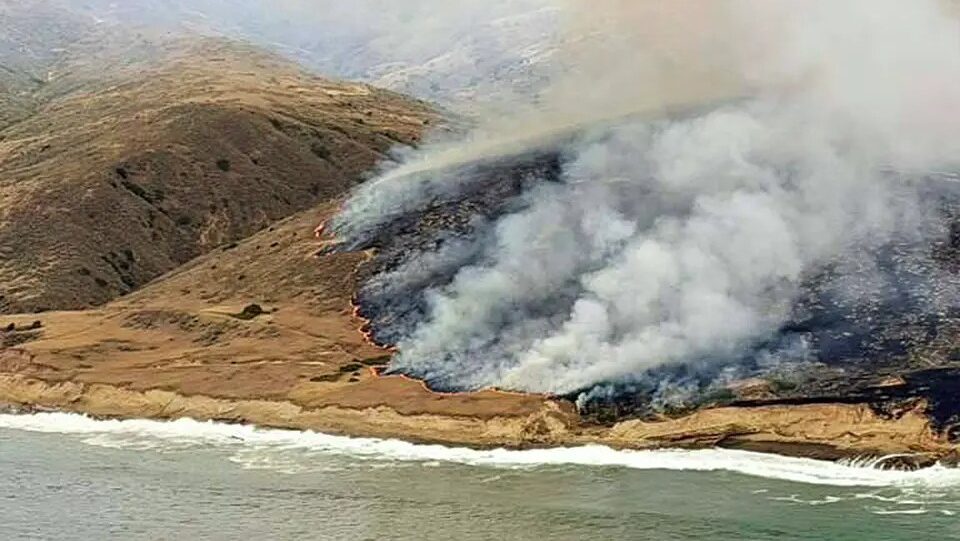
Investigators believe the flares ignited dry brush near the island’s southern coast, though the National Park Service is still examining the exact cause.
Since then, firefighters have ferried equipment, hoses, pumps and supplies onto the island by boat while helicopters evacuated nonessential park employees. Eleven National Park Service staff members were flown to the mainland on Sunday.
More than 70 firefighters have been assigned to the incident. Crews have concentrated on protecting housing areas, the pier, historic ranch structures and the island’s rare Torrey pine groves. Wind gusts above 30mph repeatedly disrupted aerial water drops, with one firefighter reporting gusts reaching about 50mph.
“Every opportunity that we have to go direct and fight this fire head-on, we will take,” Mike Theune, an information officer assigned to the fire, told USA Today.
By Monday night, officials said the fire had reached the Torrey pine habitat on the island’s eastern side. Early assessments suggested the flames moved through the area at relatively low intensity and that the grove was still standing, though crews had not yet completed a full inspection.
“We are absolutely concerned,” Theune tells the New York Times. “It’s extremely rare, considered possibly the rarest pine in the world, and it only grows naturally in these two places.”
Torrey pines grow naturally only on Santa Rosa Island and in a small reserve near San Diego. Park officials and conservationists worry the fire could leave lasting damage in one of the state’s most fragile ecosystems.
The Channel Islands are frequently compared to the Galapagos because of the number of species found nowhere else. Santa Rosa Island alone is home to six endemic plant species, along with island foxes, island spotted skunks and rare seabirds.
“It’s one of our gems of the California coast,” says Michael Cohen, chair of the Channel Islands National Marine Sanctuary Advisory Council. “It looks like it did 100 years ago – it’s just untouched.”
The fire has destroyed at least two historic buildings, with other historic properties under threat.
Officials said firefighting operations on the island have also been affected by new fires burning on the mainland, including the Sandy Fire near Simi Valley. Aircraft and other resources were reassigned according to immediate threats to life and property.
Former Channel Islands National Park superintendent Russell Galipeau said the fire highlighted both the ecological sensitivity of the islands and the strain on firefighting resources across Southern California.
“This is why this is not a time for the Park Service or any of the federal agencies to be downsizing science,” Galipeau told SFGate. “These are times we need to step it up and say, okay, what can we learn from this fire?”