Gulf Craft CEO Erwin Bamps: Navigating regional friction and driving resilience
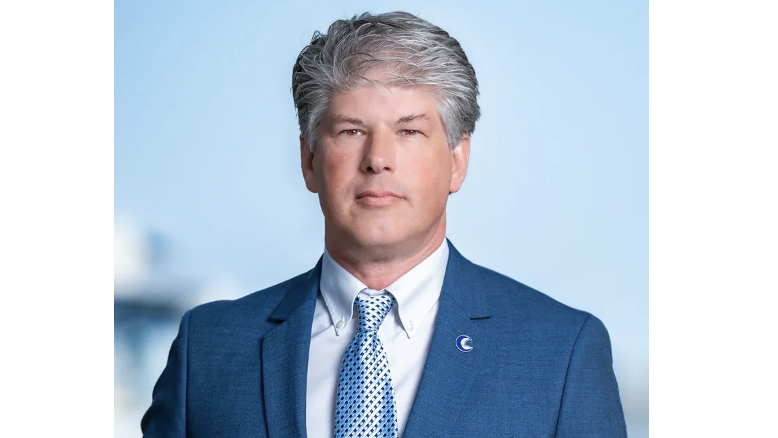 Erwin Bamps, CEO, Gulf Craft
When Erwin Bamps returned to Gulf Craft Group as CEO in April 2025, the UAE-based builder was on a clear trajectory of global expansion. Within a year, the marine industry had been tested by a series of sharp macroeconomic challenges.
Bamps, who previously spent 16 years at Gulf Craft before moving to be vice president of Prestige Yachts, has retaken the helm at a key juncture. There’s planned expansion to the Middle Eastern shipyard’s fleet and services, balanced with the residual market friction following the US-Iran conflict.
Conflict consequences
While 2026 has been anything but predictable, Bamps says strategic agility has been critical during this period.
“We didn’t stop production, not even for an hour,” he explains. “We continued to build and deliver boats while maintaining constant communication with our clients, dealers, suppliers and keep the business moving with discipline.”
Reflecting on a challenging early 2026, Bamps says: “Any regional conflict creates pressure, particularly for a manufacturing business. The most immediate effects are not necessarily on demand, but on sentiment, logistics, insurance, travel planning and the timing of buying decisions.
“In the short term, geopolitical tension naturally affects confidence. It can influence cruising plans, insurance, event activity and the timing of some purchasing decisions. That is unavoidable. Restricted logistics have also required more flexibility in delivery planning.”
But having operated from the region for more than four decades, Bamps notes that “resilience is part of the way the business is built. We are used to managing complexity, and our vertical integration gives us a level of control that helps us respond when external conditions change.”
Bamps remains optimistic: “The fundamentals of the Middle East as a yachting destination remain strong. The region continues to invest in marinas, waterfront real estate, hospitality, tourism and regulatory frameworks that support marine leisure,” he says.
“The Middle East has become more sophisticated as a yachting market. Buyers understand the product better, expectations are higher and the ecosystem is continuing to mature. That does not disappear because of a period of tension.
“In the medium term, the opportunity is to convert resilience into confidence.
The region must continue investing not only in destinations, but also in service, crew support, maintenance and long-term ownership infrastructure. That is what will define its credibility as a yachting hub.”
Middle East: a resilient boating market
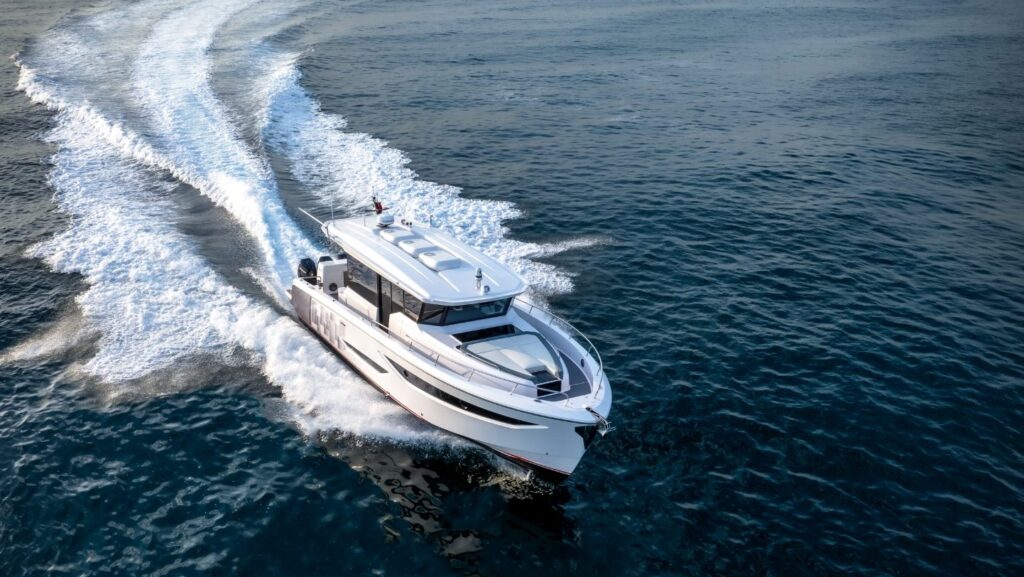
Gulf Craft’s portfolio includes the Majesty line of luxury craft ranging from 60 to 175ft, the Nomad class of yachts and superyachts, the Oryx cabin cruiser models and the SilverCat power catamarans.
In August 2026, Gulf Craft launched the new Nomad 70 at its UAE shipyard, adding a new model to the builder’s long-range cruising yacht range. The first hull of its new Majesty 145 superyacht was also unveiled in April 2026. The 145 serves as the latest addition to Gulf Craft’s 40m+ fleet, complementing the Majesty 175 and Majesty 160, with the latter due to be launched later this year.
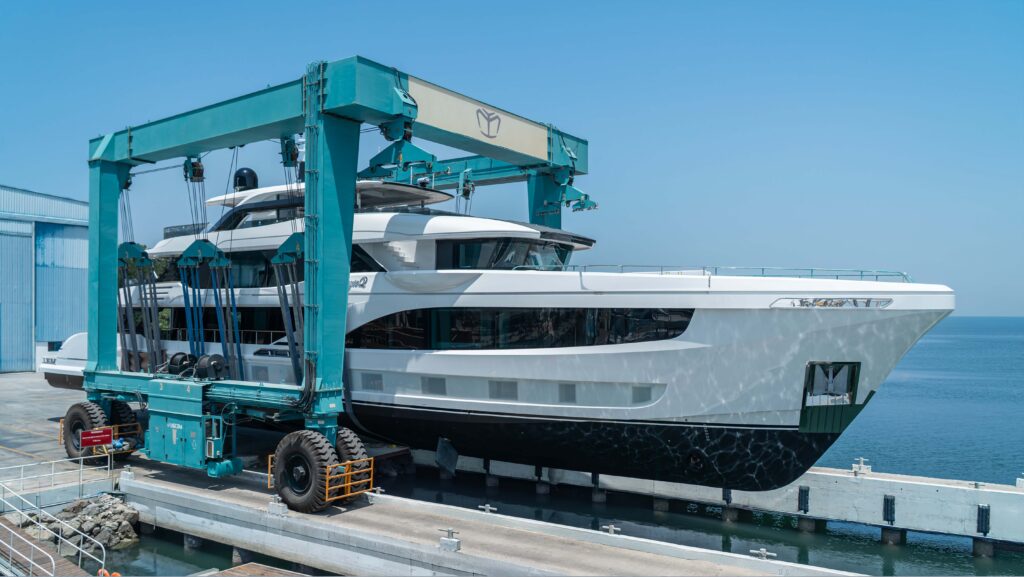
Gulf Craft has also embarked on a new 10,000m² manufacturing facility in Ajman, which will primarily build its SilverCat and Oryx lines.
“Investing in the Ajman facility is a clear sign of expansion, growing demand and build process optimisation.”
The Ajman facility allows the company to optimise production for its leisure craft range while creating more focused capacity at the main shipyard for larger yachts and superyachts.
“Oryx and SilverCat vessels have different production requirements from larger Majesty and Nomad yachts, so it makes sense to give them a dedicated environment designed around their build process, sea trials and delivery flow.”
Gulf Craft’s Superyacht Service Centre (SYSC) is helping to create the infrastructure that supports the ‘full ownership experience’.
The SYSC has deep-water berths, an 80-metre service quay, 600-ton and 75-ton travel lifts, on-site technical teams, and in-house capabilities across mechanical, painting, joinery and upholstery work.
“Importantly, this capability is not limited to Gulf Craft-built vessels – SYSC is equipped to service boats and yachts from any shipyard,” Bamps explains. The offering forms part of Bamps’ goal to expand Gulf Craft’s scope “outside the remit of boatbuilding” into ownership, service and long-term care.
Vertical integration increases at Gulf Craft
Gulf Craft is known for a high level of in-house manufacturing, which Bamps says attracts owners.
“On a boat, every centimetre matters. When design, engineering, production and interiors work closely together in-house, we can optimise layouts, integrate systems more intelligently and create spaces that feel generous without compromising practicality. In yacht building vertical integration gives better control over quality, timelines and cost.
“In 2026, the strongest value is in areas that affect consistency, timelines and lifecycle support. That includes engineering, interior fitout, after-sales support and spare parts readiness.
“The more we can manage internally, the more we can protect quality and respond quickly when conditions change. This is especially important in a market where supply chains, logistics and client expectations are all under pressure.”
Emerging markets
In line with many yards, Southeast Asia is a key emerging market for the group.
Bamps adds: “Our participation in the Singapore Yachting Festival has reinforced that potential. It showed us that there is clear relevance for all our brands in southeast Asia.
“We also see rising potential in parts of Africa, particularly coastal and island markets where tourism, marine transport and waterfront developments are evolving. These markets are interesting not only for leisure boating, but also for commercial and utility vessels.”
In May 2026, Gulf Craft appointed Asia Yachting as the official dealer for its Majesty Yachts brand in Hong Kong and the Philippines
The GCC region also remains “highly important” to the company’s core strategy.
“Across the region, major waterfront, marina and tourism developments are strengthening the marine lifestyle environment, from Dubai Harbour, Mina Rashid and Yas Marina in the UAE to Saudi Arabia’s Red Sea destinations, Qatar’s Doha Port and Oman’s emerging marina-led tourism projects.
“These developments are not only increasing berthing capacity, but also creating interconnecting yachting destinations.
“What connects these markets is not only demand. It is the development of the ecosystem around boating. That is where we see long-term opportunity: in markets where ownership, infrastructure, service and lifestyle are beginning to mature together.”
Commercial vessel operations
On the utility side, Gulf Craft supports around 80 per cent of the Maldives’ transport fleet –
a commercial model that offers interesting growth potential.
Bamps says: “Through Gulf Craft Maldives, we have a dedicated production facility in the market, which gives us a strong local presence and a direct understanding of operational requirements.
“Can this model be applied to other archipelagic markets? Yes, but it has to be adapted carefully. Every island market has its own regulations, sea conditions, tourism and transport needs, so it is not something that can simply be copied and pasted. That said, we do see clear potential in markets where marine transport is essential to daily life.”
AI in production
In 2025, Gulf Craft signed a memorandum of understanding (MoU) with cognitive AI-driven technology provider Partsol.
Bamps says the partnership initially targeted supply chain intelligence – building resilience into procurement and logistics.
“More broadly, we are currently working with several partners across different areas of intelligence, and we are gradually rolling AI tools out within the organisation,” he says. “This includes supply chain management, production planning, design modelling, visualisation, safety monitoring, maintenance planning and crew-support systems.”
A game of two halves
For Gulf Craft, long-term commercial growth across both the GCC and emerging territories depends on how effectively regional infrastructure, service networks and ownership regulations mature alongside buyer demand.
And, while 2026 has presented unexpected challenges, Gulf Craft has continued to plan for the future and build efficiency.
The group’s extensive vertical integration is providing a practical buffer and aids resilience, while its expanding portfolio and manufacturing footprint are ready for buyer sentiment to grow.
This article was originally published in Marine Industry News magazine. Read more issues here.