UK government reveals multi-billion-pound investment in major maritime projects
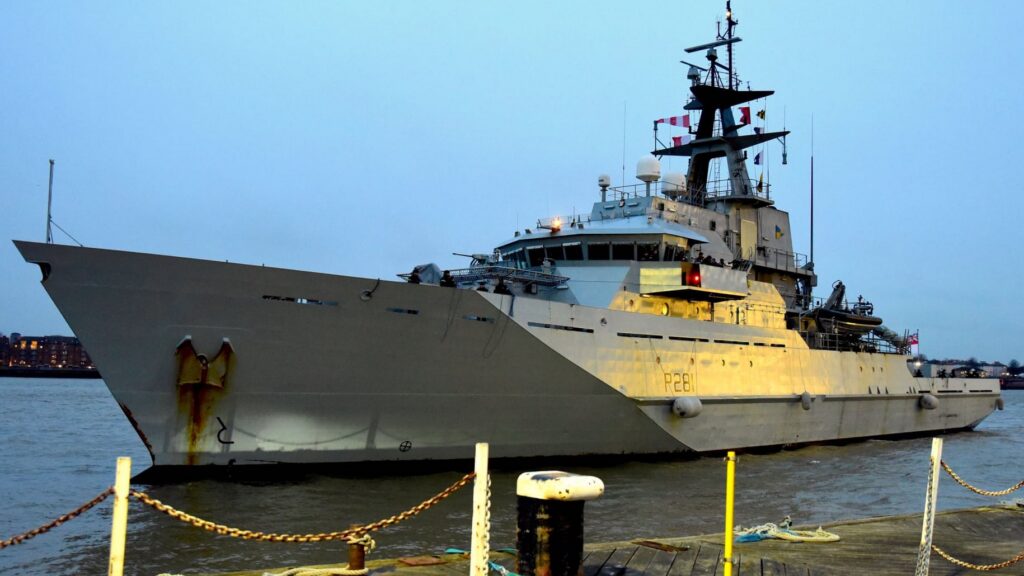 The UK’s seas contributed more than £200bn to the economy in 2021, according to the government
The UK government has announced funding for two maritime projects to be delivered by British companies, including three floating docks for the Royal Navy’s submarine service and a new marine research vessel.
Chancellor John Healey is set to confirm that the three floating docks, known as Programme Euston, will be procured through a UK-only competition. The facilities will be located at HM Naval Base Clyde and support maintenance of the Royal Navy’s current and future fleet of nuclear submarines.
The docks will be used for submarine inspections, upgrades and repairs.
New 85m marine research vessel
The government has also committed funding for an 85m marine research vessel, which is expected to enter service in 2031 or 2032. It will replace the RV Cefas Endeavour, which has supported UK marine science since 2003 and is due to retire in the early 2030s.
The new vessel will lead a national system for monitoring the UK’s seas, bringing together marine surveys, data and technology to support the management of fisheries and the marine environment.
It will accommodate more than 40 people and carry out scientific work including fish stock assessments, seabed mapping, pollution monitoring and responses to marine incidents. The vessel will use automation, robotics and artificial intelligence, while running on clean fuels.
The government says the vessel will also contribute to the security of the UK’s seas and support coastal communities. The Centre for Environment, Fisheries and Aquaculture Science (Cefas), which has laboratories in Lowestoft and Weymouth, will lead the project.
The government expects to engage with the UK shipbuilding sector in the coming months to plan the next stage of procurement. The vessel’s design will reflect the specialist scientific requirements of its mission.
The UK’s seas contributed more than £200bn to the economy in 2021, according to the government.

Chancellor of the Exchequer, John Healey, says: “Britain has a proud shipbuilding heritage, and every pound of this strategic investment in a critical sector is backing British jobs on the Clyde and businesses across the UK, supporting growth in every postcode.
“By backing British shipyards, we are not only boosting national security but also securing resilience in the industries that will drive growth today while building the capabilities the country needs for the future.”
Cefas CEO, Tim Green, says: “This once-in-a-generation investment is a significant moment for Cefas and UK marine science. This new vessel will give our scientists the capability to monitor and understand our changing seas, support sustainable fisheries and inform management decisions, and respond to growing marine challenges.
“For 125 years, Cefas has worked alongside coastal communities and the fishing industry from our main sites in Lowestoft and Weymouth to deliver world-leading marine science.
“This investment will build on that proud heritage, create opportunities for the next generation and ensure that they have the tools to shape the future of our seas.”
‘Industry risks preserving fragmented ways of working’
Jesus Hernandez, senior vice president for EMEA at Aveva, which provides industrial software for shipbuilding, cautions that investment in physical infrastructure must be matched by modern digital engineering and manufacturing capabilities.
“Shipbuilding is one of the most complex industrial environments there is, with huge volumes of engineering information passing between design, construction, suppliers and decades of through-life support,” he says. “But if investment focuses on physical infrastructure alone, the industry risks preserving fragmented ways of working – and scaling old inefficiencies alongside new capacity.
“Britain’s investment in shipbuilding cannot just mean building more physical infrastructure. The wider opportunity here is to build a genuinely modern maritime industry.
“The most competitive shipbuilders are already connecting those stages digitally, so that information created in design can flow through production and ultimately support the vessel throughout its operational life.”
Hernandez adds: “If we want this investment to create a globally competitive maritime industry, we need to focus just as squarely on scaling the modern engineering and manufacturing capability around our ships and yards.”