Oyster pontoon gives marina infrastructure a new role in biodiversity restoration
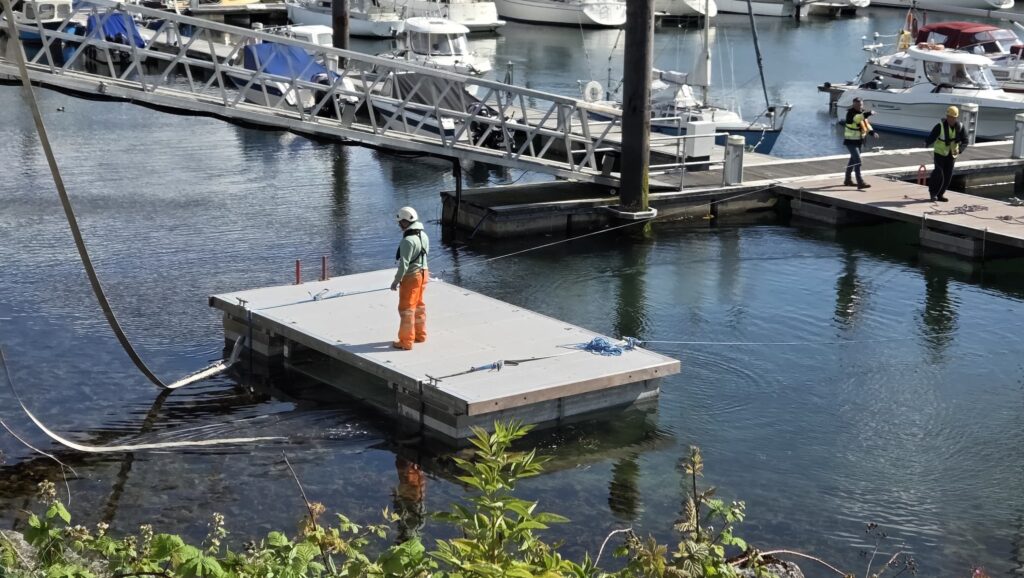 The structure at Glenarm Marina in Northern Ireland incorporates a submerged platform beneath the pontoon deck
A new pontoon installed at Glenarm Marina in County Antrim is being used to support the restoration of native oysters, demonstrating how marina infrastructure can be adapted to deliver environmental benefits alongside its primary function.
Developed by pontoon manufacturer Inland and Coastal in collaboration with Ulster Wildlife, the 6m x 3m structure incorporates a submerged platform beneath the pontoon deck where juvenile native oysters can be established.
Native oysters were once widespread around the UK and Ireland, but populations have declined by an estimated 95 per cent since the 19th century. Overfishing, habitat loss, disease and pollution have all contributed to the decline.
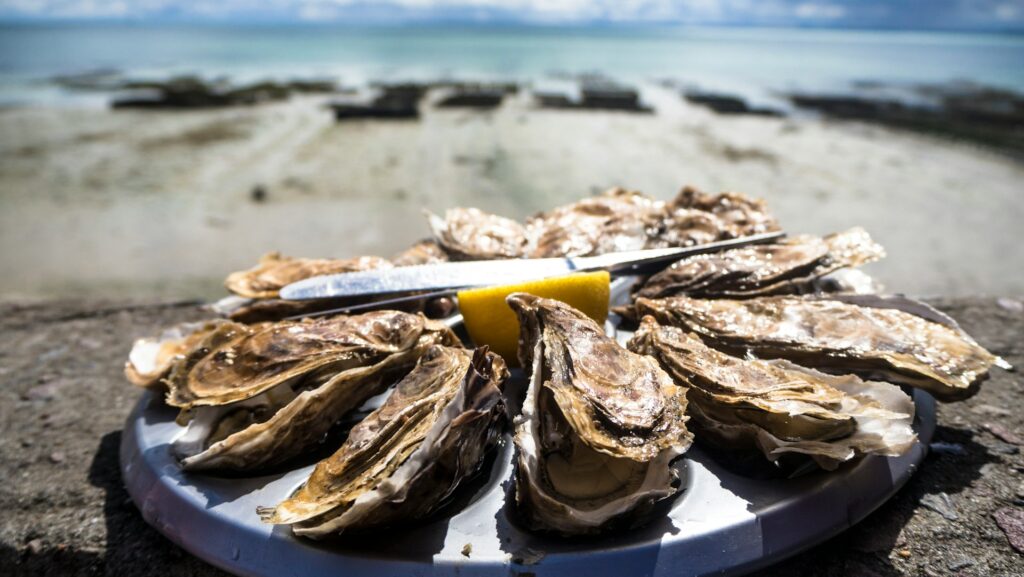
The species is considered an important ecosystem engineer. A single oyster can filter up to 200 litres of seawater a day, while restored oyster reefs can improve water clarity, support seagrass recovery and provide habitat for fish and other marine life.
Ulster Wildlife has been working to restore native oyster populations in Northern Ireland, installing the region’s first native oyster nursery at Bangor Marina in 2022. The charity approached Inland and Coastal when it wanted to extend the programme to Glenarm, with a requirement for a submerged platform that could accommodate substantially more oysters than conventional basket systems while remaining accessible for monitoring.
“This pontoon design was an experiment to see how oyster nurseries, which typically use baskets attached to the side of pontoons, could be adapted to be directly integrated into the pontoon,” says Dr Nick Baker-Horne of Ulster Wildlife.
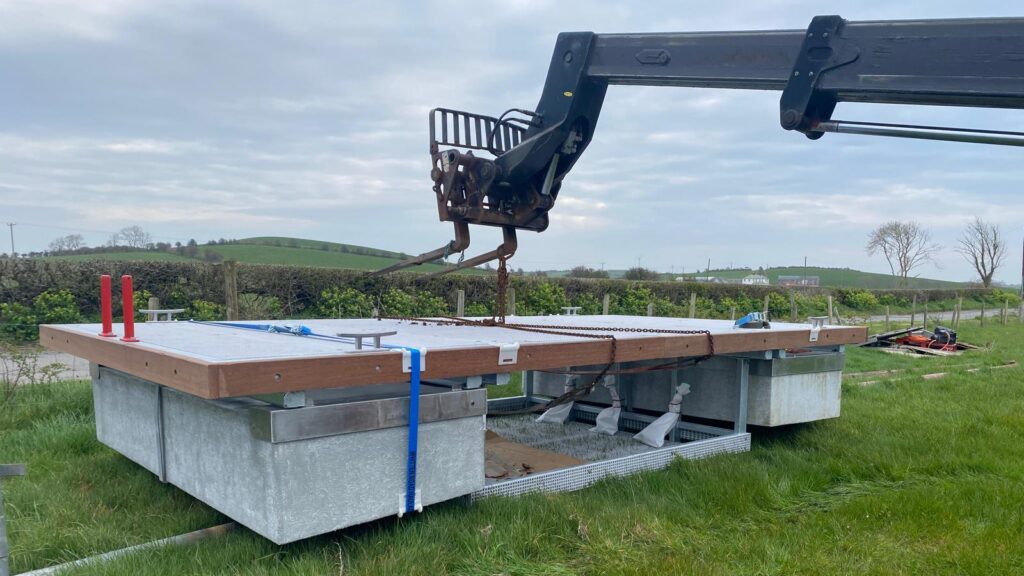
Inland and Coastal’s Kevin Treacy, one of the project engineers who led the design work, explains how the team approached it: “Starting with our standard GRP decked leisure pontoon as a basis, we fabricated a base that could fit between the spacing of our floats and bolted to the underside.
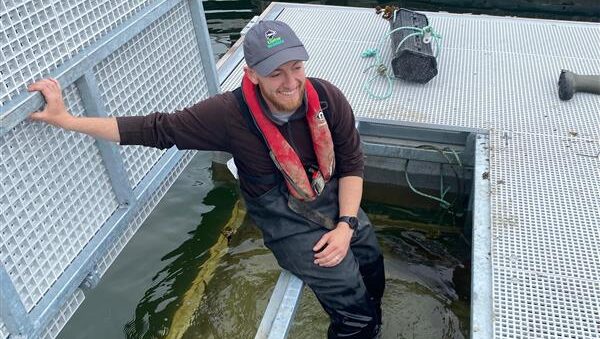
“To allow ease of access, we modified the deck, introducing hinged hatches to access the sunken platform from deck level”, allowing the oysters to be monitored without the need to dismantle the structure.
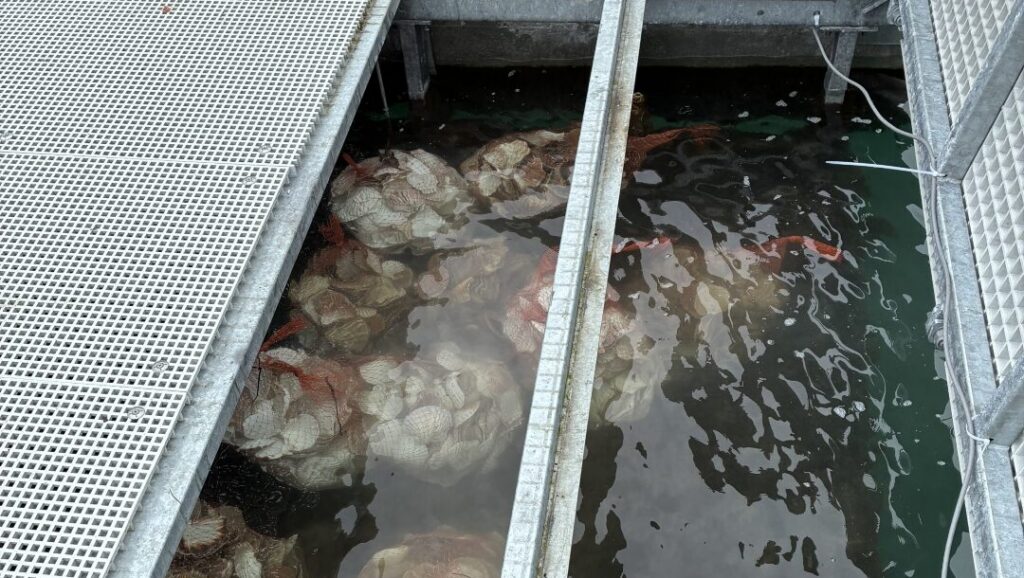
At first glance, the finished pontoon resembles a conventional leisure pontoon. Beneath the surface, however, the integrated platform provides a larger area for oysters to establish and grow.
Since installation, Ulster Wildlife has placed 5,000 juvenile oysters, known as spat, onto the platform. Early results have indicated improved survival, with the raised position of the platform helping to protect young oysters from predation during their most vulnerable stage.
The integrated design also reduces the need for individual oyster cages or baskets and requires less maintenance, with less marine growth accumulating on the structure. “It’s been a great addition to the nursery at Glenarm, allowing us to deploy 10 times more oysters onto the site,” adds Dr Baker-Horne.
Importantly for marina operators, the installation has not resulted in a loss of berthing capacity. The oyster nursery is integrated into a standard leisure pontoon and the structure remains available for boats to moor alongside.
The project is also being used to investigate how the pontoon can function as a wider marine habitat. Ulster Wildlife has installed an underwater machine-learning camera from Eco-Detect to monitor how fish and other marine species interact with the structure.
The organisation is also exploring whether similar infrastructure could be used to support rescued seagrass fragments, potentially giving pontoons a role in supporting several aspects of marine habitat restoration.
In 2023, UK sailing charity UKSA launched the Isle of Wight’s first oyster regeneration project, placing breeding baskets under its pontoons. The project facilitated the release of millions of larvae into the Solent, while also providing refuge for other marine life including endangered European eels, young seahorse and sea bass.