The future of boating will be defined by software, not hardware, says Lookout’s founder
Limitations that would be unthinkable on the road are being brought into stark focus as marine technology develops. Many vessels still depend on the skipper spotting dangers with the naked eye.
“We nearly killed some people in a small craft one night,” says David Rose, founder of Lookout.
The incident occurred at dusk, when a small vessel became almost invisible against dark water. The experience prompted Rose to ask a simple question: why has marine technology fallen behind automotive safety systems?
“If it had been a car, the car would have put up a warning, the car would have put on the brakes,” he says. “Boats don’t have that technology.”
Bringing machine vision to the helm
Rose’s background is not in marine electronics but in technology innovation. A serial entrepreneur and former head of research at Warby Parker, he spent years working on augmented reality, spatial computing and computer vision technologies.
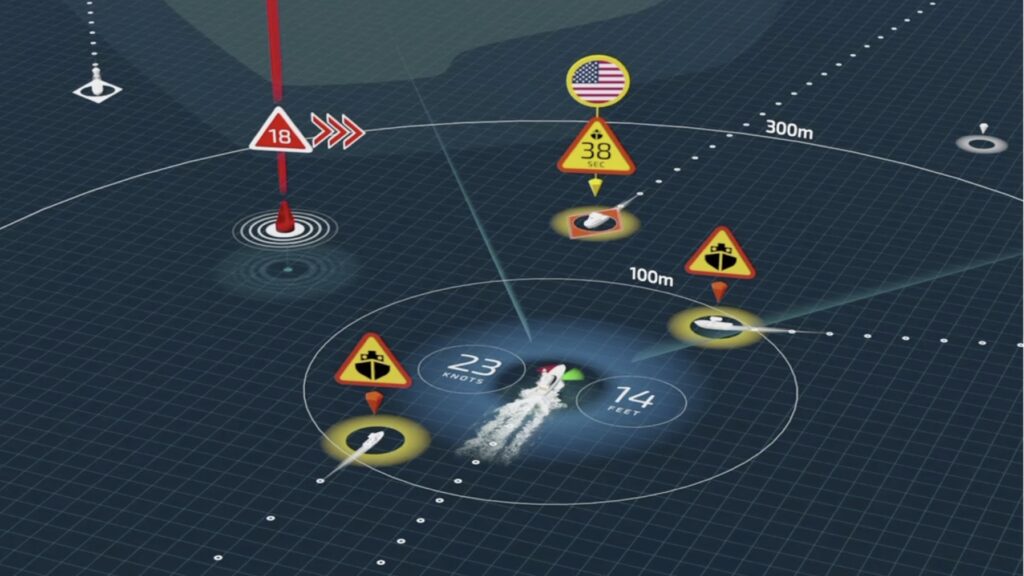
Those same technologies now underpin Lookout’s platform, which combines data from cameras, AIS, radar, sonar and onboard sensors to create a real-time digital understanding of a vessel’s surroundings.
At the heart of the system is what Rose describes as a challenge of information fusion.
“How do you fuse all these sources of truth into one coherent glanceable scene that your brain can understand in a few seconds?” he asks.
Using computer vision, the platform identifies and classifies hazards ranging from swimmers and kayakers to whales, floating containers and other vessels, presenting them through a simplified interface designed to reduce cognitive load for operators.
Winning trust in a conservative industry
While AI may be the technology story, Rose believes adoption in marine depends just as much on trust.
“My advice for any entrepreneur in this category is partner, partner, partner,” he says.
Rather than attempting to replace existing marine electronics ecosystems, Lookout has focused on integrating with established brands and infrastructure already trusted by installers, captains and boat owners.
“Brands really matter when it comes to marine,” he says.
The company has built integrations with existing navigation systems and works alongside recognised industry suppliers, a strategy designed to reduce installation friction while accelerating market acceptance.
Software becomes the differentiator
Rose argues that future vessel purchasing decisions will increasingly be influenced not only by hull design, propulsion systems or onboard finishes, but by the intelligence of the software experience.
“All the differentiation is now coming from software,” he says.
That philosophy also shapes Lookout’s own business model.
“We don’t want to be in the hardware business at all. Our expertise is AI and software.”
The company has developed its own camera hardware, but Rose views it primarily as a reference design rather than a long-term manufacturing strategy.
Towards a smarter, more autonomous future
Rose believes today’s helm displays are only the beginning.
One development area is what Lookout calls ‘auto dodge’ technology, which would allow vessels to automatically route around hazards identified by onboard systems.
“The autopilots in this industry are really, really blind,” says Rose. Information about the company’s products are available on its website.
Beyond navigation, Rose sees vessel displays evolving into information platforms for guests as well as operators.
“The helm experience should be in the salon,” he said.
Future onboard systems could provide passengers with information about wildlife, local history, wreck sites, destinations and nearby points of interest, extending situational awareness beyond the bridge and throughout the vessel.
“The future helm experience will be pervasive around the boats as well for the passengers.”
For Rose, the destination is clear: a boating experience where software, data and AI work together to make time on the water safer, more intuitive and more engaging.
About the Founder Podcast Series
This discussion forms part of the Founder Podcast Series, a collaboration between Yachting Ventures, Marine Industry News, and the Ben Taylor Podcast. The series explores innovation, leadership, and the evolving opportunities across the marine and yachting sectors.
The episode was recorded onboard M/Y On Time at the Palma International Boat Show, with thanks to Boatsters Black for providing the venue.